The Fisher Effect: Understanding the Interplay Between Interest Rates and Inflation
Finance

The Fisher Effect: Understanding the Interplay Between Interest Rates and Inflation

authorBy Nouriel Roubini
DateMay 07, 2026
Read time2 min

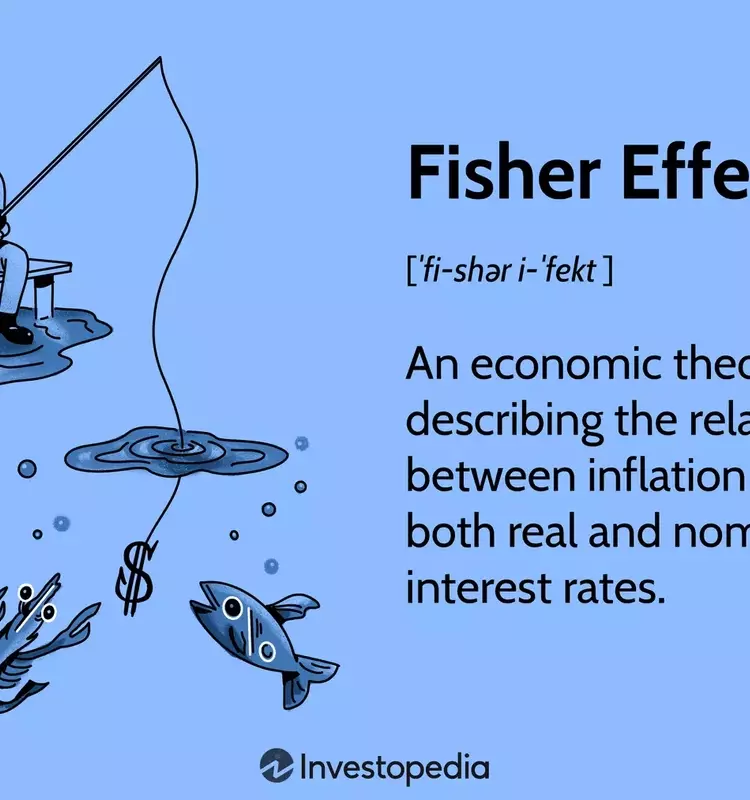
The Fisher Effect is a crucial economic principle that clarifies the connection between nominal interest rates, real interest rates, and the rate of inflation. Developed by economist Irving Fisher, this theory suggests that nominal interest rates will fluctuate in direct response to changes in the inflation rate, ensuring that the actual purchasing power of money, reflected by the real interest rate, remains constant.

This effect operates on the premise that a nominal interest rate comprises two primary components: the real interest rate and the expected rate of inflation. Consequently, if inflation rises, the real interest rate will decline unless the nominal rate increases proportionally. For example, if a savings account offers a 4% nominal interest rate and inflation is at 3%, the real growth of the savings is merely 1%. This highlights how a lower real interest rate can significantly slow the accumulation of purchasing power in savings over time. Central banks often monitor economic indicators like the Consumer Price Index (CPI) to gauge inflationary pressures, which directly influences their monetary policy decisions.

Beyond its fundamental equation, the Fisher Effect also reveals how shifts in the money supply impact both nominal and inflation rates. An increase in a country's inflation rate due to monetary policy adjustments would, according to Fisher, lead to a corresponding increase in the nominal interest rate. In such scenarios, the real interest rate is largely unaffected by changes in the money supply, as it is determined by the interplay of inflation and nominal rates. This principle is particularly relevant in international finance, where the International Fisher Effect (IFE) extends this theory to predict currency movements based on differences in risk-free nominal interest rates between countries. The IFE suggests that currencies of countries with higher nominal interest rates will depreciate against those with lower rates, reflecting the higher inflation expected in the former.

Understanding the Fisher Effect offers valuable insights into the dynamics of financial markets and monetary policy. It underscores the importance of considering inflation when evaluating investment returns or the true cost of borrowing. This economic theory highlights that an accurate assessment of financial health requires looking beyond superficial nominal figures to grasp the underlying real values that account for changes in purchasing power, thereby fostering informed decision-making in both personal and broader economic contexts.

More Articles
Finance
Air Waybills: Your Guide to International Air Cargo Documentation
An Air Waybill (AWB) is an essential non-negotiable document for international air freight. It functions as a contract between the shipper and the airline, detailing shipment specifics like consignor and consignee information, flight routes, cargo descriptions, and associated charges. Since 2019, the electronic AWB (e-AWB) has become standard, enhancing efficiency and sustainability in air cargo operations.
By Strive MasiyiwaMay 07, 2026
Finance
Strategic Metals: The Backbone of Modern Technology
Demand for critical metals like copper, lithium, and rare earths is soaring due to the rapid growth of electrification, AI infrastructure, and defense technologies. This article explores how a specific investment strategy, the WisdomTree Efficient Rare Earth Plus Strategic Metals Fund (WDIG), aims to capitalize on both short-term price movements and long-term structural demand. It also highlights the geopolitical implications of concentrated supply chains, especially China's dominance in rare earth processing, which could lead to supply disruptions and increased strategic value for diversified metal investments.
By Suze OrmanMay 07, 2026
Finance
Hermitage, PA: A Retirement Haven for Affordability and Serenity
Hermitage, Pennsylvania, is emerging as an attractive retirement destination for its unique blend of affordability, low taxes, and a tranquil lifestyle. With a significant senior population, the town offers a supportive community, accessible healthcare, and a moderate climate with distinct seasons. Its cost of living is notably below the national average, making it an ideal place for retirees seeking a comfortable and financially sound post-career life without the hustle and bustle of a resort town.
By Suze OrmanMay 07, 2026
Finance
Flex’s Strategic Spin-Off: Unlocking AI Infrastructure Value
Flex Ltd. recently unveiled its FY26 performance, marked by significant growth in its Cloud and Power Infrastructure (CPI) division. The company's future guidance has surpassed expectations, with a strategic plan to spin off the high-growth CPI segment. This move aims to enhance shareholder value, particularly by offering investors direct exposure to the burgeoning AI infrastructure market.
By David RubensteinMay 07, 2026
Finance
GCT Semiconductor Q1 Preview: High-Risk, High-Reward Situation Worth Following
GCT Semiconductor is transitioning from 4G LTE to 5G, facing significant revenue declines post-SPAC IPO. Q1 revenue is projected at $1.76M, with no concrete guidance from the company. Liquidity is a major concern, with minimal cash and substantial debt. A "Hold" rating is assigned, pending evidence of sustained 5G momentum, improved margins, and sufficient operational funding.
By Suze OrmanMay 07, 2026