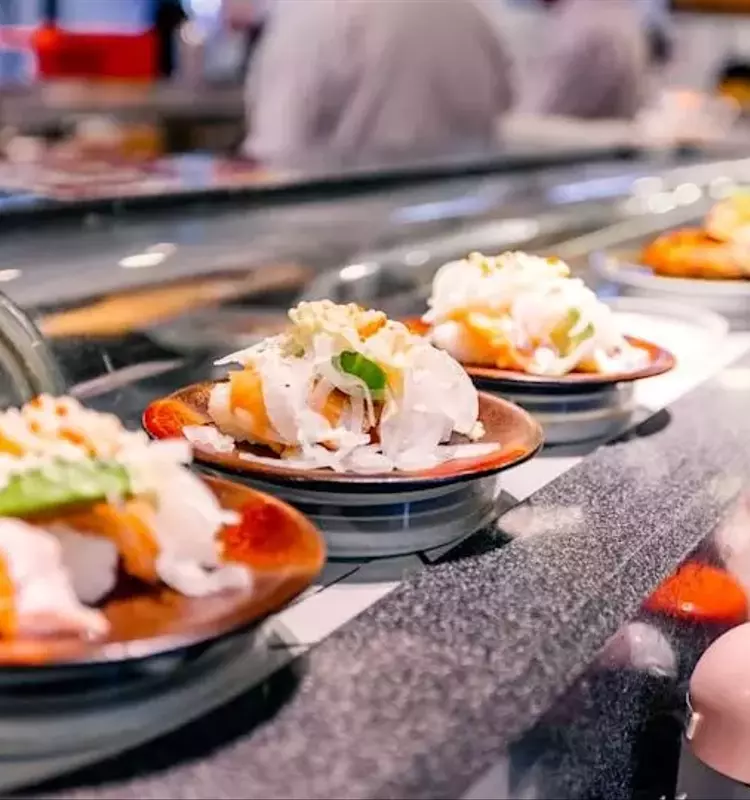
Former President Donald Trump's recent financial disclosures have unveiled a substantial investment in Kura Sushi USA, triggering a notable surge in the company's stock value and drawing considerable attention within financial circles. This investment, alongside other high-profile trades in tech giants, has reignited discussions surrounding the ethical implications of a former president's active participation in the stock market. The move has not only influenced market dynamics but also sparked public discourse, particularly in Japan, regarding the personal preferences and financial dealings of such a prominent figure.
The extensive trading activities detailed in Trump's first-quarter report have placed his financial strategies under scrutiny, contrasting sharply with the customary practices of past presidents who typically divest or place assets in blind trusts. The ongoing debate centers on the transparency and potential for conflicts of interest when political figures maintain active investment portfolios, especially when their decisions might intersect with corporate regulatory landscapes. The reactions from market analysts and political commentators alike underscore the complexities inherent in balancing personal wealth management with public responsibility.
The Unconventional Investment Strategy of a Former President
Donald Trump's Q1 financial disclosures revealed a significant acquisition of Kura Sushi USA stock, ranging from $1 million to $5 million, which immediately led to an uptick in the Japanese parent company's share price. This particular investment, made on February 2nd, was part of over 3,700 recorded trades during the first quarter of 2026, collectively valued between $220 million and $750 million. The portfolio also included positions in major tech companies such as Nvidia, Amazon, and Apple. This active trading approach diverges from the traditional path taken by former presidents, who commonly liquidate their assets or transfer them into a blind trust to avoid potential conflicts of interest. The Trump Organization asserts that independent financial advisors manage the former president's portfolio without any input from Trump, his family, or the organization itself. Despite these assurances, the disclosures have amplified concerns regarding ethical dilemmas, especially since some purchases coincided with favorable regulatory actions affecting certain holdings.
The former president's investment in Kura Sushi USA garnered considerable attention, particularly in Japan, where it prompted discussions among social media users. Many wondered if Trump, who has previously voiced a dislike for raw fish, had altered his dietary preferences. Beyond the culinary curiosity, the investment had tangible market effects. Tsutomu Yamada of Mitsubishi UFJ eSmart Securities noted that Kura Sushi's strong performance in its American operations, coupled with Trump's stake, likely stimulated interest from individual investors in Tokyo. The timing of the purchase is also noteworthy, occurring shortly after Kura Sushi USA announced a Hello Kitty promotion and a new board member. The company subsequently reported an 8.6% increase in same-store sales and a 4.3% rise in traffic for the quarter ending February 28th, leading to an upgraded full-year outlook. Vice President JD Vance defended Trump's trading activities, stating that the former president relies on independent wealth advisors to manage his finances, suggesting no impropriety in the active portfolio management.
Market Reactions and Ethical Scrutiny Post-Disclosure
The revelation of Donald Trump's investment in Kura Sushi USA and other substantial stock trades has sent ripples through both the financial markets and political commentary spheres. The sudden surge in Kura Sushi's stock, particularly its Japan-listed shares, illustrates the immediate and tangible impact that a high-profile individual's financial moves can have. Market analysts observed an unusual level of excitement, with some suggesting that the former president's involvement acted as a catalyst, drawing in new investors. This phenomenon highlights how celebrity influence can inadvertently, or deliberately, steer market sentiment and investment decisions. The broad scope of Trump's investment activities, spanning various sectors and amounting to hundreds of millions, underscores a dynamic and aggressive approach to wealth management that continues to provoke public and expert debate.
The significant market response to Trump's investments has intensified the discussion around the ethical standards expected of public figures, particularly those who have held, or aspire to hold, high office. Critics point to the inherent potential for conflicts of interest, arguing that even indirect influence could compromise public trust. The standard practice for former presidents has been to either liquidate their assets or place them in a blind trust to completely sever any perceived ties that could exploit public office for personal gain. Trump's deviation from this norm, despite claims of independent management by financial firms, keeps the ethical spotlight firmly on his financial dealings. This situation not only affects market perception but also raises broader questions about governance, transparency, and the intersection of political power with personal financial endeavors, ultimately shaping public expectations for future leaders' financial conduct.
