Freeport-McMoRan (FCX) stands as a prominent entity in the copper industry, a sector increasingly vital due to the expanding demands of artificial intelligence (AI) and global electrification initiatives. Despite recent operational hurdles, particularly concerning production, the company is poised to report robust second-quarter earnings, primarily driven by an upward trend in copper prices and the accelerated output from its Grasberg mine. However, a closer look at its valuation reveals a stock trading at approximately nine times its normalized EV/EBITDA, a figure considerably higher than its historical range of five to seven times. This elevated valuation suggests a potential downside of 22%, with a target price of $47 per share.
For nearly a decade, my analysis of Freeport-McMoRan has underscored its significant role within the commodity market. The burgeoning demand for copper, fueled by technological advancements in AI and the widespread adoption of electrification, has positioned FCX as a critical asset. Copper's intrinsic properties, such as high electrical conductivity and durability, make it indispensable for data centers, electric vehicles, and renewable energy infrastructure. This surge in demand has naturally led to increased interest in major copper producers like FCX.
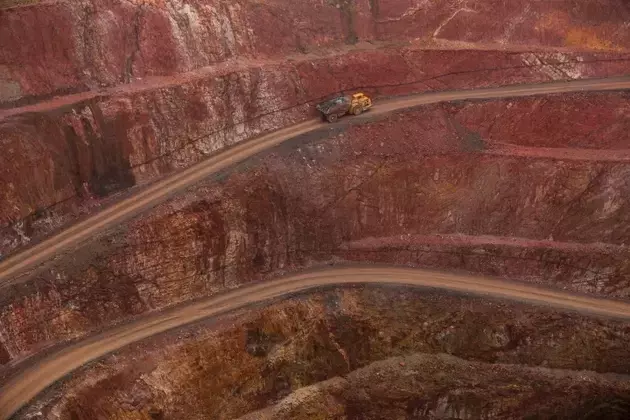
The company's operational performance, particularly at its Grasberg complex, is a major determinant of its market position. Although the mine has faced intermittent production challenges, its strategic importance remains undisputed. The anticipation of stronger Q2 results is largely predicated on the expectation that Grasberg will overcome these setbacks and contribute significantly to overall output, capitalizing on favorable copper prices. This optimistic outlook, however, must be tempered with a realistic assessment of the broader market and economic factors.
Despite the positive short-term earnings forecast, the current market valuation of FCX raises concerns. Trading at a premium compared to its historical averages indicates that much of the future growth potential, including that driven by AI and electrification, may already be factored into its stock price. This 'priced-in' scenario suggests that while the company's fundamentals are strong, the stock may not offer substantial upside in the immediate future without new, unforeseen catalysts. Moreover, the inherent volatility of commodity prices, particularly copper, poses a risk that could impact the company's profitability and stock performance.
Considering the high valuation multiples and the inherent risks associated with commodity price fluctuations, maintaining a "Hold" rating on Freeport-McMoRan appears to be a prudent strategy. While the long-term prospects for copper, driven by AI and electrification, remain strong, the current market pricing suggests that investors should exercise caution. A lack of immediate catalysts to further propel the stock price, coupled with a valuation that has already accounted for much of the anticipated growth, means that significant short-term gains are less likely. Therefore, while FCX is a solid company with strong assets, its present market valuation limits its appeal for aggressive accumulation.
