GameStop Reaffirms eBay Acquisition Pursuit and Elevates Financial Outlook
Finance

GameStop Reaffirms eBay Acquisition Pursuit and Elevates Financial Outlook

authorBy Suze Orman
DateJun 29, 2026
Read time3 min
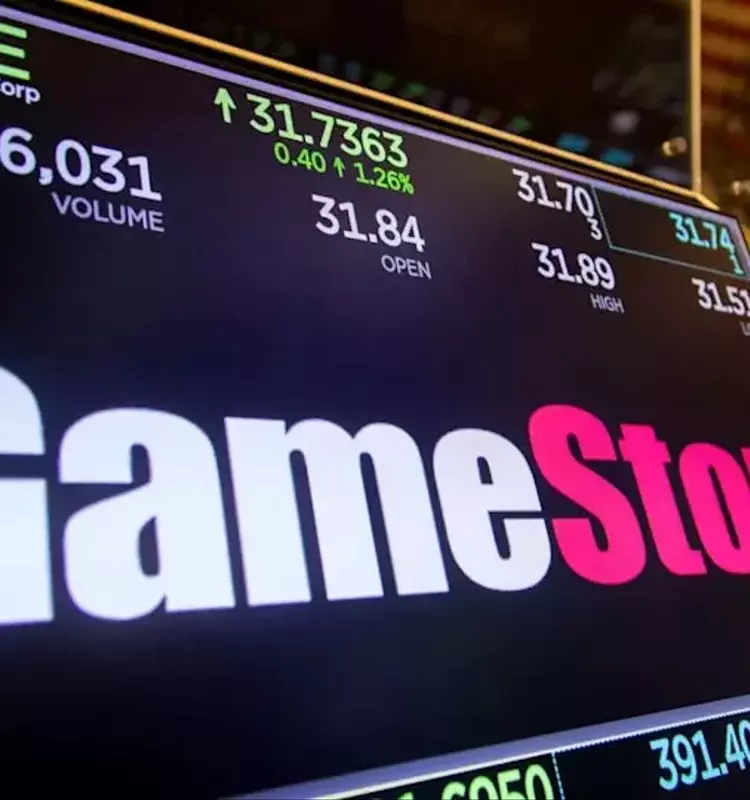
GameStop has announced its continued intent to acquire eBay, even after its initial proposal was declined. Concurrently, the company has raised its financial projections for the upcoming fiscal year, signaling confidence in its strategic direction despite the challenges posed by the proposed acquisition.

Unyielding Ambition: GameStop's Bold Bid for eBay and Future Prosperity

GameStop's Unwavering Commitment to eBay Acquisition

GameStop declared its steadfast resolve to move forward with the acquisition of eBay, notwithstanding the e-commerce giant's prior refusal of the unsolicited offer. This announcement underscores GameStop's determination to integrate eBay into its business operations, despite the significant hurdles.

Optimistic Financial Forecast for Fiscal Year 2026

The company has significantly revised its financial expectations for fiscal year 2026, which concludes on January 30, 2027. Projections indicate that adjusted EBITDA will exceed $600 million, a substantial increase from the $345.4 million reported in fiscal year 2025. This positive outlook led to a more than 2% rise in GameStop's stock during after-hours trading, reflecting investor confidence in the company's future performance.

Strategic Intent Beyond Initial Rejection

A recent regulatory filing reiterated GameStop's dedication to the eBay deal, with promises of forthcoming detailed documentation to explain its strategic rationale. Although GameStop did not immediately clarify how it plans to advance the deal, this move suggests a comprehensive strategy is being developed to address prior objections and push the acquisition forward.

Detailed Strategic Plan on the Horizon

GameStop had previously indicated its intention to unveil an in-depth presentation outlining the operational and strategic benefits of merging with eBay. This presentation is expected to address how the combined entities would function and the synergies that could be realized, providing clarity to stakeholders and the market.

The Non-Binding Proposal and Financing Details

In May, GameStop CEO Ryan Cohen initiated a non-binding proposal to purchase all outstanding eBay shares at $125 each, a deal valued at approximately $55.5 billion. The financing plan involved utilizing GameStop's $9.4 billion in cash reserves and securing up to $20 billion in debt through a commitment letter from TD Securities. Cohen expressed his desire to lead the merged company without drawing a salary or cash bonuses.

Addressing Skepticism and Overcoming Obstacles

eBay's board dismissed GameStop's proposal as "neither credible nor attractive," citing concerns over financing, the management of the combined entity, and Cohen's compensation structure. Analysts and investors have voiced skepticism due to GameStop's market capitalization of approximately $10 billion attempting to acquire a company five times its size, raising questions about the remaining funding required for the deal.

Cohen's Financial Sacrifice and Equity Holdings

Earlier in the week, Cohen voluntarily rescinded a January bonus agreement worth up to $35 billion, which was conditional on GameStop reaching a $100 billion market capitalization. GameStop clarified that this pay plan was approved before the decision to pursue eBay. Furthermore, Cohen suggested a personal injection of $500 million into the deal, although this amount only partially addresses the substantial financing gap. GameStop currently holds over 4.3 million shares of eBay common stock and derivative arrangements providing economic exposure to an additional 39 million shares, demonstrating its vested interest in the acquisition.

More Articles
Finance
Sixth Street Specialty Lending: A Strong Buy with 10% Yield Despite Dividend Cut
Sixth Street Specialty Lending (TSLX) is a compelling 'Strong Buy' due to its attractive valuation and robust fundamentals, even after a recent dividend reduction. Trading near its 52-week low with a 10.5% yield and a P/Book at the lower end of its historical range, TSLX presents substantial upside. The dividend cut was a strategic response to lower base rates, not a sign of credit deterioration. Its portfolio quality remains high, characterized by minimal non-accruals and conservative leverage. While software exposure introduces some risk, strong margin expansion and healthy portfolio companies bolster the investment case for value and income-focused investors.
By Mariana MazzucatoJun 29, 2026
Finance
Roundhill Memory ETF: Capitalizing on AI-Driven DRAM Demand
The Roundhill Memory ETF (DRAM) provides targeted exposure to leading memory chip manufacturers such as SK hynix, Samsung, and Micron. Launched recently, the fund has rapidly accumulated over $24 billion in assets, driven by surging demand for DRAM, NAND, and High Bandwidth Memory (HBM) fueled by artificial intelligence. With a concentrated portfolio focused on technologically advanced East Asian firms, DRAM is poised for further growth, especially with events like the upcoming SK hynix Nasdaq ADR listing. Despite high valuations and concentration risks, the fund presents a compelling 'Buy' opportunity for investors looking to capitalize on the booming memory sector.
By David RubensteinJun 29, 2026
Finance
Analyzing Danaher's Valuation Amidst Slowing Growth
This analysis delves into Danaher's (DHR) current valuation, arguing that its high price-to-earnings ratio is not justified by its projected earnings per share growth. While acknowledging Danaher's strong market position and successful acquisition strategy, the article highlights risks associated with its reliance on mergers and acquisitions and exposure to pharmaceutical spending fluctuations. It suggests that a more attractive entry point, around $140 per share, would be necessary to achieve substantial returns, rating the stock as 'HOLD'.
By Nouriel RoubiniJun 29, 2026
Finance
Franklin U.S. Low Volatility High Dividend ETF (LVHD): A De-risking Instrument
The Franklin U.S. Low Volatility High Dividend ETF (LVHD) offers a 3.5% yield from 112 U.S. dividend stocks, focusing on value and defensive sectors. While its heavy allocation to utilities, consumer staples, and real estate reduces volatility, it limits growth potential, leading to underperformance compared to broader benchmarks. Despite its tactical utility for de-risking amidst market correction risks, its long-term growth appeal remains unconvincing.
By Michele FerreroJun 29, 2026
Finance
Hut 8's Strategic Pivot to AI Infrastructure: A New Era of Growth
Hut 8 has successfully transitioned from Bitcoin mining to digital infrastructure, marked by robust Q1 results and a repeatable project finance model. The company's gross margin significantly expanded from 14% to 64% year-over-year, driven by the growth of its compute segment and high-margin digital infrastructure contracts with investment-grade tenants. This strategic shift is validated by major AI data center leases, securing substantial contracted revenue and establishing a strong foundation for future expansion and value creation.
By Morgan HouselJun 29, 2026