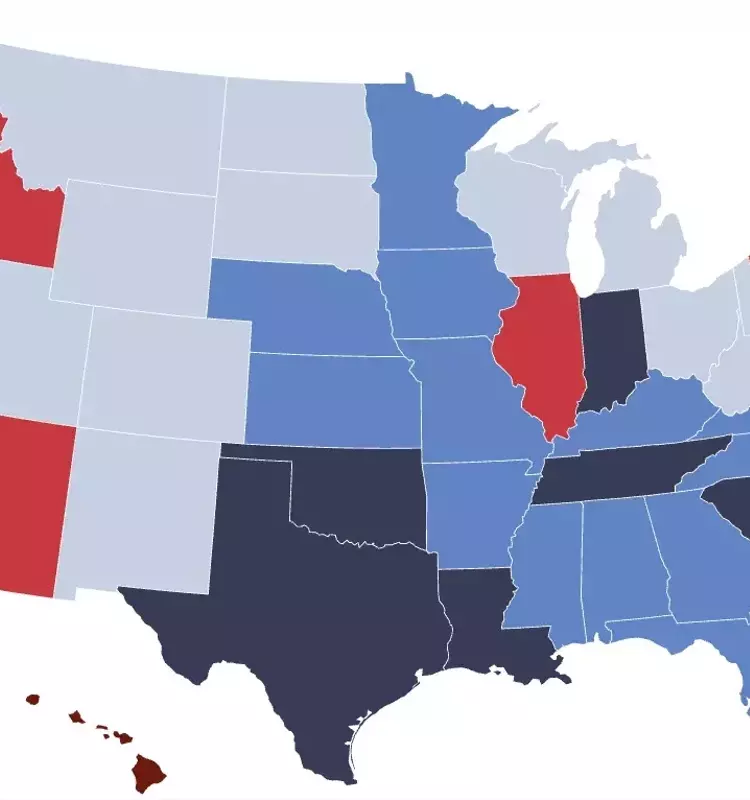
Gasoline Prices Drop Below $4 Nationally for First Time Since March
Finance

Gasoline Prices Drop Below $4 Nationally for First Time Since March

authorBy Suze Orman
DateJun 18, 2026
Read time2 min
This article examines the recent decline in US gasoline prices, exploring the factors contributing to this trend and the varying impacts across different states.

Driving Down Costs: The Nationwide Relief at the Pump

National Average Gas Price Falls Below $4 for the First Time Since March

For the first time since March 30, the national average price for regular gasoline has dropped below $4 per gallon, settling at $3.999. This marks the fourth consecutive week of declining prices, bringing significant relief to American drivers.

The Role of Oil Prices and Geopolitical Stability in Fuel Cost Reduction

The consistent decrease in fuel prices is largely due to a downward trend in oil prices. This shift is linked to potential advancements in resolving the Middle East conflict and the full reopening of the Strait of Hormuz, a crucial transit point for global oil shipments. Over the past week, prices fell by another 13 cents, reversing the sharp increases observed during the spring.

Comparing Current Gas Prices to Winter Lows and May Peaks

While the national average is now below $4, it remains considerably higher than the winter lows seen in December, January, and February, when prices largely stayed under $3 per gallon. This highlights the extent of the price surge experienced earlier in the year. However, the current situation is a vast improvement from May's peak, when all 50 states saw average gas prices exceeding $4.

State-by-State Variation: Where Gas is Cheapest and Most Expensive

The benefits of lower gas prices are not evenly distributed across the country. Currently, 28 states boast average prices below $4, primarily concentrated in the Southern and Midwestern regions. Indiana leads with the lowest average at $3.39 per gallon, followed by Texas, Oklahoma, South Carolina, Tennessee, and Louisiana, all under $3.60. In contrast, California continues to have the highest prices at $5.64 per gallon, with Hawaii, Washington, and Alaska also exceeding $5. The price difference between Indiana and California stands at a significant $2.25 per gallon.

Factors Contributing to State-Level Price Discrepancies

Several factors account for the wide disparities in gas prices across states. Fuel taxes play a major role; while the federal gas tax is uniform, state taxes and fees vary considerably, directly impacting pump prices. States with higher fuel taxes generally have higher baseline prices, even when oil costs are low.

Impact of Geography, Infrastructure, and Environmental Regulations on Fuel Costs

Geographic location and infrastructure also influence pricing. States near major refineries or extensive pipeline networks typically benefit from lower transportation costs. Conversely, more isolated markets may face supply chain challenges or higher shipping expenses. Additionally, environmental regulations, such as California's requirement for a specialized cleaner-burning gasoline blend, can contribute to higher prices due to limited production sources.

More Articles
Finance
The Peril of Assumptions: A Journey Through Investment Philosophy and Personal Growth
This article delves into the author's investment philosophy, emphasizing skepticism towards valuation models reliant on assumptions. It highlights a significant portfolio adjustment—the sale of BIPC for simplification—and a personal journey of self-discovery through a sabbatical in Costa Rica, which ultimately led to a career change focused on educating others about personal finance.
By Suze OrmanJun 18, 2026
Finance
Fidelity Freedom Funds Q1 2026 Performance Overview
The first quarter of 2026 saw significant market volatility due to geopolitical tensions, persistent inflation concerns, and policy uncertainties. Fidelity's target-date strategies, including the Freedom Funds, delivered mixed returns, reflecting declines in both equity and fixed-income markets. However, strategic asset allocation and security selection positively influenced the funds' performance relative to their Composite index during this challenging period. The fund's investment approach is aligned with investors' expected retirement years, aiming to adapt its asset mix as the target date approaches.
By Fareed ZakariaJun 18, 2026
Finance
Top Tax Relief Services for Expert Support
This guide reviews leading tax relief companies, evaluating them on factors such as payment plans, staff expertise, and range of services. It highlights Precision Tax Relief as the top choice for overall excellence and details other companies like Tax Defense Network for their comprehensive services and ALG Tax Solutions for their extensive educational resources, aiming to help individuals find the best professional assistance for their tax issues.
By David RubensteinJun 18, 2026
Finance
Understanding Earned and Unearned Income for Tax Purposes
Earned income encompasses compensation received from employment or self-employment, including wages, salaries, bonuses, and tips. Conversely, unearned income originates from sources like investments or government benefits. This distinction is crucial for tax calculation, as these income types are subject to different tax treatments. Low- and moderate-income individuals may qualify for the Earned Income Tax Credit (EITC), a refundable credit designed to reduce tax liabilities or provide a refund.
By Mariana MazzucatoJun 18, 2026
Finance
Understanding the Volatility: A Deep Dive into Leveraged ETFs and AST SpaceMobile
This article explores the mechanics of leveraged ETFs, specifically focusing on Tradr 2X Long ASTS Daily ETF (ASTX), which aims to deliver twice the daily performance of AST SpaceMobile, Inc. (ASTS). It highlights the inherent risks of such financial products, including leverage-induced decay and the impact of compounding, making them suitable primarily for short-term trading. Despite a bullish long-term outlook for ASTS due to its satellite constellation’s potential revenue generation by 2027, the article maintains a 'Hold' rating on ASTX, emphasizing the necessity of stringent risk management for traders.
By Fareed ZakariaJun 18, 2026