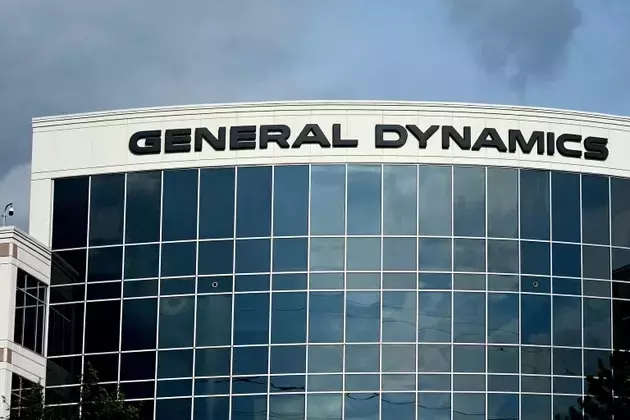
General Dynamics (GD) currently presents a balanced investment outlook, with its stock price closely aligning with its fair value. This suggests a neutral stance for investors, neither strongly recommending buying nor selling. The company's diverse operations, spanning both defense and aerospace, contribute to its stability but also introduce distinct challenges and opportunities that warrant careful consideration.
The company's primary defense segments, particularly its marine systems, offer a foundation of steady, predictable revenue. However, the aerospace division, largely driven by Gulfstream, acts as a key growth driver, albeit with inherent market sensitivities. Understanding these dual dynamics is crucial for evaluating GD's future performance and overall investment appeal.
General Dynamics: A Balanced Investment Perspective
General Dynamics currently holds a 'hold' rating, as its market price closely mirrors its estimated intrinsic value of $334.85. This assessment is rooted in a thorough discounted cash flow (DCF) analysis, which indicates that the stock is neither significantly overvalued nor undervalued at its present level. Investors considering General Dynamics should recognize that while its defense segments provide a robust and predictable revenue stream, often characterized by long-term, low-risk government contracts, these operations are not without their challenges. Margin pressures stemming from fixed-price agreements and persistent labor shortages, particularly in specialized fields like shipbuilding, can impact profitability. Despite these headwinds, the marine sector's foundational stability makes it a reliable, if not rapidly growing, contributor to the company's overall financial health.
Conversely, the aerospace division, spearheaded by its renowned Gulfstream business jet line, offers higher growth potential and superior profit margins. This segment is a critical driver of the company's financial performance, leveraging innovation and brand prestige in the business aviation market. However, its fortunes are closely tied to broader macroeconomic conditions, making it susceptible to volatility during economic downturns or periods of reduced corporate spending. The demand for business jets can fluctuate significantly, influenced by global economic health, corporate profitability, and geopolitical stability. Therefore, while aerospace boosts overall profitability, it also introduces an element of cyclical risk to General Dynamics' diverse portfolio. Evaluating GD requires a nuanced understanding of these contrasting operational dynamics, weighing the stable but constrained defense earnings against the higher-growth, more volatile aerospace contributions.
Key Drivers and Risks in General Dynamics' Performance
General Dynamics' operational success is significantly influenced by its robust marine systems, which encompass submarine and naval vessel construction. This segment benefits from substantial, multi-year government contracts, providing a stable and predictable revenue base. Such contracts often feature long development and production cycles, ensuring consistent cash flow and mitigating short-term market fluctuations. However, the fixed-price nature of many of these contracts means that unforeseen increases in material costs or labor can compress profit margins, especially in an inflationary environment. Additionally, the highly specialized nature of shipbuilding creates a perpetual demand for skilled labor, and shortages in this area can lead to project delays and increased operational costs, further impacting profitability and delivery schedules. The strategic importance of naval defense, however, assures a continuous demand, underpinning the long-term viability of this division.
The company's aerospace segment, primarily through its Gulfstream business, is characterized by its high-margin contributions and significant growth potential. Gulfstream's position as a leader in the premium business jet market allows it to command strong pricing power and benefit from innovation in aircraft design and technology. However, this segment is inherently vulnerable to global economic cycles. During periods of economic contraction or uncertainty, corporate spending on high-value assets like business jets typically diminishes, leading to reduced order backlogs and slower revenue growth. Furthermore, geopolitical events and regulatory changes can also impact demand and operational costs. The interplay between these stable yet constrained defense operations and the dynamic, higher-margin aerospace business creates a complex risk-reward profile for General Dynamics, demanding careful analysis of both internal operational efficiency and external market forces.
