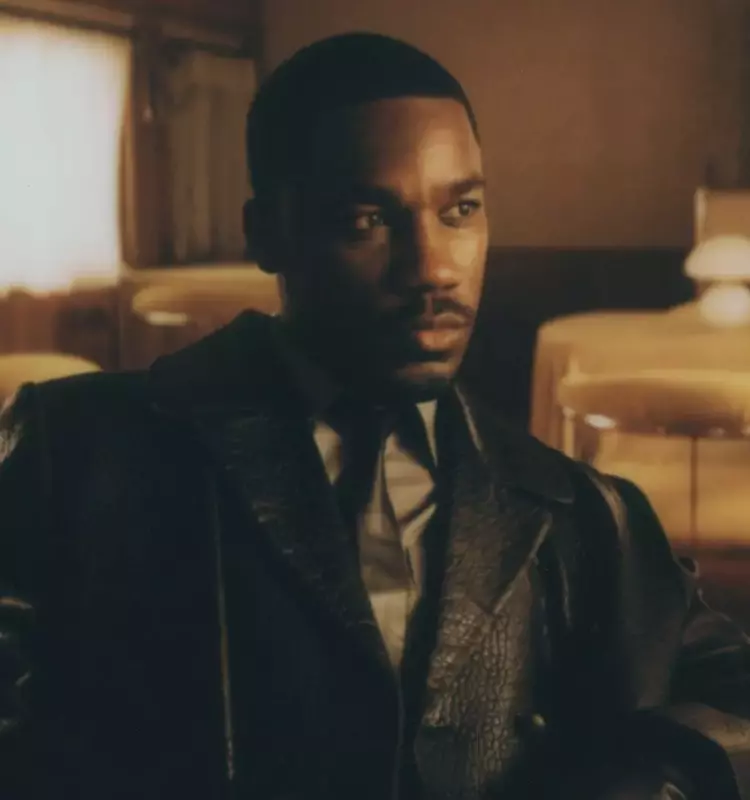
Journey Through Love's Labyrinth: Givēon's \"Beloved\" Unveils the Rawness of Human Connection
Embracing the Timeless Sound: From Contemporary R&B to Orchestral Soul
Givēon, celebrated for his distinctive deep voice, has consistently evoked a sense of nostalgia, often sounding like a crooner from the golden age of the 1970s. In an era dominated by fleeting digital trends, his compositions, frequently centered on lost affection, unfold with a deliberate, unhurried pace. While his early works, such as the EP Take Time and album Give or Take, incorporated subtle rap rhythms and cloudy vocal cadences, his sophomore LP, Beloved, signals a decisive pivot. This new record largely eschews hip-hop elements, immersing itself instead in the expansive, orchestral R&B of yesteryear. The soundscape is rich with soaring strings and crisp hi-hats, reminiscent of Al Green's soulful artistry, the Philadelphia soul movement, the vibrant energy of the Jackson 5, and the iconic soundtracks of Blaxploitation films.
Exploring the Depths of Emotion: A Panoramic View of Romantic Turmoil
On Beloved, Givēon exhibits an unprecedented command over his vocal instrument, delivering a compelling and expansive portrayal of relationships navigating their most challenging phases. His consistent yearning, a quality influenced by the "Black women heartbreak music" his mother introduced him to – artists like Anita Baker and Mary J. Blige – is more pronounced than ever. Much of the album explores the emotional landscape at the breaking point of romance. Tracks such as “Twenties,” “Mud,” and “Strangers” pulsate with a profound sense of defeat. In “Strangers,” he poignantly declares, “Yes, I’m taking this hard,” expressing his raw anguish upon discovering his former partner has moved on. By “Numb,” his emotional state is one of complete detachment. His admission, “I’ve been here before,” cushioned by ethereal background harmonies, serves as a knowing nod to listeners familiar with his heartbroken persona, though this rendition offers a remarkably raw and visceral experience.
Navigating the Nuances of Narrative: Beyond the Victim's Perspective
While Givēon often portrays himself as the wronged party in these deeply emotional narratives, confronting a former lover with accusations like, “You run my name through the mud/Wipe that dirt off your shoes.… You be lying to yourself so much it sounds true,” he also skillfully introduces layers of complexity to his romantic character. This adds a compelling nuance to his storytelling, making his emotional landscape even more intricate and relatable.
The Interplay of Hope and Illusion: Slipping Into Vulnerable Optimism
Tracks such as “Diamonds for Your Pain (Interlude)” and “Keeper” reveal Givēon subtly attempting to reconcile past mistakes, hinting at reconciliation. In the former, he croons, “Prettier than I remember/Haven’t seen you since December/You know I come around every summertime, swimming in your teardrops.” Such vivid imagery permeates the album, expertly enhancing the cinematic quality crafted by acclaimed producers like Jeff Gitty and Jahaan Sweet. However, the track “Avalanche,” though brimming with hopeful declarations rather than attempts at repair, subtly reveals a touch of naiveté. He dreamily proclaims, “Intuition says we’re way too young to start a family/But I’ve been thinking about forever, my dear,” hinting at a hopeful but perhaps unrealistic outlook.
Embracing Complexity: The Journey Towards Resolution
Beloved truly distinguishes itself by embracing the multifaceted nature of heartache, particularly in songs where Givēon and his romantic interests find themselves in emotional purgatory. In “Backup Plan,” he anxiously observes his partner contemplating departure. On “Bleeding,” he delicately navigates the fragments of a woman’s shattered heart, acknowledging her lingering attachment to a past love. A more optimistic tone emerges in “I Can Tell,” where he confidently presents himself as a superior alternative to a young woman's current partner. The album concludes with Givēon as part of a seemingly committed couple, working through shared challenges. This buoyant resolution serves as a powerful reminder that even within his emotional soundscape, not every obstacle leads to a complete breakdown. “I’ll even let you run me down to the ground/Watching you while you run your mouth/I stick around,” he sings with a newfound brightness, concluding with, “I love you ’cause you love me/Through the good, bad, and ugly.”