Global Commodity Market Review: Oil, Gas, and Agriculture Trends
Finance

Global Commodity Market Review: Oil, Gas, and Agriculture Trends

authorBy Nouriel Roubini
DateJul 01, 2026
Read time2 min

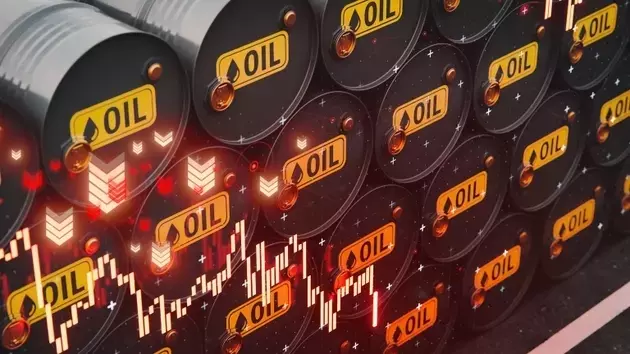
The second quarter witnessed a notable downturn in the crude oil sector, marking its most substantial quarterly reduction since the initial quarter of 2020. This decline was largely influenced by an unprecedented surge in crude oil production and exports from the United States. These record-breaking outputs helped to counterbalance supply interruptions from the Persian Gulf region, contributing to a weaker pricing environment for oil and dampening expectations for a rapid price recovery.

In the realm of natural gas, significant disruptions were reported as QatarEnergy prolonged force majeure on several liquefied natural gas (LNG) deliveries to both Asian and European markets, with some extensions stretching into early September. Concurrently, industrial metals showed an upward trend, buoyed by ongoing discussions between the U.S. and Iran, as well as evolving perspectives on the Federal Reserve's monetary policy. The agricultural sector is also facing impending changes, with the USDA's recent report indicating a potential decrease in corn and wheat acreage, alongside an anticipated increase in soybean cultivation for the upcoming year.

These converging factors highlight a dynamic and interconnected global commodity landscape. The interplay of increased U.S. oil supply, geopolitical developments impacting energy markets, and strategic shifts in agricultural production underscore the complexities and inherent volatilities of these essential sectors. Stakeholders across these industries must remain agile and informed to navigate the shifting currents of supply, demand, and policy. Continued vigilance and adaptive strategies will be crucial for sustained success and stability in these critical global markets.

More Articles
Finance
Franklin Equity Income SMA: Navigating Market Shifts in Q1 2026
The Franklin Equity Income SMA experienced a challenging Q1 2026, underperforming the Russell 1000 Value Index. This was largely due to investors re-evaluating the AI sector's long-term prospects and rising geopolitical tensions. Despite these headwinds, some sectors performed well, notably energy, driven by strong earnings from Chevron and Suncor. The financial sector, however, faced significant declines amid concerns about alternative asset exposure. The SMA remains focused on identifying undervalued companies with resilient or growing earnings and unrecognized long-term market leadership.
By Strive MasiyiwaJul 01, 2026
Finance
Harbor International Equity ETF: Navigating Global Markets in Q1 2026
The Harbor International Equity ETF (EPIN) delivered a strong performance in the first quarter of 2026, surpassing its benchmark, the MSCI ACWI ex USA Index. Despite geopolitical challenges and rising energy prices, EPIN's strategic sector allocations and stock selections, particularly in Information Technology, Energy, and Materials, contributed to its positive returns. The commentary highlights key holdings like Novartis and Samsung Electronics, while also addressing concerns regarding Barclays' market performance.
By Lisa JingJul 01, 2026
Finance
Progress Software: Navigating Market Turbulence with Strategic Acquisitions and Value Proposition
Progress Software (PRGS) is trading at attractive single-digit P/E multiples despite a recent ~20% share price decline. The company operates uniquely, resembling a private equity collection rather than a traditional R&D-focused SaaS entity. Despite broader sector challenges, PRGS has enhanced its net retention rates, mitigating near-term risks from AI disruption. Its current valuation, at less than 10 times free cash flow, combined with robust operational resilience, positions PRGS as a compelling value opportunity within the technology sector.
By Fareed ZakariaJul 01, 2026
Finance
TCW Private Asset Income Fund Q1 2026 Commentary: Navigating Volatility with Asset-Backed Finance
In Q1 2026, private credit funds faced significant volatility due to fundamental, technical, and geopolitical concerns. However, asset-backed finance (ABF) vehicles, particularly the TCW Private Asset Income Fund (TPAY), demonstrated resilience. TPAY's short-duration, self-amortizing structures limited asset-liability mismatches and prioritized structural investor protections, enabling consistent yield and stable performance despite market shocks. TPAY actively sought opportunities within the $20 trillion ABF market, proving its robust strategy during turbulent times.
By Lisa JingJul 01, 2026
Finance
USD/JPY: Echoes of the 1980s
The USD/JPY currency pair has surged past 162, a level last seen decades ago. Market participants are speculating about the timing and effectiveness of potential interventions by the Bank of Japan. A lack of intervention this week could signal a delay until mid-July, coinciding with a Japanese holiday, as Japan's substantial FX reserves offer some leeway, though the exact psychological floor for these reserves remains uncertain.
By Mariana MazzucatoJul 01, 2026