Global Commodity Markets: Key Developments and Price Drivers
Finance

Global Commodity Markets: Key Developments and Price Drivers

authorBy Robert Kiyosaki
DateMay 14, 2026
Read time3 min

Global commodity markets are currently experiencing a period of significant flux, driven by a confluence of geopolitical events, supply-side constraints, and policy adjustments. From the fluctuating price of crude oil, influenced by high-level international discussions, to the climbing values of industrial metals like copper, buoyed by tight supply and robust demand, the landscape is complex and dynamic. Additionally, strategic trade decisions by major economies, such as India's revisions to import duties on precious metals and its ban on sugar exports, are reshaping market expectations and influencing global trade flows. These interwoven factors highlight a critical juncture for investors and analysts monitoring the pulse of international commerce and resource allocation.

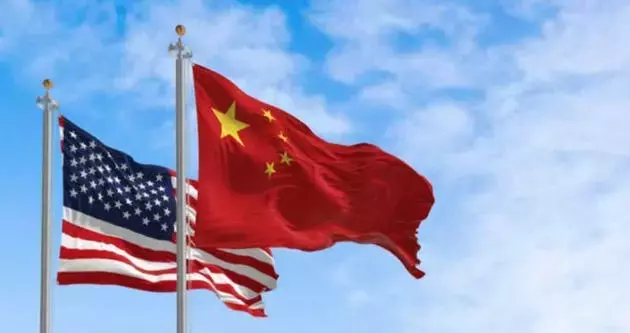
The oil market remains in a cautious holding pattern, keenly observing the outcomes of the impending summit between President Trump and President Xi. This high-stakes meeting is anticipated to provide clarity on several fronts, particularly concerning potential resolutions or escalations surrounding the ongoing Iran conflict. Any positive developments on this geopolitical issue could significantly alleviate market uncertainties, influencing oil supply and demand dynamics. The market's current 'wait-and-see' approach reflects the profound impact that these diplomatic talks could have on global energy stability and prices.

Meanwhile, the copper market has demonstrated remarkable resilience, extending its upward trajectory beyond $14,000 per ton. This surge positions the metal tantalizingly close to its historical peak of $14,527.50, established in late January. This robust performance is primarily attributed to a combination of factors including persistent supply-side risks, which have tightened the availability of the metal. Furthermore, strong demand from China, a key consumer, coupled with increased speculative buying, has provided additional momentum to prices, underscoring copper's pivotal role in industrial and technological sectors.

In the realm of precious metals, India, recognized as the world's second-largest consumer of gold, has enacted a substantial policy change. The nation has more than doubled its import tariffs on both gold and silver, signaling a potential shift in domestic demand patterns and international trade flows for these valuable commodities. Concurrently, the Indian government has imposed a ban on sugar exports, effective until the close of September. This measure is intended to safeguard adequate domestic supply, but it also carries significant implications for global sugar prices, likely pushing them higher due to reduced international availability.

The global commodity landscape is at a critical juncture, shaped by geopolitical dialogues, persistent supply challenges, and significant policy shifts. These developments collectively influence market stability, demand, and pricing across key sectors, reflecting a complex and interconnected international economy.

More Articles
Finance
BNY Mellon Small/Mid Cap Growth Fund Q1 2026 Commentary
The BNY Mellon Small/Mid Cap Growth Fund faced challenges in Q1 2026, underperforming its benchmark, the Russell 2500 Growth Index. While MKS Instruments and Casey's General Stores saw gains, Wingstop and Herc Holdings experienced declines, reflecting a mixed market sentiment amid geopolitical tensions and rising oil prices. Investors reacted to growth concerns and valuation sensitivities, leading to overall negative equity performance across global markets despite some economic resilience.
By Strive MasiyiwaMay 14, 2026
Finance
Diageo: A New Era Under 'Drastic Dave' Could Drive A Long-Term Re-Rating
Diageo (DEO) remains a "Buy" due to its resilient performance despite economic challenges and attractive valuation. The new CEO has initiated cost-cutting, dividend adjustments, and is focusing on long-term premiumization. Despite immediate consumer slowdowns in key markets, Diageo's strong brand portfolio and strategic investments are expected to fuel future growth. The company's guidance for FY26, including $3 billion in free cash flow and reduced capital expenditure, reinforces confidence in its recovery.
By Morgan HouselMay 14, 2026
Finance
Understanding Accretive Growth in Finance
This article explores the concept of "accretive" in finance, defining it as a transaction that enhances a company's earnings per share (EPS) and overall value. It discusses accretive acquisitions and investments, such as discounted bonds, and explains how to calculate the accretion rate. The article also provides illustrative examples to clarify its application in both investment and corporate finance scenarios.
By David RubensteinMay 14, 2026
Finance
IRAs' Unexpectedly Minor Role in Retirement Income: A Closer Look
Despite Individual Retirement Accounts (IRAs) holding trillions in assets, a recent survey reveals that they play a surprisingly minor role in the actual retirement income for most Americans. While nearly all retirees depend on Social Security, only about half draw from IRAs, ranking them below personal savings and pensions. This gap between workers' expectations and retirees' reality suggests a softening role for IRAs as a primary income source, often serving as a supplemental rather than foundational element of retirement finances.
By Lisa JingMay 14, 2026
Finance
Understanding Capitalized Lease Accounting and Its Financial Implications
The capitalized lease method treats lease agreements as asset acquisitions, impacting a company's financial statements by recording both depreciation and interest expenses. This method is applied when a lease meets specific criteria set by accounting standards. Unlike operating leases, which expense payments immediately, capitalized leases defer expense recognition, affecting key financial ratios and how analysts evaluate a company's financial health.
By Fareed ZakariaMay 14, 2026