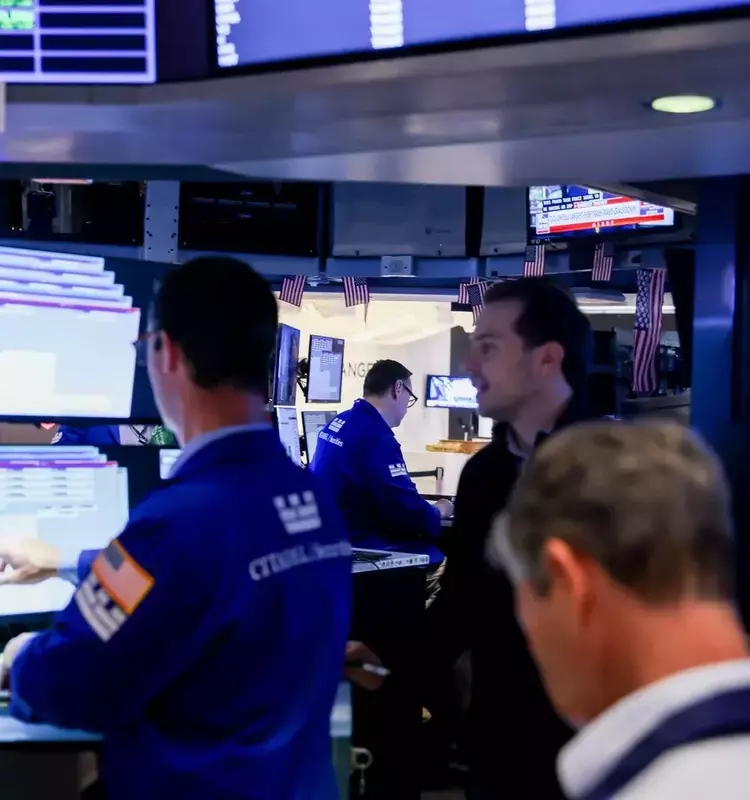
Global financial markets experienced a significant downturn as geopolitical tensions and a slump in the semiconductor industry cast a shadow over investor sentiment. Stock futures pointed to a markedly lower opening, with major indexes extending their weekly losses. The concurrent rise in oil prices, fueled by military actions in the Middle East, added another layer of complexity to the already volatile market landscape.
Chip Sector Experiences Significant Sell-Off Amid AI Spending Concerns
The technology sector, particularly semiconductor stocks, witnessed a sharp decline, contributing heavily to the overall market weakness. This downturn was triggered by Taiwan Semiconductor Manufacturing Co.'s (TSMC) revised capital expenditure forecasts, which ignited concerns about future AI investment. Major semiconductor firms, including Advanced Micro Devices (AMD), Micron Technology (MU), Broadcom (AVGO), and Intel (INTC), saw their shares fall, reflecting investor apprehension. The iShares Semiconductor ETF (SOXX) and the Roundhill Memory ETF (DRAM) both suffered substantial losses, with some components experiencing double-digit declines. This widespread sell-off in chip stocks underscores the market's sensitivity to shifts in technology spending and future growth projections.
The semiconductor industry's recent performance has been a focal point for investors, with Thursday's sell-off intensifying concerns. TSMC's decision to increase its full-year capital expenditure outlook, while seemingly positive for growth, was interpreted by some analysts as a signal of potentially slowing AI spending in the near future, leading to a wave of selling across the sector. This fear was compounded by a Bloomberg report suggesting Google's flagship AI model, Gemini 3.5 Pro, was behind schedule, further dampening enthusiasm for AI-related investments. As a result, many prominent chip stocks, including those within the iShares Semiconductor ETF (SOXX) and the Roundhill Memory ETF (DRAM), faced considerable pressure. Companies such as Sandisk (SNDK), Seagate Technology Holdings (STX), and SK Hynix (SKHY) saw their share prices drop significantly, indicating a broader market adjustment to the evolving outlook for technology and artificial intelligence growth.
Geopolitical Events and Macroeconomic Indicators Influence Market Dynamics
Beyond the tech sector, broader macroeconomic and geopolitical factors played a crucial role in shaping market sentiment. Oil prices surged following reports of US military strikes on Iranian targets, highlighting the potential for escalating conflicts in the Middle East to disrupt global energy supplies. This geopolitical uncertainty contrasted with relatively stable Treasury yields and a flat US dollar index, suggesting that while specific sectors faced headwinds, the broader financial environment remained somewhat contained. The mixed signals from various asset classes underscored the complex interplay of factors influencing global markets, from sector-specific challenges to international relations.
Geopolitical tensions have significantly impacted the market, particularly the energy sector. The news of US Central Command's strikes on Iranian military targets immediately sent oil prices upwards, with West Texas Intermediate and Brent crude futures both experiencing notable gains. This reaction reflects the market's inherent sensitivity to supply chain disruptions and instability in key oil-producing regions. Meanwhile, other macroeconomic indicators provided a more nuanced picture. The 10-year Treasury yield remained relatively stable, and the US dollar index showed little change against a basket of foreign currencies, suggesting that while some areas of the market reacted sharply to news, broader currency and bond markets maintained their composure. Even Bitcoin, despite an overnight high, saw a slight decline, illustrating the varied responses of different asset classes to the current confluence of technological challenges and international events.
