Global Oil Markets: Navigating Geopolitical Tensions and Supply Dynamics
Finance

Global Oil Markets: Navigating Geopolitical Tensions and Supply Dynamics

authorBy Mariana Mazzucato
DateMay 19, 2026
Read time3 min

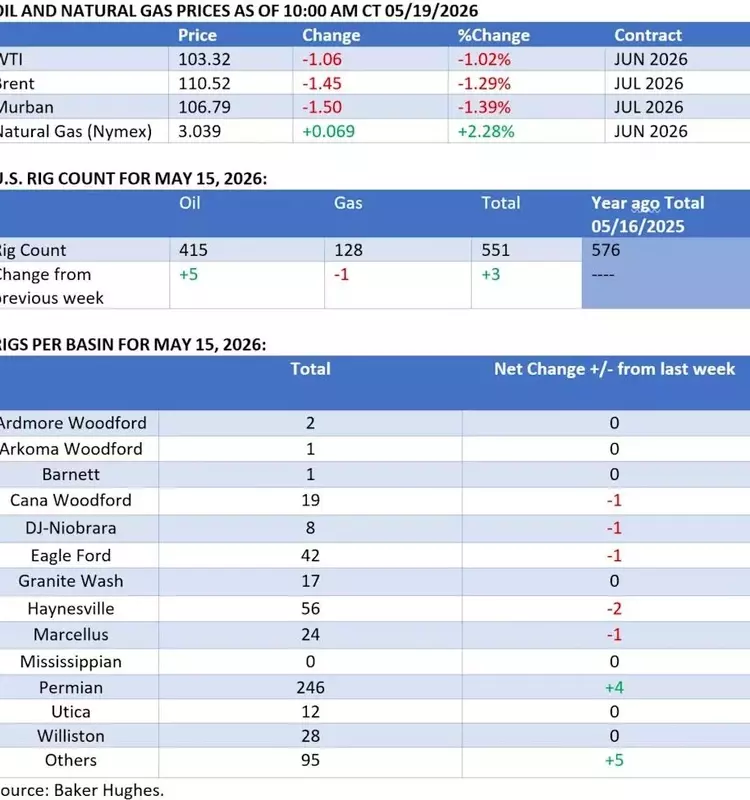
Global oil markets are currently experiencing a period of relative stability, with crude prices hovering around $110 per barrel. This equilibrium is largely due to recent geopolitical developments, specifically the US decision to postpone military action against Iran and the continued waivers allowing certain countries to purchase Russian oil. These actions have collectively eased immediate supply concerns, preventing a further spike in prices. This comes at a time when the United States is pushing unprecedented volumes of crude into the global market, largely through strategic reserves.

The US Strategic Petroleum Reserve (SPR) has seen historic withdrawals, with volumes reaching record highs. In particular, last week witnessed a nearly 10 million barrel drawdown, reducing total SPR inventories to their lowest level since July 2024. This significant release has fueled US oil exports, with May potentially marking the first time exports have exceeded 5.5 million barrels per day. The majority of these released reserves are absorbed by the domestic market, but a substantial portion is being exported, with European buyers showing particular interest in specific crude grades. However, the accelerated rate of these drawdowns raises concerns about potential long-term damage to the salt caverns housing these vital reserves.

Beyond geopolitical influences, the energy sector is buzzing with major investment activities and policy shifts globally. ConocoPhillips is securing long-term natural gas supplies for Alaska's LNG project, while Shell and its partners are eyeing a final investment decision for the LNG Canada Phase 2 project. Inpex is expanding its natural gas portfolio by acquiring a stake in Australia's Browse project, and Equinor is advancing its lithium project in Arkansas. Anglo American is divesting its steelmaking coal assets, marking a strategic exit from that sector. Meanwhile, the IEA warns of rapid depletion in commercial oil inventories. China's refinery runs have decreased due to weak margins and export restrictions, and Venezuela is overhauling its oil tax laws to attract foreign investment. New LNG projects are emerging in the US, and Indonesia is planning tighter controls over commodity exports like coal and palm oil. In a related development, Australia is securing jet fuel from China to stabilize its supplies, and Brazil's Petrobras is considering investments in Mexico's deepwater oil assets. These diverse activities highlight a dynamic global energy landscape constantly adjusting to market demands and strategic priorities.

The global energy landscape is a complex tapestry woven from geopolitical decisions, economic strategies, and environmental considerations. The current stability in oil prices, while welcome, is inherently fragile, relying on a delicate balance of international relations and supply management. As nations strive for energy security and sustainability, proactive and collaborative approaches will be essential to navigate future challenges and foster a more resilient global energy system.

More Articles
Finance
Crescent Capital BDC: Navigating Value and Yield Amid Market Underestimation
Crescent Capital BDC (CCAP) presents a compelling investment opportunity, trading near its 52-week low with an attractive 13% yield and a significant 0.61x price-to-book discount. Its robust portfolio, largely composed of first-lien investments, and recent management fee reductions underscore strong Net Investment Income (NII) coverage of dividends at 113.5%. While non-accruals, primarily in healthcare, have seen an uptick, active management indicates proactive risk mitigation. The current market valuation appears to overstate credit risks, offering a promising entry point for income-focused investors.
By Lisa JingMay 19, 2026
Finance
Understanding M2: A Key Indicator of Economic Health and Monetary Policy
M2, a crucial economic metric tracked by the U.S. Federal Reserve, provides insights into the amount of liquid money in circulation. This measure encompasses physical cash, checking and savings deposits, and other highly convertible short-term savings instruments like money market accounts and certificates of deposit. By monitoring M2, economists and central banks can assess the overall health of the economy, predict inflationary trends, and formulate effective monetary policies to maintain price stability and foster sustainable employment.
By Robert KiyosakiMay 19, 2026
Finance
Fair Isaac (FICO) Experiences Decline in Q1 Amidst Valuation Concerns
Fair Isaac Corporation (FICO), a leading technology company specializing in analytic and digital decision-making technologies, saw its stock decline by 37% in the first quarter of 2026. This downturn was primarily attributed to growing valuation concerns following a significant surge in late 2025. Fidelity Growth Strategies Fund, a key investor, consequently reduced its stake in FICO, repositioning it as their 15th largest holding. Despite this, FICO reported strong Q2 2026 revenues of $692 million, marking a 39% year-over-year increase.
By Suze OrmanMay 19, 2026
Finance
Dutch Bros Sustains Robust Growth Despite Economic Headwinds
Dutch Bros (BROS) continues to demonstrate strong performance, with impressive revenue growth and an optimistic outlook. The company reported a substantial year-over-year revenue increase of 30.7% and an 8.3% rise in same-shop sales. Furthermore, Dutch Bros has revised its 2026 targets upwards across revenue, EBITDA, and new store openings, underscoring its aggressive expansion strategy. Despite potential macroeconomic challenges and competitive pressures, its asset-light model and solid financial position are expected to fuel continued growth and provide attractive returns for investors.
By Robert KiyosakiMay 19, 2026
Finance
Navigating the Volatile Waters of Invesco Senior Income Trust: A Critical Analysis of Its Dividend Sustainability
This analysis delves into the precarious financial position of Invesco Senior Income Trust (VVR), highlighting its ongoing susceptibility to interest rate fluctuations, diminishing earnings, and an unsustainable dividend policy. Despite a high yield, the fund's income fails to cover payouts, exacerbated by its exposure to risky, low-grade floating rate debt. A significant dividend reduction is proposed as a crucial step to mitigate Net Asset Value erosion and ensure long-term viability amidst a challenging high-rate environment.
By Suze OrmanMay 19, 2026