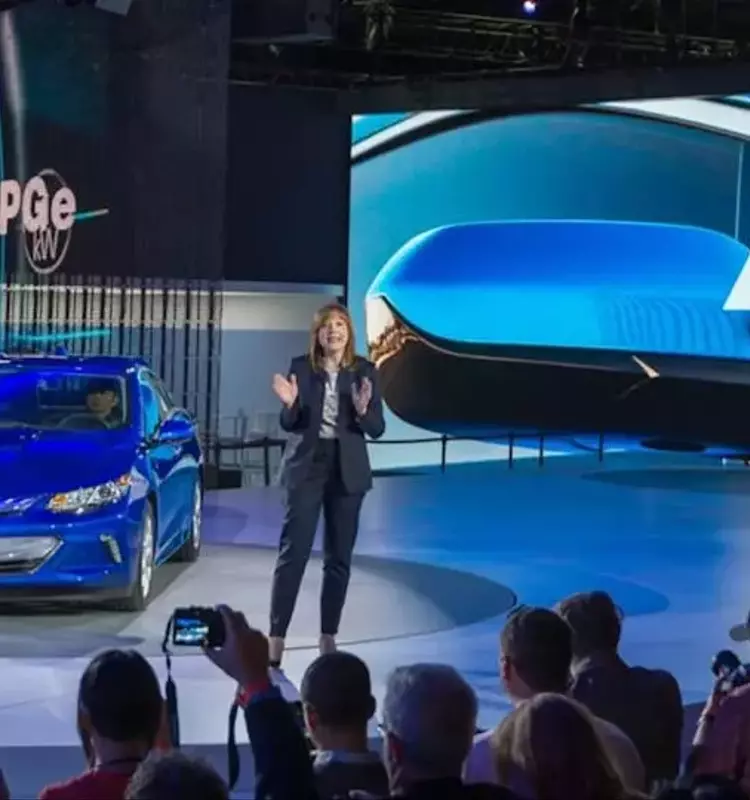
GM CEO Mary Barra Addresses Consumer Behavior Amidst Rising Gas Prices and Auto Market Dynamics
General Motors' Chief Executive, Mary Barra, asserts that despite escalating fuel costs and a broader economic squeeze, there has been no substantial alteration in vehicle purchasing trends among consumers. She emphasizes GM's dedication to offering reasonably priced automobiles and its judicious approach to sales promotions, distinguishing it from rival manufacturers such as Ford, which are increasingly relying on incentives.
The rising cost of gasoline has been a notable concern for many households. In March, lower-income families allocated an average of 4.2% of their income to fuel, an increase from 3.9% in the previous year, though still below the peak levels observed in 2022. This upward trend in fuel expenses, coupled with market instability following the Iran conflict, has reportedly dampened consumer confidence, particularly among middle and higher-income demographics, as indicated by the University of Michigan's Survey of Consumers. Gasoline prices alone saw an increment of over one dollar per gallon for regular unleaded in March, leading to a 16.5% month-over-month surge in gasoline card expenditures.
Economists from the Stanford Institute of Economic Policy Research estimate that the conflict in Iran has inflated the average American's annual gasoline costs by $857 this year. Despite these economic pressures, Barra notes that GM has not witnessed a significant change in how consumers buy cars. She highlighted in an interview with "Good Morning America" that car purchasers are consistently meeting their auto loan obligations. Barra also pointed out GM's commitment to affordability, citing six models priced under $30,000, ensuring that car ownership remains accessible.
However, the broader economic data presents a more complex picture. Prior to the Iran conflict, auto loan delinquency rates had reached a decade-high, driven by elevated prices and persistent inflation. Jeremy Robb, interim chief economist at Cox Automotive, articulated that consumers face financial strain from various fronts, including car loans, insurance, fuel, and groceries. When questioned about the potential impact of $5-per-gallon gas prices enduring until Labor Day, Barra expressed concern for the general affordability for all Americans, underscoring the importance of offering affordable vehicles and monitoring the overall economic health, while hoping for a swift resolution to the conflict in Iran.
In terms of competitive strategy, GM is adopting a different stance compared to Ford. While Ford has been actively using incentives to attract buyers, a strategy that historically yields positive results but impacts profit margins, GM is moving in the opposite direction. During its first-quarter earnings call, GM proudly announced that its incentives remained among the lowest in the industry for both internal combustion engine (ICE) and electric vehicles (EVs). This "incentive discipline," as described by CFO Paul Jacobson, coupled with lean inventories and a strong product portfolio, provides GM with a competitive advantage. Barra believes this approach allows GM to maintain agility and profitability while effectively catering to customer needs, especially in the truck segment.
GM's strategy focuses on maintaining competitive pricing and limiting incentives, contrasting with the approaches of some rivals. This emphasis on value and financial prudence aims to sustain market strength even amidst fluctuating economic conditions and evolving consumer sentiment.
