Gold's Evolving Demand Landscape: A Three-Tiered Analysis
Finance

Gold's Evolving Demand Landscape: A Three-Tiered Analysis

authorBy Michele Ferrero
DateMay 06, 2026
Read time2 min

The contemporary appreciation in gold's value is characterized by a sequential and diverse expansion of investor engagement. This includes sovereign entities, established financial institutions, and emerging crypto-centric platforms, collectively contributing to an increased demand for the precious metal. Distinct from historical patterns where a single dominant buyer typically fueled price increases, the present rally demonstrates a robust, multi-layered demand structure where each new participant group reinforces, rather than replaces, previous buying activity.

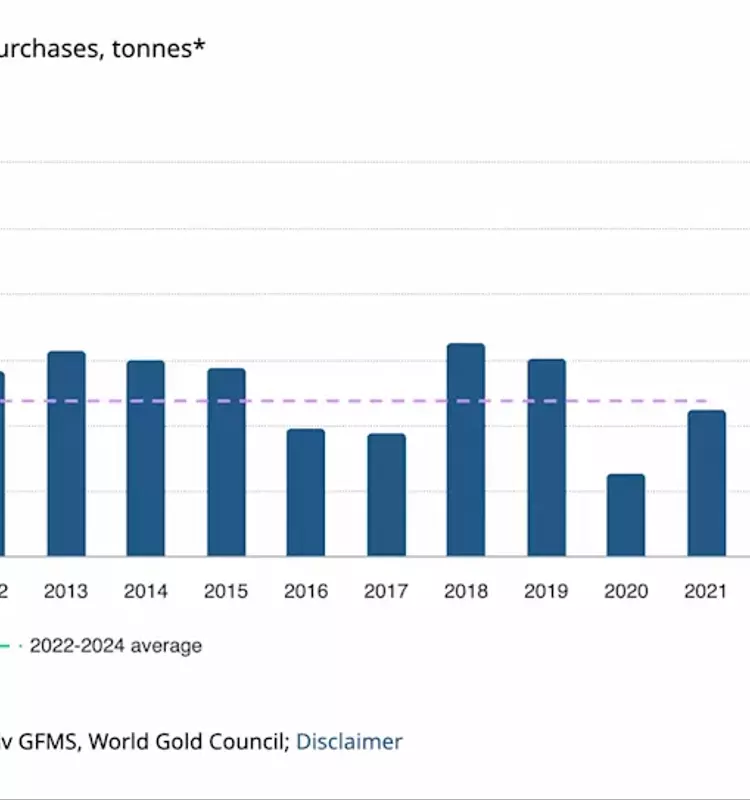
This sustained interest in gold can be categorized into three successive stages. The initial phase, spanning from 2022 to 2024, saw central banks emerge as significant buyers, procuring over 1,000 tonnes annually. This strategic acquisition established a resilient demand floor, driven by objectives of portfolio diversification and de-dollarization, largely impervious to short-term market fluctuations. Subsequently, 2025 marked the commencement of a second phase, observing renewed engagement from Western institutional and private capital. Exchange-Traded Funds (ETFs) and individual investors collectively added an estimated 801 tonnes to global gold demand, propelling total demand past 5,000 tonnes for the year. Despite this resurgence, gold allocations within Western portfolios remain relatively modest, suggesting considerable potential for further expansion within this segment. The third and newest phase involves crypto-native platforms, which are integrating gold into digital financial ecosystems through tokenized gold and stablecoin reserves, representing a structurally novel and rapidly growing avenue for demand, albeit currently smaller in absolute terms.

Looking ahead, the implications of this segmented demand structure suggest a dynamic future for gold allocation. While central bank purchases may stabilize after their rapid accumulation, the under-allocated Western institutional and private capital sectors present the largest immediate growth opportunity. Should these portfolios gradually increase their gold holdings, a substantial rise in incremental demand is anticipated. Meanwhile, the crypto-native segment, though nascent, exhibits the highest growth potential, continually innovating new use cases for gold within digital finance. This multi-faceted demand profile underscores a fundamental shift in gold's market dynamics, transforming it from a mere macro hedge into an increasingly versatile and essential asset across diverse financial landscapes. The integration of gold as productive collateral within burgeoning digital economies points to a future where its intrinsic value is further amplified by technological innovation and expanding utility.

More Articles
Finance
Digital Realty's Preferred Equity: A Stronger Bet Than Common Stock
Digital Realty Trust (DLR) is a leading data center REIT. While its common stock has an expected AFFO yield of around 3.65%, the preferred shares offer a more attractive risk-adjusted opportunity for conservative investors. These preferred shares (DLR.PR.J, DLR.PR.K, DLR.PR.L) yield 6.4–6.5%, trade below par, and boast investment-grade ratings. This makes them a superior choice compared to both the common stock and OTC bonds, particularly for income-focused investors prioritizing credit quality and yield.
By Suze OrmanMay 06, 2026
Finance
XRP's Post-SEC Lawsuit Performance: A Harsh Reality for Late Investors
This article examines the investment performance of 10,000 XRP purchased immediately after Ripple's victory against the SEC. Despite the initial rally, investors who bought at the peak saw a significant decline in value. The piece highlights critical lessons for crypto investors regarding market anticipation, the perils of reacting to breaking news, and the distinction between patience and opportune timing in volatile markets.
By Morgan HouselMay 06, 2026
Finance
Lumen Technologies: A Strategic Shift Towards AI Infrastructure
Lumen Technologies is actively transforming its business model from traditional telecommunications to a focus on digital infrastructure, particularly targeting AI-driven data center connectivity. The recent acquisition of Alkira is crucial, significantly expanding Lumen's market reach to an estimated $70 billion by enabling advanced cloud and data center interconnections vital for AI workloads. The company's first-quarter results indicate a positive shift, with strategic revenues outperforming legacy segments and a notable reduction in debt leverage below four times. Furthermore, Lumen has increased its free cash flow projections to between $1.9 billion and $2.1 billion.
By Mariana MazzucatoMay 06, 2026
Finance
Evaluate Simplify Volatility Premium ETF (SVOL) for Retirement Portfolios
This analysis scrutinizes the Simplify Volatility Premium ETF (SVOL), initially touted for its high-yield potential and downside protection. Despite an attractive ~17% yield in 2023, SVOL's total return only reached ~13% since then, lagging broader markets and barely keeping pace with inflation. Concerns arise from its Net Asset Value (NAV) erosion and the impact of a January 2025 strategy shift.
By David RubensteinMay 06, 2026
Finance
Lucid's Q1 Performance Falls Short as Cash Burn Persists Amidst Production Expansion
Lucid's first-quarter results missed financial projections, with a significant adjusted loss and negative free cash flow. Despite these challenges, the company remains optimistic due to an increased cash position and strong product demand, especially with the upcoming Gravity SUV and midsize vehicle launches. Strategic partnerships and substantial investments from Saudi Arabia are expected to bolster future growth, although concerns about sustained cash burn remain.
By Fareed ZakariaMay 06, 2026