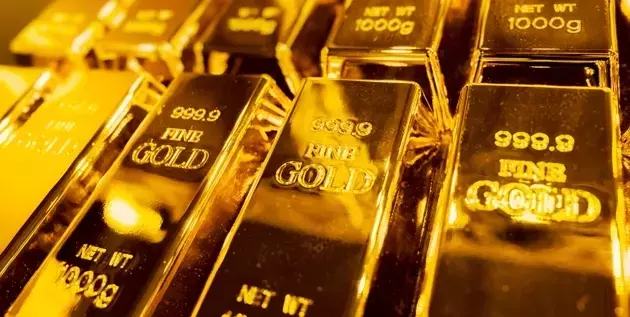
Unearthing Opportunity: The Future of Gold in a Volatile World
The Recent Trajectory of Gold Prices
Gold has experienced a significant downturn from its recent peak, descending from over $5,600 per ounce on the Comex futures market in late January to approximately $4,300 per ounce. This correction has unfolded within a distinct wedge formation, signaling a period of consolidation following its earlier ascent.
Central Banks and the Shifting Landscape of Gold Acquisition
Historically, central banks have been consistent buyers of gold, bolstering its appeal as a safe-haven asset. However, the dynamics of central bank gold purchases have become less predictable. While the second quarter saw a substantial 289 tons acquired, buying patterns now exhibit notable fluctuations, with occasional instances of selling by certain nations. Paradoxically, this less linear behavior in central bank activity lends greater credibility to the long-term bullish argument for gold, suggesting a more organic, rather than artificially inflated, demand.
China's Enigmatic Gold Strategy
China's approach to gold accumulation remains largely shrouded in secrecy. Evidence suggests a continuous, yet officially understated, growth in its gold reserves. Beijing's strategic disengagement from paper gold, favoring physical assets, underscores a structural demand that is not always fully captured by official statistics. This discreet accumulation by a major global power highlights a crucial underlying support for gold prices.
The Interplay of Real Interest Rates and Gold's Valuation
The near-term trajectory of gold prices is heavily influenced by real interest rates. When these rates are positive and elevated, gold tends to face downward pressure as the opportunity cost of holding a non-yielding asset increases. Conversely, a decline in real interest rates, or an earlier-than-anticipated easing of monetary policy by central banks, could provide a significant tailwind for gold, alleviating current pressures and fostering renewed upward momentum.
Key Technical Indicators for Gold's Future Direction
From a technical standpoint, a confirmed breach above the established wedge pattern, specifically within the $4,000 to $4,200 per ounce range, would constitute a strong bullish signal. This breakout would suggest that gold has successfully completed its corrective phase and is poised for further gains. Conversely, a failure to decisively break above this critical resistance level could lead to a deeper consolidation, potentially driving prices lower towards the $3,500 per ounce mark. Investors should closely monitor these technical levels for indications of gold's next significant move.
"}[{"imgs":["https://static.seekingalpha.com/cdn/s3/uploads/getty_images/2247136970/image_2247136970.jpg?io=getty-c-w630"],"title":"The Golden Rebound: Navigating Market Fluctuations and Geopolitical Shifts","abstract":"Gold has seen significant price movements recently, correcting to around $4,300/oz after a peak above $5,600. This article explores the factors influencing gold's price, including evolving central bank demand and the impact of real interest rates. It also delves into China's discreet gold accumulation and analyzes key technical levels to watch for future price action.","keywords":["Gold Price","Central Banks","Real Rates","China Gold","Technical Analysis"],"html":"This analysis delves into the recent movements and future prospects of gold, examining the interplay of central bank policies, real interest rates, and geopolitical influences. We explore the factors contributing to gold's price corrections and its potential for a bullish breakout, providing a comprehensive overview for investors.Unearthing Opportunity: The Future of Gold in a Volatile World
The Recent Trajectory of Gold Prices
Gold has experienced a significant downturn from its recent peak, descending from over $5,600 per ounce on the Comex futures market in late January to approximately $4,300 per ounce. This correction has unfolded within a distinct wedge formation, signaling a period of consolidation following its earlier ascent.
Central Banks and the Shifting Landscape of Gold Acquisition
Historically, central banks have been consistent buyers of gold, bolstering its appeal as a safe-haven asset. However, the dynamics of central bank gold purchases have become less predictable. While the second quarter saw a substantial 289 tons acquired, buying patterns now exhibit notable fluctuations, with occasional instances of selling by certain nations. Paradoxically, this less linear behavior in central bank activity lends greater credibility to the long-term bullish argument for gold, suggesting a more organic, rather than artificially inflated, demand.
China's Enigmatic Gold Strategy
China's approach to gold accumulation remains largely shrouded in secrecy. Evidence suggests a continuous, yet officially understated, growth in its gold reserves. Beijing's strategic disengagement from paper gold, favoring physical assets, underscores a structural demand that is not always fully captured by official statistics. This discreet accumulation by a major global power highlights a crucial underlying support for gold prices.
The Interplay of Real Interest Rates and Gold's Valuation
The near-term trajectory of gold prices is heavily influenced by real interest rates. When these rates are positive and elevated, gold tends to face downward pressure as the opportunity cost of holding a non-yielding asset increases. Conversely, a decline in real interest rates, or an earlier-than-anticipated easing of monetary policy by central banks, could provide a significant tailwind for gold, alleviating current pressures and fostering renewed upward momentum.
Key Technical Indicators for Gold's Future Direction
From a technical standpoint, a confirmed breach above the established wedge pattern, specifically within the $4,000 to $4,200 per ounce range, would constitute a strong bullish signal. This breakout would suggest that gold has successfully completed its corrective phase and is poised for further gains. Conversely, a failure to decisively break above this critical resistance level could lead to a deeper consolidation, potentially driving prices lower towards the $3,500 per ounce mark. Investors should closely monitor these technical levels for indications of gold's next significant move.
