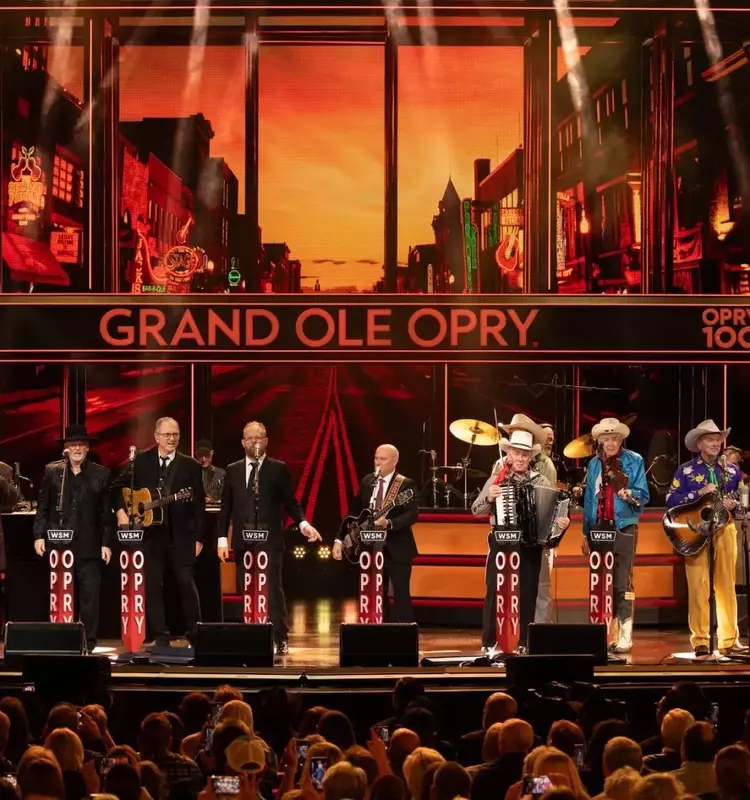
The Grand Ole Opry, a revered institution in American music, recently marked its centennial with a magnificent, star-studded celebration in Nashville. This landmark event not only honored a century of unparalleled musical heritage but also showcased the dynamic evolution of country music, blending deep-rooted traditions with contemporary artistry. The evening was a profound affirmation of the Opry's enduring legacy, its unwavering influence on countless artists, and its cherished place in the hearts of music enthusiasts worldwide.
Opry's Centennial Gala: A Night of Musical Tributes and Backstage Camaraderie
On a memorable Friday night in Nashville, the Grand Ole Opry officially celebrated its 100th anniversary with an unforgettable event that seamlessly blended a grand public performance with an intimate backstage gathering. The festivities began with a toast led by the venerable Whispering Bill Anderson, the Opry’s longest-serving member with 64 years of dedication. Surrounded by fellow artists, the 88-year-old raised his glass, proclaiming, “To 1925 and all that was; to 2025 and all that is, and to a hundred years from tonight for all that there may be, long live the Grand Ole Opry.” This poignant moment underscored the deep reverence and familial bond shared among the Opry community.
The concert, held precisely a century after the inaugural Opry performance, commenced with Ricky Skaggs playing “Tennessee Wagoner” on the very same fiddle used by Uncle Jimmy Thompson at that historic first show. The stage then welcomed a diverse array of artists who paid tribute to the Opry’s foundational genres: country, bluegrass, gospel, and comedy. Performers such as Scotty McCreery, Mandy Anderson, T. Graham Brown, and Mark Wills delivered a stirring rendition of George Jones’ “Who’s Gonna Fill Their Shoes,” setting a reflective yet hopeful tone for the evening. Lorrie Morgan captivated the audience with “Something in Red,” while Kathy Mattea and Suzy Bogguss exchanged acoustic versions of their signature songs. Comedians Gary Mule Deer and Henry Cho added bursts of laughter, and Marty Stuart led the Tennessee Mafia Jug Band and the Opry Square Dancers in lively bluegrass sets.
Behind the scenes, the event unfolded with remarkable precision, a testament to years of meticulous planning led by show producer Nicole Judd. The “machine-like production” visible to the audience contrasted sharply with the warm, reunion-like atmosphere backstage. This private side of the Opry, often unseen by fans, is where artists like Vince Gill, affectionately known as “Vinnie Acuff” — a nod to his predecessor Roy Acuff — held court, greeting colleagues and sharing lighthearted jokes. The dressing rooms housed a treasure trove of country music artifacts, from Minnie Pearl’s hat to Scotty McCreery’s induction footwear, offering a glimpse into the rich history that permeates every corner of the venue. Jamey Johnson reflected on his journey, stating, “When I played the Opry the first time, all of a sudden there was the time before and the time after,” highlighting the transformative power of performing on its sacred stage. Pam Tillis, receiving a photograph of herself and her father Mel Tillis at the Opry, teared up, remarking, “In the words of Hank Williams, Jr., I’m carrying on a family tradition — just not the stoned part.”
Opry Vice President Dan Rogers emphasized the institution’s forward-looking vision, noting initiatives like the “OpryNext” project, which provides a platform for rising stars such as Kaitlin Butts, 49 Winchester, and Wyatt Flores. These efforts are crucial to nurturing the next generation of talent, ensuring that the Opry will continue to thrive for another century. The evening culminated in a powerful moment when Vince Gill, a true bridge between the Opry’s past and present, performed “He Stopped Loving Her Today,” a song voted by fans as country music’s greatest, delivering a heartfelt rendition that resonated deeply with everyone present.
The centennial celebration of the Grand Ole Opry served as a poignant reminder of the enduring power of music, tradition, and community. It highlighted how an institution can honor its rich past while actively shaping its future, inviting new voices to join the chorus and ensuring that the circle remains unbroken for generations to come. The blend of seasoned legends and emerging talents created an atmosphere of both reverence and renewal, proving that the Opry is not just a stage, but a living, breathing testament to the soul of country music.