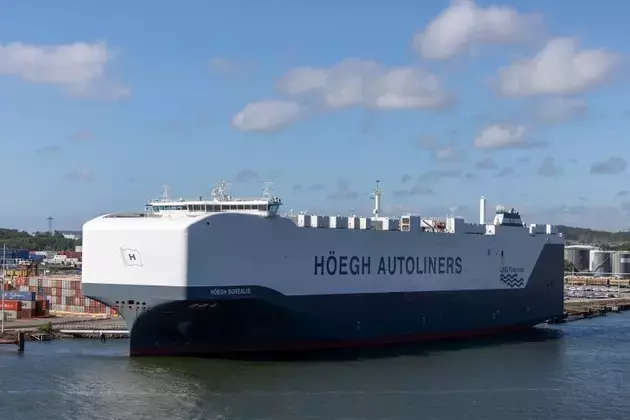
Höegh Autoliners, a prominent entity in the Roll-on/Roll-off (Ro-Ro) shipping industry, has distinguished itself through its advanced, eco-conscious Aurora-class vessels and a robust financial position. While the company enjoys the stability of extensive long-term contracts and a commitment to shareholder returns, it must navigate the complexities of significant leverage and the cyclical nature of its market. Despite the current favorable industry climate, a projected slowdown, influenced by an overabundance of vessel orders, a deceleration in the electric vehicle and broader automotive sectors, and heightened competition, signals a potential shift towards less favorable conditions. This confluence of factors leads to a perception of overvaluation for the stock, with forecasts indicating a decline in future earnings and insufficient upside potential when weighed against associated risks.
Höegh Autoliners' strategic focus on sustainability and its strong contractual foundations provide a competitive edge in the global shipping landscape. However, the anticipated sector-wide challenges necessitate a cautious outlook. The company's future performance will largely depend on its ability to mitigate these external pressures and adapt to evolving market dynamics, ensuring long-term resilience and value creation for its stakeholders.
Höegh Autoliners: Market Position and Financial Strengths
Höegh Autoliners, a key player in the Roll-on/Roll-off (Ro-Ro) shipping sector, distinguishes itself through its cutting-edge, ESG-compliant Aurora-class vessels and a robust financial framework. The company benefits from a solid foundation of long-term contracts, which secure approximately 85% of its shipping volume, ensuring stable revenue streams and double-digit yields. This contractual stability, combined with attractive shareholder remuneration policies, underscores its strong market position.
The company's commitment to environmental, social, and governance (ESG) principles, exemplified by its advanced fleet, enhances its appeal in a global market increasingly prioritizing sustainability. However, despite these strengths, Höegh Autoliners faces inherent challenges, including substantial financial leverage and exposure to the unpredictable cyclicality of the shipping industry. While current market conditions are generally favorable, these underlying risks necessitate careful monitoring.
Navigating Cyclical Risks and Future Outlook
Despite its current advantages, Höegh Autoliners is poised to encounter significant industry headwinds that could temper its performance. The market is increasingly threatened by an oversupply of new vessel orders, a potential deceleration in the electric vehicle and broader automotive manufacturing sectors, and intensifying competition within the Ro-Ro segment. These factors collectively point towards a probable downturn in the sector, challenging the company's sustained growth and profitability.
Given these impending challenges, the stock is currently assessed as overvalued. Earnings forecasts indicate a downward trend, and the potential returns do not adequately compensate for the associated risks. Therefore, a 'HOLD' rating is assigned, with a target price reflecting a cautious outlook on the company's prospects amidst an evolving and potentially less favorable market environment. Investors are advised to consider these cyclical risks and the projected softening of market dynamics when evaluating their positions in Höegh Autoliners.
