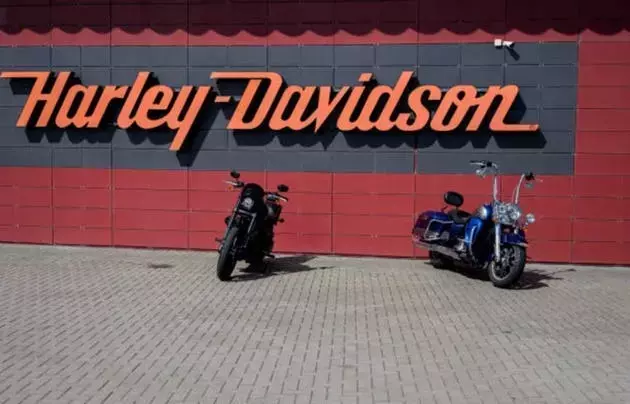
Harley-Davidson, Inc. (HOG) is an iconic motorcycle manufacturer facing tariff impact, secular decline, an aging customer base, and declining market shares. The company's stock continues to be heavily shorted despite being undervalued—even for a declining company. This report revisits the investment thesis, focusing on the potential for a short squeeze and the company's intrinsic value.
Harley-Davidson's Undervaluation and Short Interest
Harley-Davidson, a prominent motorcycle manufacturer, is currently navigating a challenging landscape marked by diminishing market share, an aging consumer demographic, and persistent industry-wide decline. Despite these hurdles, the company's equity appears substantially undervalued. A significant factor contributing to its depressed stock price is the extensive short interest, which currently stands at 14% of its float. This high level of short selling suggests that the market's current valuation of HOG is predominantly influenced by bearish sentiment rather than its underlying financial health.
In a strategic move to bolster its financial position and enhance shareholder value, Harley-Davidson recently forged alliances with KKR and PIMCO. These partnerships have been instrumental in unlocking approximately $1 billion in discretionary cash. This newfound liquidity has enabled the company to aggressively pursue share repurchases, a clear signal of management's confidence in the stock's intrinsic value and its commitment to returning capital to shareholders.
The upcoming release of its first-quarter earnings and a detailed strategic plan presentation are highly anticipated events. These announcements have the potential to act as significant catalysts, possibly leading to a re-evaluation of HOG's stock price or even triggering a substantial short squeeze. A short squeeze occurs when a stock's price surges, forcing short-sellers to buy shares to cover their positions, thereby driving the price even higher. Given the current high short interest, such an event could lead to a rapid upward movement in HOG's valuation.
Furthermore, the company's substantial net cash assets provide a robust downside protection, mitigating risks for investors. This financial strength acts as a buffer against potential market volatility and reinforces the argument that HOG's current trading price does not fully reflect its inherent value.
From an investment perspective, Harley-Davidson presents a compelling case for investors looking for undervalued assets with a potential for a significant upside. The combination of its deeply discounted valuation, high short interest, strategic financial maneuvers, and robust balance sheet indicates that the market may be overlooking its recovery potential.
The situation with Harley-Davidson highlights a crucial dynamic in financial markets: the interplay between fundamental value and market sentiment. While the company faces legitimate long-term challenges, its immediate prospects are heavily influenced by the actions of short-sellers. The confluence of strategic financial management and impending positive news could shift market perception, potentially leading to a re-rating that aligns its stock price more closely with its true value.
The company's ability to generate significant discretionary cash through strategic partnerships, coupled with an active share repurchase program, underscores a proactive management approach. This approach, combined with the potential for a short squeeze and the protection offered by its net cash position, paints a picture of a company poised for a potential turnaround in market perception, despite ongoing operational challenges.
This case of Harley-Davidson serves as a reminder that market prices do not always perfectly reflect intrinsic value, especially when influenced by strong bearish sentiment. For astute investors, such discrepancies can present opportune moments for engagement.
