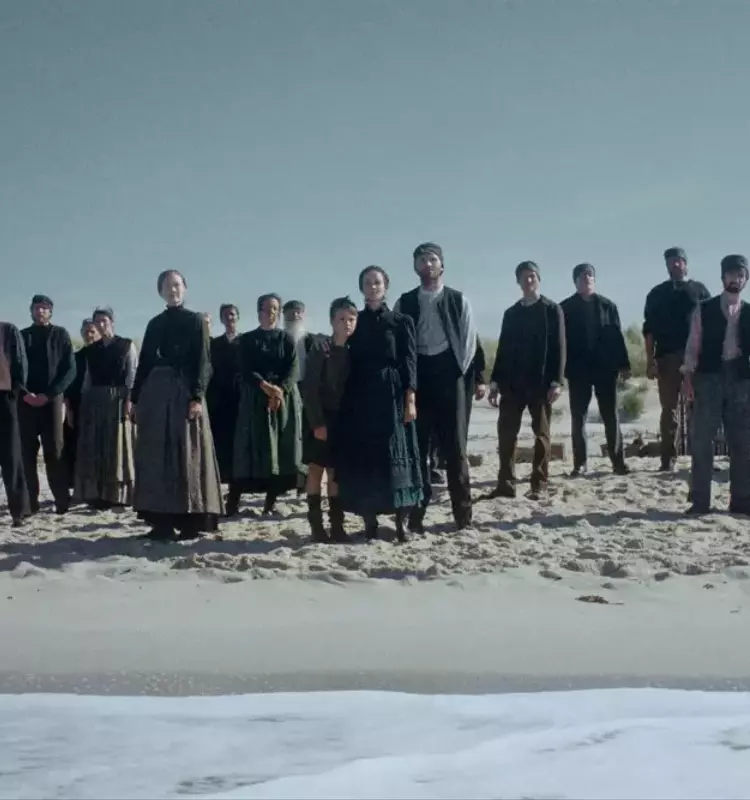
"Trial of Hein," directed by Kai Stänicke, presents an intriguing Brechtian drama that explores the intricate relationship between memory, identity, and societal perceptions. Set in a deliberately ambiguous fishing village, the film centers on Hein's return after a 14-year absence, only to find himself subjected to a rigorous trial by the community elders who doubt his very identity. This compelling narrative delves into the subjective nature of recollection, highlighting how individual experiences and collective narratives can diverge significantly. Stänicke masterfully employs theatrical elements and a nuanced approach to portray Hein's struggle to reconcile his past with the villagers' fragmented memories, offering a profound commentary on self-preservation and the human condition. The film, despite some minor structural imperfections, captivates with its thought-provoking themes and an invigorating lead performance, ultimately delivering a poignant exploration of how past events shape present realities.
The narrative arc of "Trial of Hein" revolves around the protagonist's journey of self-discovery amidst a skeptical community. His quest to reaffirm his identity becomes a metaphor for anyone grappling with a past that is either forgotten or intentionally reshaped by others. The film's unique setting, with its deliberately artificial backdrops and stage-like interiors, reinforces its Brechtian undertones, encouraging viewers to critically analyze the construction of truth and memory. Through Hein's interactions with his estranged mother, childhood friends, and the village elders, the film meticulously dissects how personal and collective memories are formed, distorted, and ultimately, how they influence one's sense of self. The trial itself serves not just as a plot device, but as a theatrical examination of truth, where the audience, much like the villagers, is invited to question and interpret the presented narratives. This makes for a deeply engaging and intellectually stimulating cinematic experience.
Theatricality and the Quest for Self
Kai Stänicke's initial directorial endeavor, "Trial of Hein," crafts a captivating period piece within the confines of an isolated fishing community, presenting a timeless yet deeply relevant exploration of memory and personal identity. The film introduces its peculiar environment through the eyes of Heinrich, known as Hein, a gaunt young man returning after a prolonged absence of 14 years. His reception is one of skepticism; no one in the village, not even his mother, Mechthild, who suffers from advanced dementia, seems to recognize him. Consequently, Hein is compelled to undergo a trial orchestrated by the village's elders to substantiate his claims of identity. This central premise sets the stage for a drama that, despite occasionally overstating its thematic intentions, masterfully investigates the essence of personal experience and recollection with an intimate and compelling narrative.
The unique visual presentation, characterized by the use of exterior flats for dwellings and stage-like interiors, highlights the film's deliberate Brechtian influence. This aesthetic choice encourages a critical perspective on the characters' public personas and concealed emotions, particularly in the lead performance by Paul Boche. His portrayal of Hein as a man hardened by years of urban wandering, now seeking a true understanding of himself, is profoundly moving. The narrative skillfully interweaves Hein's internal struggles with the villagers' diverging perspectives on his past, showcasing how individual and collective memories are often at odds. The film's strength lies in its ability to probe the complexities of self-preservation and the longing for belonging, transforming Hein's personal ordeal into a universal human experience. This blend of stylized realism and profound introspection makes "Trial of Hein" a significant and memorable cinematic achievement.
Memory's Shifting Sands: A Community's Verdict
The core of "Trial of Hein" lies in its exploration of how memory shapes perception, particularly when personal recollections confront a community's collective narrative. Hein's struggle to be recognized by his former village, where his own sister is too young to remember him, forces him to rely on childhood friends Greta and Friedemann. While Greta unequivocally supports his identity, Friedemann's evasiveness hints at a hidden past, revealing the film's underlying theme of navigating a closeted youth. This central narrative, inspired by Stänicke's personal experiences as a queer filmmaker, frames the entire film as an intricate interrogation of truth and self-discovery. Despite the handheld camera work, each frame is meticulously composed, showcasing an impressive formal control that enhances the film's deliberate theatricality.
The discrepancies in the villagers' memories, where most recall Hein's childhood as idyllic while he remembers a bleaker reality, form the crux of the drama. Stänicke deftly avoids simplistic moralizing, instead offering a nuanced portrayal where both Hein's longing and his instinct for self-preservation inform his recollections. The village courtroom, designed as an amphitheater, emphasizes the performative aspect of the trial, compelling both participants and viewers to look beyond surface appearances. While some narrative elements, such as a recurring card game metaphor, occasionally feel redundant, the film's overall impact is undeniable. As the story progresses, it gains a piercing intensity, using its intentionally artificial sets and subtle symbolic gestures to interrogate the socio-political truths the village grapples with. The film ultimately transcends its period setting, offering a contemporary commentary on the dangers of conservatism, xenophobia, and the desperate search for gentleness and understanding in a world often hostile to non-conformity. Stänicke's quest to nurture this gentleness, despite the imperfections, makes "Trial of Hein" a profoundly worthwhile dramatic journey into the depths of human memory and transformation.
