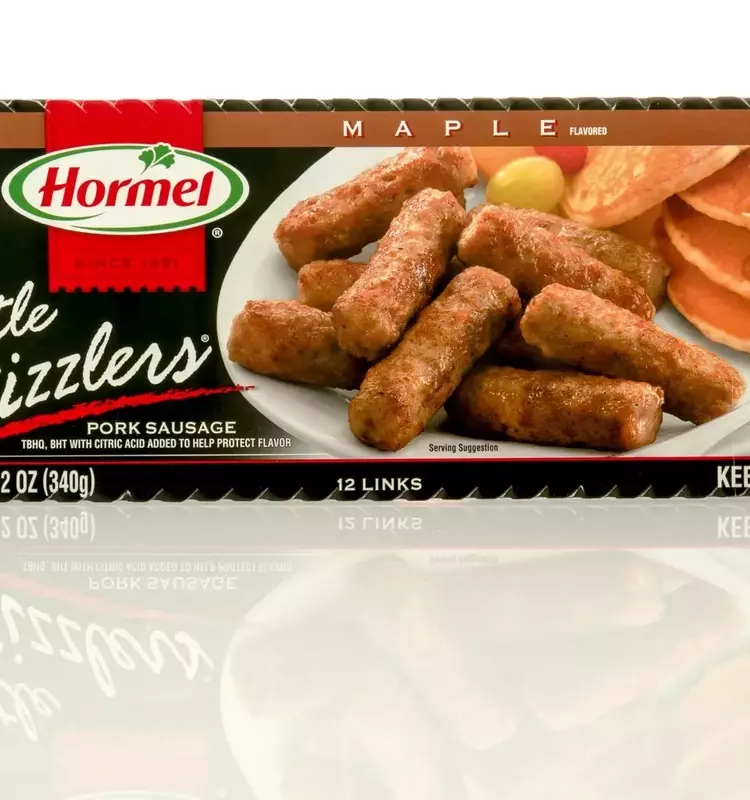
Hormel Foods Corporation, a multinational entity specializing in food processing, boasts a legacy spanning over a century since its establishment in 1891. With a market capitalization of $13 billion and a global workforce of approximately 20,000 individuals, Hormel has solidified its position as a giant in the food industry. Notably, the company holds the prestigious title of 'Dividend King,' a testament to its unparalleled achievement of increasing dividends for 60 consecutive years, a record that underscores its financial resilience and commitment to shareholder returns.
The financial health of Hormel Foods is remarkably strong, characterized by a prudent approach to debt management and robust profitability indicators. The company's stock is currently trading at a price-to-earnings ratio considerably lower than its historical averages, hinting at an attractive entry point for value-oriented investors. This potential undervaluation, combined with its consistent dividend growth, positions Hormel as a compelling consideration for those focused on long-term investment strategies.
A Legacy of Shareholder Returns and Financial Prudence
Hormel Foods has carved out an impressive reputation in the financial markets, primarily due to its exceptional track record of dividend growth. The company has not only achieved but has more than doubled the criteria for being recognized as a 'Dividend Aristocrat,' extending its dividend increases to six decades. This consistent commitment to returning value to shareholders is deeply embedded in Hormel's corporate strategy, making it a cornerstone for investors prioritizing stable income and long-term capital appreciation. Such a prolonged history of dividend hikes speaks volumes about the company's enduring profitability and its ability to navigate various economic cycles while maintaining financial discipline.
Beyond its dividend prowess, Hormel Foods demonstrates a highly stable financial structure. The company maintains a healthy long-term debt-to-equity ratio, indicating a conservative leverage policy and a strong balance sheet. Furthermore, its interest coverage ratio, which signifies the company's ability to meet its interest obligations, is robust, providing assurance of its financial stability. These metrics collectively paint a picture of a financially sound enterprise, capable of sustaining its operations and dividend payouts even amidst challenging market conditions, thereby offering a degree of safety and predictability for its investors.
Assessing Hormel's Current Market Standing and Future Outlook
In the current market landscape, Hormel Foods appears to be trading at a compelling valuation. Its price-to-earnings ratio, based on the midpoint of its adjusted earnings per share guidance for the current fiscal year, is notably below its historical averages. This suggests that the market might be underpricing Hormel's intrinsic value, presenting a potential opportunity for investors. A lower P/E ratio, especially for a company with such a strong and reliable financial history, often indicates that the stock is trading at a discount relative to its earnings potential and past performance. This situation could attract investors looking for quality assets at reasonable prices, anticipating a potential re-rating by the market.
Looking ahead, the outlook for Hormel Foods remains positive, albeit with modest growth expectations. Analyst consensus projects mid-single-digit growth in earnings per share over the next few years, reflecting a steady, rather than explosive, expansion trajectory. This steady growth, coupled with the company's commitment to maintaining its dividend growth streak, underscores its appeal as a defensive investment. For investors, this implies a reliable source of income and gradual capital appreciation, making Hormel a suitable candidate for a diversified portfolio, particularly for those with a focus on income generation and long-term stability. The combination of an attractive valuation and a predictable growth path reinforces Hormel's position as a noteworthy investment in the food processing sector.
