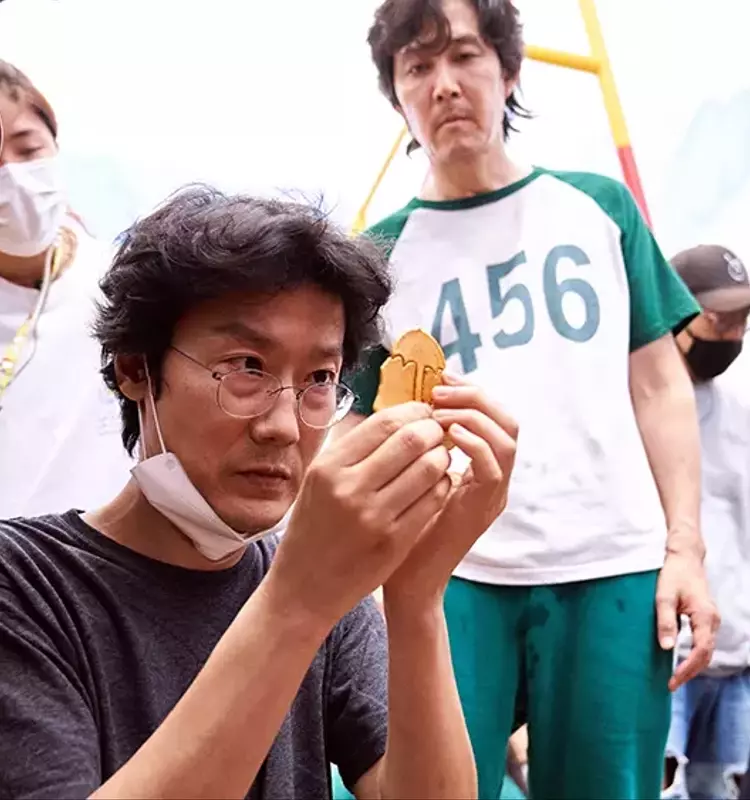
In a recent masterclass at the Asian Film Awards in Hong Kong, acclaimed director Hwang Dong-hyuk shared fascinating insights into the genesis and global triumph of his hit series 'Squid Game'. He revealed that his initial pitch for the show a decade prior was met with skepticism, with one person even questioning the absurdity of his concept. Despite this, Hwang saw the comment as a positive sign. The idea for the series originated during a challenging personal period when his previous film projects faced setbacks and he was struggling financially. Immersed in survival game comics, he envisioned a uniquely Korean narrative, focusing on ordinary individuals navigating simple childhood games with their lives at stake, a stark contrast to typical survival stories featuring superhuman protagonists.
Hwang's perseverance paid off as the global landscape began to mirror the themes of 'Squid Game'. After a decade of his script languishing, a re-evaluation in 2018 convinced him that the world's intensified competition, widening wealth disparities, and heightened social tensions had made his once 'absurd' narrative shockingly relevant. The emergence of Netflix Korea provided the perfect platform, granting his vision a global audience, which he believed was crucial given the survival genre's limited appeal in South Korea. The extended series format, unlike his initial two-hour film concept, allowed for richer character development, such as the pivotal figure of Oh Il-nam, and the subtle emotional underpinnings of the final episode. He also adapted several games for international viewers, opting for universally understood challenges like marbles and honeycomb carving, while deliberately designing the iconic 'Red Light, Green Light' doll to evoke a surprising sense of menace from a childhood image.
Hwang also delved into his broader film career, which began after he abandoned journalism, feeling the Korean press was too conservative. His journey into filmmaking led him to USC, where he was the only one in his class to become a feature film director. His works include 'My Father', inspired by a personal family history of adoption, and 'Silenced', a harrowing film that spurred real-world legal reform despite its heavy emotional toll on him. In a lighter vein, 'Miss Granny' was a direct response to the intensity of 'Silenced', a multi-generational comedy honoring his mother and grandmother. He expressed admiration for classic Hong Kong cinema, acknowledging its profound impact on his generation of Korean filmmakers. Hwang attributed Korea's cultural global dominance not to mystique, but to a long-standing export-oriented mindset, where artists, like other industries, increasingly cater to international audiences.
Hwang's journey exemplifies the power of artistic vision and perseverance. His ability to transform personal struggles into universally resonant narratives underscores the importance of storytelling that reflects societal realities. Aspiring filmmakers should draw inspiration from his emphasis on lived experience and authentic storytelling over mere technical proficiency. By embracing diverse perspectives and pushing creative boundaries, creators can craft works that not only entertain but also provoke thought, foster empathy, and ultimately contribute to a more interconnected global culture, demonstrating that true impact often arises from a deep understanding of the human condition and a willingness to challenge conventional norms.
