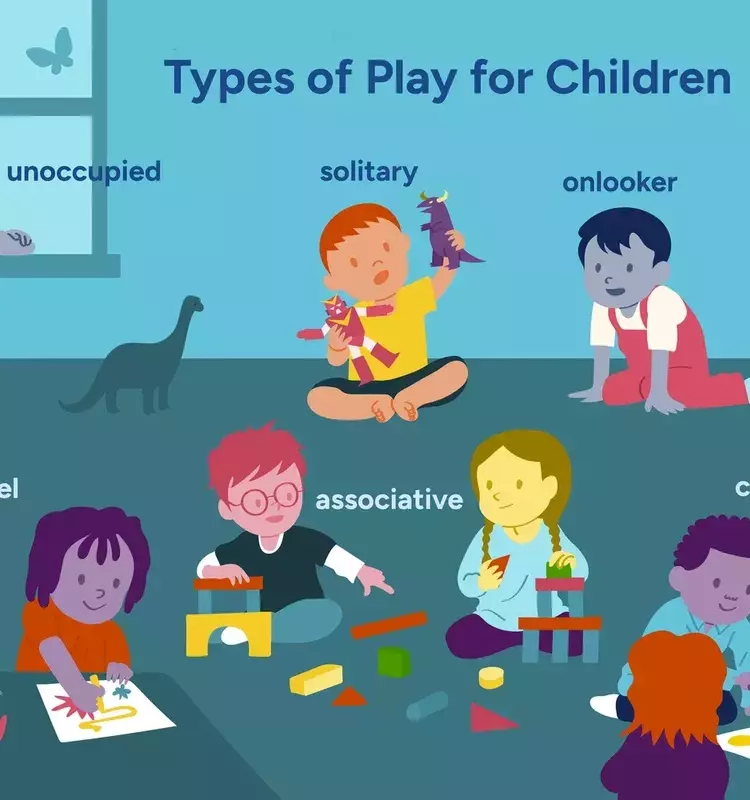
Play is not merely a pastime for children; it is a fundamental pillar supporting their growth across all developmental domains. From infancy through early childhood, engaging in diverse forms of play is essential for honing social interactions, cognitive abilities, physical coordination, and emotional regulation. As children navigate the world, play acts as a crucial medium for learning, problem-solving, and creative expression. This exploration delves into the structured stages of play recognized in child development, along with other significant play categories that contribute to a well-rounded and confident child.
The Transformative Power of Play in Childhood Development
Child development experts emphasize that play is intrinsically linked to a child's understanding of their environment and their capacity to adapt to various social scenarios. Dr. Lauren Starnes, a leading authority in child development, highlights how play enables young children to internalize social situations and experiment with different roles, thereby constructing a coherent view of the world around them. The journey through play begins at birth and evolves significantly by the age of five, encompassing both sequential stages and various thematic play types.
The initial developmental phases of play, as delineated by sociologist Mildred Parten, chart a child's increasing engagement with their surroundings and peers:
- Unoccupied Play (0–3 months): In this earliest stage, infants primarily observe their environment and make random movements, laying the groundwork for future development by fostering curiosity and sensory awareness. Parents can stimulate this stage by offering colorful visuals and consistent verbal interaction.
- Solitary Play (0–2 years): During this period, children prefer to entertain themselves independently, focusing on their immediate activities. This solo engagement is vital for developing self-reliance, imagination, and motor skills. Providing a variety of toys and books in their play space encourages this critical phase.
- Onlooker Play (around 2 years): Toddlers at this stage watch other children play without actively participating. This observation helps them learn social cues and build confidence before joining group activities. Encouraging children to watch older siblings or adults engage in tasks can foster this type of play.
- Parallel Play (2+ years): Children engaged in parallel play occupy the same space and often use similar toys but do not interact directly. This stage is a precursor to social interaction, teaching children about coexistence and shared experiences without demanding direct collaboration. Offering multiple sets of popular toys can minimize conflict and facilitate this play.
- Associative Play (3–4 years): As children reach ages three or four, their interest in peers grows, leading to associative play. They engage with others in activities but may not work towards a common goal. This fosters social skills, cooperation, language development, and conflict resolution. Regular playdates and diverse activities are beneficial.
- Cooperative Play (4+ years): This advanced stage involves children actively playing together towards a shared objective, such as building a fort or playing structured games. It refines verbal communication, teamwork, empathy, and compromise, which are crucial for social and emotional maturity. Encouraging family games and group activities supports this development.
Beyond these structured stages, other play types further enrich a child's development:
- Symbolic Play (around 18 months onwards): Children use objects to represent other things, such as a marker becoming a cell phone. This imaginative play enhances creativity and abstract thinking. Adults can encourage this by demonstrating symbolic uses for everyday items.
- Dramatic or Fantasy Play: This form of play heavily relies on imagination, encompassing activities like dress-up or role-playing different scenarios. It allows children to mimic real-world behaviors and explore various identities. Providing costume boxes and diverse props fuels this imaginative exploration.
- Competitive Play: Involving structured activities with rules, competitive play teaches children about sportsmanship, taking turns, following instructions, and managing setbacks. Family game nights or organized sports are excellent ways to encourage this.
- Physical Play: This includes any activity involving body movement, such as dancing, playing tag, or riding scooters. It is crucial for developing fine and gross motor skills, balance, and hand-eye coordination. Impromptu physical activities with caregivers can be highly beneficial.
- Constructive Play: Children build or create things using materials like blocks or sand. This organized approach to creation fosters persistence, planning, creativity, and logical thinking, and introduces basic scientific and mathematical concepts. Providing various building materials and asking open-ended questions can ignite their innovative spirit.
Recognizing the diverse forms of play and supporting children through each stage is paramount for nurturing their comprehensive development. Each play experience, whether solitary or cooperative, imaginary or physical, contributes to building a child's confidence, resilience, and capacity to navigate the complexities of the world. As parents and educators, our role is to provide rich environments and encouragement, allowing children the freedom to explore, learn, and grow through the universal language of play. This holistic approach ensures that children not only acquire essential skills but also develop into well-adjusted, imaginative, and socially adept individuals ready to face future challenges.
