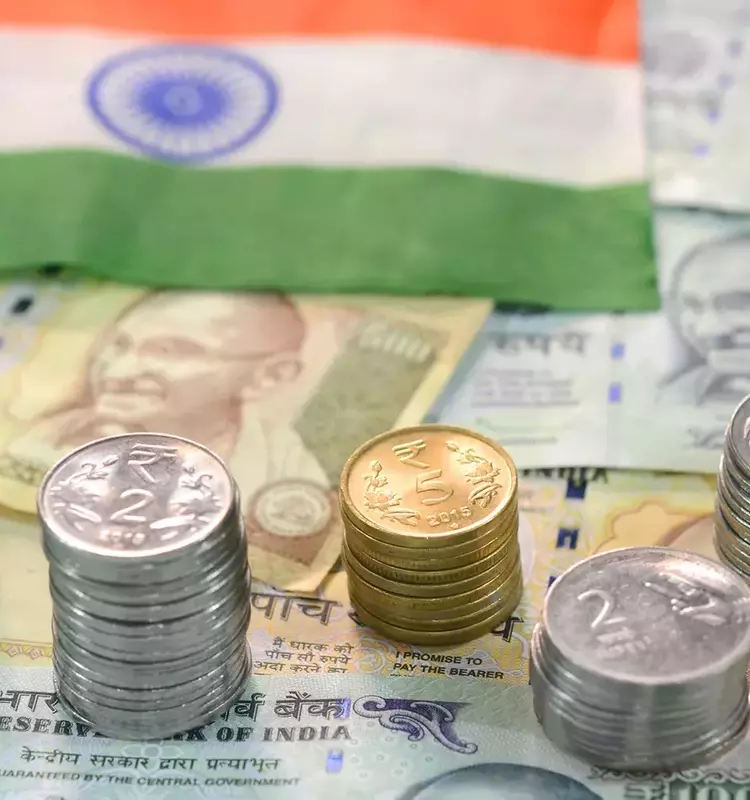
India's economy is a global powerhouse, consistently ranking among the fastest-growing worldwide. Its remarkable expansion is driven by a dynamic interplay of service, industrial, and agricultural sectors. Once a centrally planned economy after gaining independence in 1947, India has successfully transitioned to a liberalized mixed economy. This evolution has fostered a robust private sector and increased international trade, propelling the nation's GDP from $288 billion in 1992 to an estimated $4.15 trillion by 2026. Despite a temporary setback during the COVID-19 pandemic, the economy quickly rebounded, demonstrating its inherent resilience and capacity for sustained growth. Today, India is a significant global player, attracting considerable international investment and continually improving living standards for its population.
The Reserve Bank of India (RBI), established in 1935, plays a crucial role in maintaining financial stability through monetary policy and currency management. India's major exports, primarily refined petroleum products, along with telephones, packaged medicines, diamonds, and jewelry, underscore its diverse manufacturing capabilities. The United States remains India's largest export market, while China is its biggest import partner. This intricate network of trade relationships solidifies India's position in the global economic landscape. The nation's commitment to economic growth has led to a significant reduction in extreme poverty and a steady improvement in overall standards of living, with real GDP projected to increase by 6.5% in the 2026 fiscal year, according to the International Monetary Fund.
The Evolution of India's Economic Structure and Key Drivers
India's economic trajectory has seen a profound transformation since its independence. Initially operating as a centrally planned economy, the government managed most aspects of production and distribution. This approach, while aiming for industrial growth, proved unsustainable in the long run. The pivotal shift in 1991 towards economic liberalization opened doors for the private sector and integrated India more deeply into the global economy. This transition fostered a mixed economic system where private enterprises and state-controlled sectors coexist, allowing citizens to pursue diverse occupations and establish businesses while the government retains control over strategic areas like defense and banking. This adaptability has been crucial to India's sustained economic expansion, positioning it as a significant force in international commerce.
The nation's economic success is primarily attributable to its three core sectors: service, industrial, and agricultural. The service sector, particularly information technology and business process outsourcing, has grown exponentially, leveraging India's large, English-speaking, and skilled workforce. Giants like Intel, Meta, and Microsoft have a significant presence, further boosting this sector. Industrial production, encompassing petrochemicals, pharmaceuticals, automotive manufacturing, and mining, also contributes substantially to the GDP. Despite a relative decline in its share of GDP, agriculture remains vital, providing revenue and employment to millions. Challenges in agricultural infrastructure, such as irrigation and storage, are being addressed to minimize waste and enhance efficiency. These combined efforts highlight India's multi-faceted economic development and its ongoing commitment to inclusive growth.
Sectoral Performance and Global Economic Integration
India's service sector has emerged as a dominant force, growing from approximately 39% of the economy in 1960 to an estimated 56.4% of gross value added by 2026. This exponential growth is largely due to India's considerable pool of skilled, English-speaking professionals, making it a preferred destination for telecommunications, IT, and software development, as well as business process outsourcing (BPO). Major global corporations have established significant operations in India, capitalizing on cost advantages, scalability, and a competent workforce. BPO, in particular, has witnessed rapid expansion since the mid-1990s, playing a crucial role in the IT-enabled services industry by offering efficiencies and risk mitigation for international businesses.
Beyond the primary and secondary sectors, other service industries significantly bolster India's economy. The retail sector, a massive market for both traditional consumer goods and agricultural products, confronts challenges related to wastage due to inadequate storage and transportation. The government is actively seeking policy, technological, and infrastructural solutions to mitigate these losses. Furthermore, India's energy sector, though heavily reliant on fossil fuels, is increasingly diversifying into hydroelectric, wind, solar, and nuclear power. Tourism, both leisure and medical, also contributes substantially to the GDP, drawing millions of foreign visitors annually. Medical tourism, driven by affordable yet high-quality healthcare, is a rapidly growing segment, attracting patients globally for various medical procedures. This diverse economic base, coupled with strategic global trade partnerships, underscores India's dynamic role in the international economic arena.
