The Indispensable Role of Accounting Software in Modern Business Operations
Finance

The Indispensable Role of Accounting Software in Modern Business Operations

authorBy Lisa Jing
DateMay 13, 2026
Read time2 min

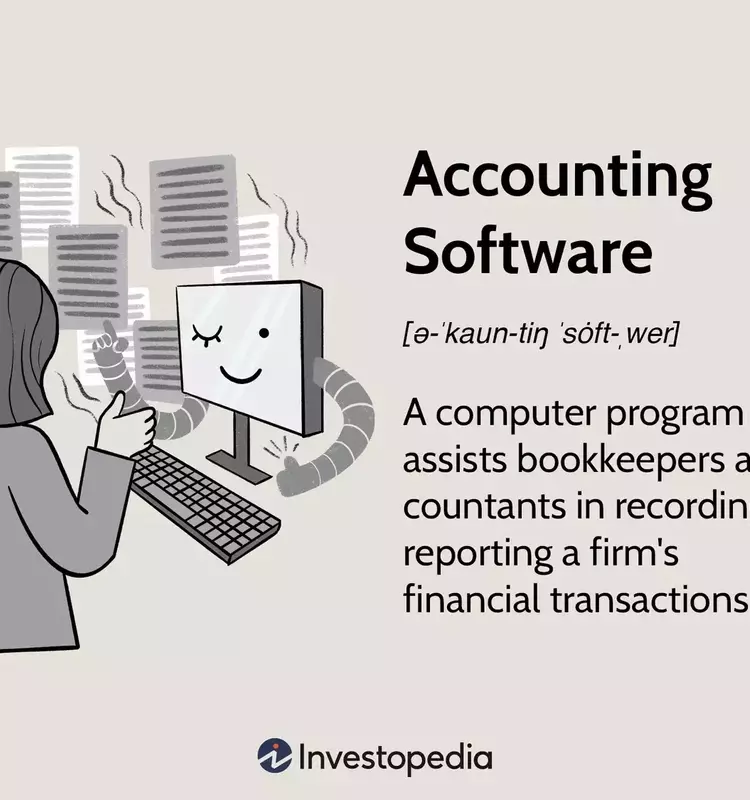
Modern enterprises increasingly rely on sophisticated accounting software to streamline their financial operations. This technology automates the recording of transactions and the generation of reports, leading to enhanced efficiency and reduced operational expenditures. Such digital tools are vital for organizations across the spectrum, from small and medium-sized businesses to large corporations, in making astute financial judgments. Customized solutions are often adopted by larger entities to integrate vast datasets from diverse departments, while smaller businesses typically opt for ready-to-use software packages.

The utility of accounting software extends beyond mere automation; it transforms financial data management. By facilitating meticulous tracking of financial movements and providing immediate reporting and analysis, it replaces traditional manual methods that involved extensive journal entries. This automation significantly lowers accounting costs and supports more timely and effective financial decision-making. Furthermore, the capacity to store vast amounts of data electronically reduces the need for physical storage, contributing to savings in office space and associated expenses. The accessibility of financial information through this software simplifies audit processes, especially for historical data, benefiting both internal reviews and external examinations by regulatory bodies.

Choosing the right accounting software is a strategic decision that depends on a company's unique needs. Available options range from popular platforms like Intuit’s QuickBooks for smaller enterprises to comprehensive systems from Microsoft, SAP, and Oracle for larger organizations. Key features to consider include expense reporting, inventory management methods (such as LIFO and FIFO), point-of-sale integration, batch processing, document management, and multi-currency transaction capabilities. Deployment options vary, including on-premises installations, Software as a Service (SaaS) models, or cloud-based solutions. Pricing structures are also flexible, with flat rates, time-based, per-user, or tiered models. Ultimately, the successful integration of accounting software can significantly enhance a firm's financial agility and accuracy.

Implementing advanced accounting software can unlock substantial benefits for any organization, fostering transparency, accountability, and strategic growth. By embracing these technological advancements, businesses can not only optimize their financial processes but also empower their teams with the insights needed to navigate complex economic landscapes and achieve long-term prosperity.

More Articles
Finance
State-Owned Enterprises: Role in Global Economies and Public Service
State-owned enterprises (SOEs) are entities established by governments to conduct commercial activities. These organizations can be fully or partially government-owned and are instrumental in national economies worldwide. While many aim for profitability, some SOEs prioritize public service, operating at a loss with government backing. They balance commercial objectives with their role in national development and public welfare.
By Fareed ZakariaMay 13, 2026
Finance
Meta's WhatsApp Monetization Strategy: A New Era of High-Margin Revenue
Meta Platforms is set to introduce WhatsApp Plus, a premium subscription service, aiming to leverage WhatsApp's massive user base of 3.3 billion for high-margin recurring revenue. Priced at approximately $2.99 per month, this initiative could generate an estimated $2 billion in annual revenue with nearly 100% gross margins at a modest 1.5% conversion rate. This move, while seemingly small compared to Meta's overall revenue, could significantly boost operating income and reshape market perceptions.
By Strive MasiyiwaMay 13, 2026
Finance
Tobin's Q Ratio: Understanding Market Valuation and Asset Replacement Costs
Tobin's Q ratio is a financial metric that compares a company's market value to the replacement cost of its assets. A Q ratio above 1 suggests overvaluation, while a ratio below 1 indicates undervaluation. This metric helps assess whether a company or an entire market is priced fairly, but accurately estimating asset replacement costs, especially for intangible assets, remains a challenge.
By Mariana MazzucatoMay 13, 2026
Finance
Christy Walton: A Philanthropic Legacy
Christy Walton, a Walmart heiress, is renowned for her significant philanthropic contributions, primarily focusing on advancing children's education and environmental conservation. Despite her private nature, her impactful work through various organizations highlights her commitment to societal betterment. She also has a notable involvement in film production, further diversifying her contributions.
By Morgan HouselMay 13, 2026
Finance
Navigating the Semiconductor Market: Opportunities and Risks Amidst AI Boom
This analysis delves into the dynamic semiconductor industry, highlighting the current market momentum driven by AI and the potential for a correction. It examines key players like Nvidia, Marvell, Broadcom, Intel, AMD, and ARM, assessing their strategic positions, earnings expectations, and competitive landscapes. The discussion also explores the impact of macroeconomic factors, supply chain constraints, and the evolving CPU-GPU ratio in AI computing.
By Michele FerreroMay 13, 2026