The Indispensable Role of Clearinghouses in Financial Market Stability
Finance

The Indispensable Role of Clearinghouses in Financial Market Stability

authorBy Strive Masiyiwa
DateJul 22, 2026
Read time3 min

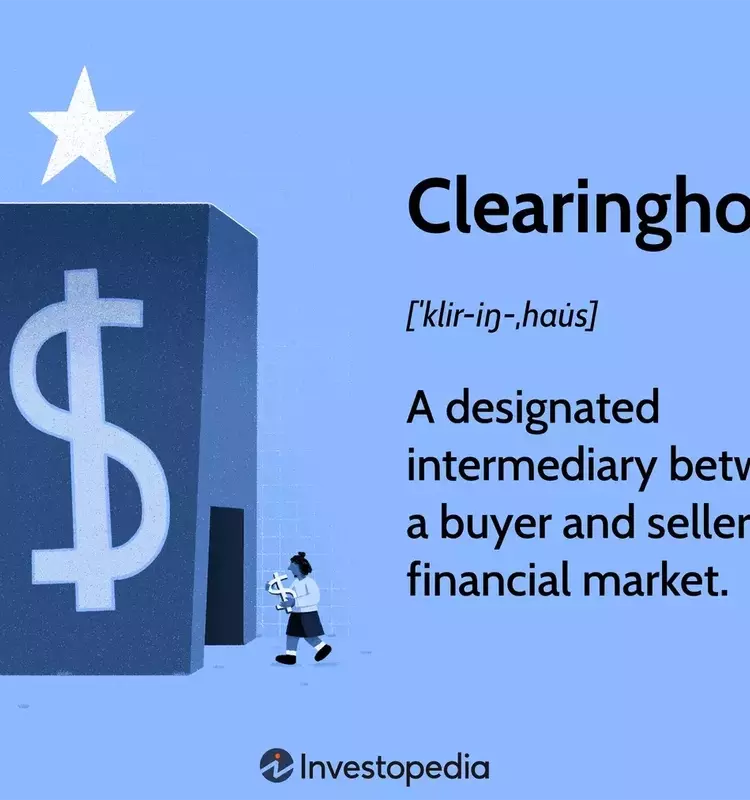
In the complex landscape of financial markets, a clearinghouse serves as an essential intermediary, validating transactions and ensuring that all participants honor their contractual commitments. Their fundamental role is to provide security and efficiency, thereby reducing risk and facilitating seamless market operations. This critical function extends to managing trade settlements and margin requirements across various financial instruments, including futures and stock exchanges.

Clearinghouses undertake a range of key responsibilities, including the finalization of trades, settlement of trading accounts, collection of margin payments, oversight of asset delivery to new owners, and reporting of trading data. They effectively act as central counterparties for futures and options contracts, becoming the buyer to every seller and the seller to every buyer. This structural setup allows them to step in after a trade is executed, ensuring that all necessary steps are completed to finalize and validate the transaction. By taking opposite positions in trades, clearinghouses significantly reduce transactional risk and cost, allowing for highly efficient settlement processes.

Their importance is particularly pronounced in the futures market, given the leveraged nature of these products, which necessitates a robust intermediary to mitigate default risk. Each exchange typically operates its own clearinghouse, requiring all members to clear their trades through it and deposit sufficient funds, based on margin requirements, to cover any debit balances. For instance, when a trader enters a futures contract, the clearinghouse establishes initial and maintenance margin requirements. The initial margin acts as a good-faith deposit, ensuring the trader can cover potential losses, while the maintenance margin ensures that sufficient funds are always available to keep the trade open. If a trader fails to meet a margin call, the trade is closed, and the remaining margin funds are released, effectively preventing default and maintaining market integrity. Similarly, in stock markets, clearing divisions within exchanges like the New York Stock Exchange ensure that traders have adequate funds to finance their transactions, facilitating the smooth transfer of shares and money and safeguarding investor confidence.

Clearinghouses are pillars of financial market stability, serving as indispensable intermediaries between trading parties. They rigorously validate and finalize transactions, adeptly manage risks through stringent margin requirements, and champion the security and efficiency crucial for a healthy market ecosystem. By consistently mitigating default risk, these entities foster unwavering confidence and trust in financial transactions, particularly within the intricate frameworks of futures and options markets. Their enduring presence underscores a commitment to market integrity and investor protection, forming the bedrock upon which resilient financial systems are built.

More Articles
Finance
Understanding the SEC Yield: A Standardized Metric for Bond Funds
The SEC yield, a standardized 30-day yield calculation mandated by the Securities and Exchange Commission, offers investors a transparent measure of a bond fund's potential annual earnings. It considers dividends, interest, and expenses, enabling fair comparisons between various bond funds and providing insights into their effective interest rates. This metric is essential for making informed investment decisions in the bond market.
By Lisa JingJul 22, 2026
Finance
Vale S.A. Faces Valuation Concerns Amidst Debt and Geopolitical Risks
This article evaluates Vale S.A., a major materials company, noting its 'HOLD' rating. The assessment highlights concerns over high leverage, the sustainability of its dividend policy, and significant valuation risks. It also delves into the company's reliance on debt-funded shareholder returns, potential legal liabilities from past environmental incidents, and exposure to Chinese market demand. The analysis concludes with a suggested entry price for investors seeking an attractive risk/reward profile.
By Michele FerreroJul 22, 2026
Finance
Dutch Bros: Re-evaluating the Investment Amidst Soaring Valuation
This article re-evaluates Dutch Bros' stock performance following a significant surge since a previous 'buy' recommendation. The author maintains that Dutch Bros is fundamentally an energy drink competitor rather than a traditional coffee chain. However, due to rapid stock appreciation outstripping current business performance, the rating has been downgraded to 'sell,' primarily driven by an inflated valuation rather than weakened business fundamentals. Investors are advised to exercise caution at current price levels.
By Lisa JingJul 22, 2026
Finance
Understanding Market Value: Definition, Dynamics, and Impact on Investment
This article explores market value, defining it as the price an asset commands in the open market, influenced by buyer willingness and seller acceptance. It distinguishes market value from book value and delves into how various factors, such as economic cycles, industry sectors, profitability, and debt levels, shape its fluctuations. The text also touches upon the complexities of determining market value for different asset types, from publicly traded stocks to illiquid assets, and provides insights into its calculation and significance for investors.
By Morgan HouselJul 22, 2026
Finance
Understanding Hybrid Securities: Debt and Equity Integration
Hybrid securities represent a sophisticated class of financial instruments that ingeniously blend characteristics of both debt and equity. These unique assets, such as convertible bonds and preference shares, offer investors a diverse array of potential benefits, including fixed or floating returns and often provide an avenue for equity participation. However, their intricate nature also introduces distinct risks, demanding careful consideration from investors.
By Strive MasiyiwaJul 22, 2026