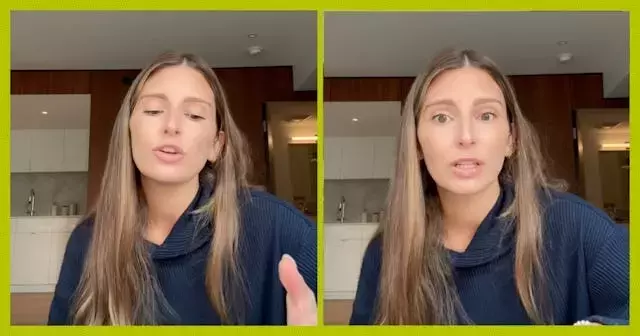
Influencer Criticizes Wealthy Peers for Being Out of Touch
ParentsKids

Influencer Criticizes Wealthy Peers for Being Out of Touch

authorBy Kim John Payne
DateNov 21, 2025
Read time3 min

This article summarizes the growing discomfort among social media audiences regarding wealthy influencers who continue to showcase opulent lifestyles despite widespread economic difficulties. It highlights a particular influencer's brave stance against this trend, arguing that such displays are distasteful and disconnect creators from their audience. The piece emphasizes the shift in audience desire towards more genuine and relatable content, reflecting current global challenges rather than aspirational luxury.

Carla Bezanson, a social media personality with a substantial following, recently voiced strong opinions against the prevalent practice of flaunting immense wealth on social media platforms. In a video that garnered significant attention, she articulated her concern that many content creators are displaying an alarming lack of awareness regarding the financial struggles faced by much of their audience. Bezanson specifically pointed out instances of influencers showcasing private jets, designer accessories like Van Cleef bracelets and expensive handbags, and luxury travel, contrasting these displays with the reality of many viewers struggling to afford basic necessities like groceries or rent.

Bezanson underscored a crucial point: the financial success of these influencers is directly tied to their audience. She questioned the long-term viability of content that alienates the very people who contribute to their prosperity. According to her, while there's nothing inherently wrong with personal wealth, the continuous exhibition of extreme luxury becomes problematic when a significant portion of the viewership is navigating economic insecurity, job instability, and rising inflation. She believes this creates a chasm between creators and their community, making the content feel inaccessible and irrelevant to daily life.

The influencer also reflected on her own journey, admitting that she once felt pressured to adopt a similar lavish persona. However, she eventually realized that genuine connection and engagement stem from authenticity and vulnerability, not from aspirational displays of wealth. Bezanson contends that in the current global climate, characterized by economic uncertainty and various societal challenges, there is a strong demand for content that is authentic, relatable, and evokes real emotion. This shift, she suggests, indicates a move away from superficial portrayals of luxury towards more meaningful and grounded narratives.

The overwhelming response in the comments section to Bezanson's video confirmed her observations. Many viewers echoed her sentiments, expressing fatigue with constant consumerism, expensive product hauls, and the relentless promotion of an unattainable lifestyle. Comments ranged from frustration over exorbitant product prices to comparisons of social media to a modern-day infomercial channel. This collective sentiment suggests a broader desire for a paradigm shift in how influencers engage with their audience, urging a greater emphasis on shared experiences and genuine connection over ostentatious displays of affluence.

More Articles
ParentsKids
CoComelon: Engaging and Educational Content for Toddlers
CoComelon, a popular YouTube channel for toddlers, offers a variety of song-based videos designed to educate and entertain young children. This week's new releases include a festive Christmas-themed 'Wheels on the Bus' rendition, a fun 'Itsy Bitsy Spider' bath time routine, and a colorful 'Rainbow Popsicle Song' to introduce colors and fruits. These videos aim to make learning life lessons and celebrating milestones enjoyable for little ones.
By Dr. Carlos GonzálezNov 21, 2025
ParentsKids
The Babysitter's Dilemma: Should Childcare Include Housekeeping?
A recent online discussion has ignited a debate among parents and caregivers regarding the scope of a babysitter's responsibilities. A mother sparked the conversation after expressing her frustration when she returned home to an untidy house, despite paying her babysitter a premium hourly rate. The incident has led to a wider examination of expectations, compensation, and the evolving roles within childcare arrangements, highlighting a generational shift in what constitutes a babysitter's duties.
By Cathy GlassNov 21, 2025
ParentsKids
Little Partners Recalls Learning Towers Due to Fall Hazard
Little Partners has issued a recall for its Grow 'N Stow Folding Learning Towers following reports of platform collapse, posing a fall risk to young children. The company, in collaboration with the CPSC, is offering free repair kits to affected consumers. This recall highlights the importance of product safety and prompt action when potential hazards are identified in children's products.
By Kim John PayneNov 21, 2025
ParentsKids
New Federal Law Aims to Streamline Air Travel for Parents Carrying Breast Milk
A new federal law, the BABES Enhancement Act, is on the cusp of enactment, promising to significantly improve air travel experiences for parents transporting breast milk and pumping equipment. Inspired by science communicator Emily Calandrelli's frustrating encounter with TSA, the bill aims to standardize screening procedures, ensuring hygienic handling and consistent application of rules across all airports. This legislation, which has garnered bipartisan support and passed both chambers of Congress, seeks to alleviate the stress faced by traveling parents, who often encounter inconsistent policies despite existing TSA guidelines.
By Emily OsterNov 21, 2025
ParentsKids
Rethinking Praise: Quality Over Quantity in Child Development
A viral video by parenting coach Dr. Chelsey Hauge-Zavaleta advocating for 100-500 praises daily for children has sparked widespread discussion among parents. While some embraced the concept, others found the numbers daunting. This article delves into the research behind positive reinforcement, clarifying that while praise is beneficial, its quality and specificity are more impactful than a mere daily count. It also highlights the particular relevance of positive feedback for neurodivergent children who often receive more corrective criticism.
By Emily OsterNov 21, 2025