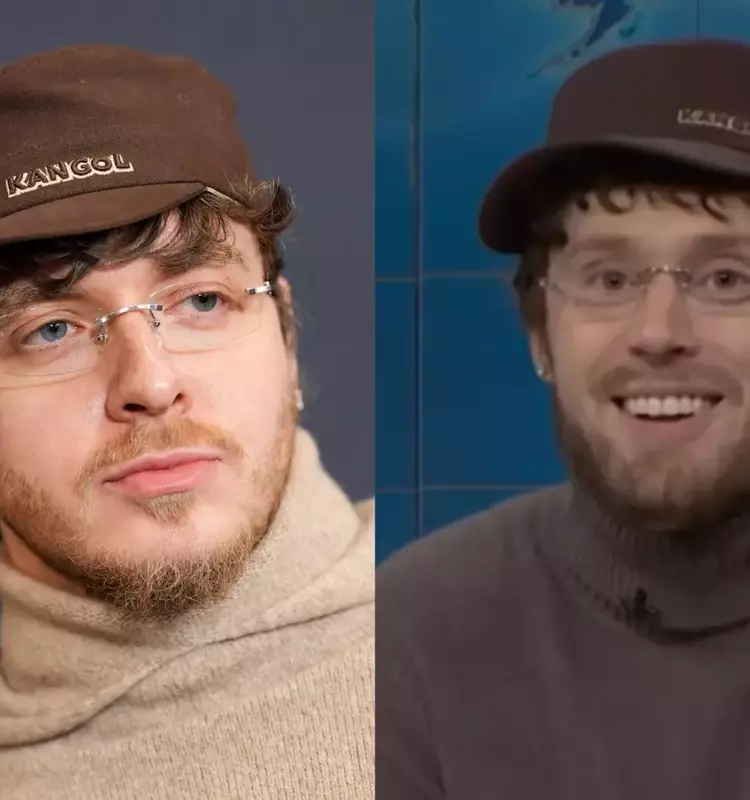
Rapper Jack Harlow's family, particularly his aunt, was thoroughly convinced by Ben Marshall's portrayal of him on last weekend's "Saturday Night Live." The performance, which satirized Harlow's recent album "Monica" and his controversial remarks about its sound, resonated so deeply that his aunt texted him expressing pride for his supposed appearance and for tackling the album's criticisms head-on. This comedic take highlights the rapper's public image and the ongoing dialogue surrounding his latest musical endeavor, demonstrating how quickly online discussions can translate into mainstream comedy.
During the well-known segment "Weekend Update," comedian Ben Marshall took on the persona of Jack Harlow, complete with the rapper's distinct brown Kangol hat and rimless glasses, a clear nod to his appearance at the "Marty Supreme" premiere. Marshall's impression was introduced by Michael Che, who humorously referenced Harlow's recent statement about his new album sounding "blacker." This specific comment had previously sparked a flurry of memes and widespread criticism online.
Marshall's sketch directly addressed the online reactions to Harlow's album, "Monica," playfully mentioning various internet-given nicknames such as "LL Cool Whip" and "D'Angelo." The segment cleverly incorporated these criticisms into the comedic act, illustrating the viral nature of online discussions about celebrities and their work.
On the Monday following the broadcast, the actual Jack Harlow responded to the viral sketch with good humor. He took to Instagram, sharing a photo of himself wearing a bonnet, and revealed that his aunt had genuinely believed he was on "SNL." His message, "My aunt texted me and told me she was proud of me for going on SNL and addressing everything," underscored the impressive accuracy of Marshall's impression and the extent to which it blurred the lines between satire and reality for some viewers.
Harlow's fourth studio album, "Monica," debuted on March 13. The neo-soul-infused record garnered mixed reviews, with some critics suggesting that Harlow was mimicking other artists and lacked originality. However, the most significant controversy arose from his comments on "The New York Times' Popcast." When questioned about his musical direction, Harlow controversially stated that he had made the neo-soul album "blacker," a remark that subsequently ignited a firestorm of memes and public outcry. As observed by music editor Jeff Ihaza in a "Rolling Stone" review, had Harlow simply released the album without such an explanation, he might have been perceived as being in on the joke, but his comments instead fueled further criticism.
The incident perfectly illustrates the pervasive influence of popular culture and social media, where a celebrity's off-the-cuff remarks can quickly evolve into a widespread online phenomenon, eventually making their way into mainstream comedy. This particular episode highlights the fine line between an artist's personal expression and public perception, especially when controversial statements are involved. Jack Harlow's gracious response to the parody also demonstrates his ability to navigate public scrutiny with a sense of humor.