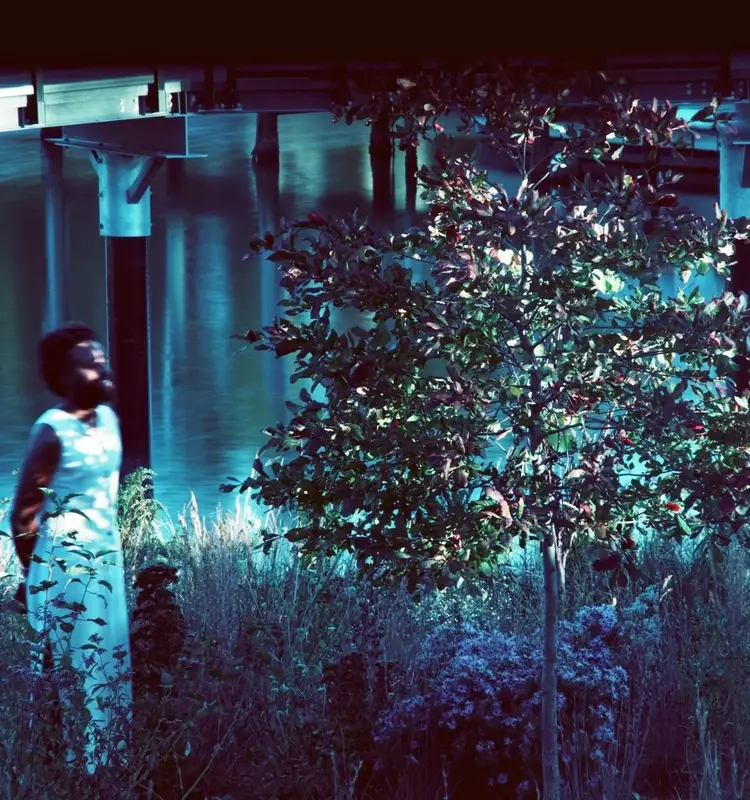
JJJJJerome Ellis's latest album, "Vesper Sparrow," embarks on a profound artistic journey, transforming a personal speech impediment into a foundational element of musical expression and temporal exploration. The work is a deeply personal statement, where Ellis reinterprets their stutter not as a hindrance but as a source of creative potential, a "musical instrument" capable of dilating time and fostering intimate connections. This innovative approach to music and self-expression allows for a unique auditory experience, inviting listeners to perceive pauses and breaks as meaningful contributions to the overarching narrative.
The album continues the intellectual and emotional threads from Ellis's debut, "The Clearing," but refines its focus to a more poetic and immersive experience. By intertwining the abstract concept of glottal blocks with concrete musical compositions, Ellis provides a compelling exploration of how personal challenges can be transmuted into universal artistic insights. "Vesper Sparrow" stands as a testament to the power of artistic introspection, demonstrating how an individual's unique experience can unveil new dimensions of understanding for an audience, making the act of listening a shared journey of discovery.
The Stutter as a Musical Instrument and Temporal Phenomenon
JJJJJerome Ellis, a Grenadian-Jamaican-American composer and artist, ingeniously redefines the stutter, specifically glottal blocks, as a profound musical instrument. This concept, central to his album "Vesper Sparrow," challenges conventional perceptions of speech impediments. For Ellis, these involuntary pauses in speech are not sources of shame but rather "clearings"—moments that dilate time, foster intimacy, and unlock spontaneous improvisation within music. His early life saw him finding freedom in the saxophone's fluid sounds, a stark contrast to the discomfort speaking caused. Through his work, Ellis navigates the intricate relationships between Blackness, speech dysfluency, and music, building on his critically acclaimed debut, "The Clearing." The new album, however, shifts its focus to the temporal aspects of stuttering, exploring how these pauses can suspend time for both the speaker and the listener, ultimately forging new connections through shared moments of stillness and introspection.
Ellis's journey from viewing his stutter as a personal struggle to embracing it as an artistic tool is eloquently articulated in "Vesper Sparrow." He describes these glottal blocks as "clearings," analogous to open spaces in a forest path, historically significant as places of congregation and spiritual solace for enslaved African Americans. This rich metaphor underscores the album's thematic depth, connecting personal identity with historical and cultural narratives. The album's structure, particularly the four-part "Evensong," integrates these "clearings" directly into the musical composition. Ellis explicitly details his creative process, explaining how he uses granular synthesis to break down sound into "grains" interspersed with silence. This technique transforms individual sounds into musical fragments, mirroring the fragmented yet cohesive nature of his speech. The pauses, which form significant portions of the album, are not empty voids but rather rich tapestries woven with ecstatic saxophone, hammered dulcimer, and drifting vocals, offering a unique sonic landscape where silence and sound coexist and collaborate to create a deeply moving and thought-provoking experience.
Bridging Gaps: Time, Connection, and Spiritual Echoes
The core philosophy of JJJJJerome Ellis's "Vesper Sparrow" profoundly revolves around the concept of the pause, particularly how a stutter can create significant temporal gaps that surprisingly lead to deeper human and spiritual connections. These deliberate silences, or "clearings," within the album's structure are not mere interruptions but critical junctures that invite meditation and reflection. The album effectively uses these pauses to suspend the listener in a unique temporal space, mirroring the experience of the speaker. This innovative approach extends to the two versions of the hymn "His Eye Is on the Sparrow" strategically placed within the "Evensong" parts. These renditions not only pay homage to Ellis's religious upbringing in his reverend grandfather's church but also serve as musical bridges, filling the temporal gaps with profound emotional and spiritual content, thus fostering a shared experience of vulnerability and connection between artist and audience.
Ellis's work on "Vesper Sparrow" is a masterclass in using sound and silence to explore the nuanced interplay between personal history, musical innovation, and the human condition. The inclusion of "His Eye Is on the Sparrow," with sparse piano accompanying Ellis's soulful voice on the title track and a 16-minute pipe organ drone on "Savannah Sparrow," transforms these traditional hymns into deeply personal memorials to his grandmother and reflections on his own struggles and faith. The saxophone, played by Ellis, is described as having its own "stutter," contributing to a gripping and patient presence that evokes a loving conversation. This artistic choice elevates the personal act of stuttering into a universal symbol of empathy and understanding. The album culminates in the idea that these "clearings" act as seeds, growing largely unobserved, authorized and protected by silence itself. This concept underscores the album's central message: that moments of stillness and perceived imperfection can open up infinite possibilities, making the world slow down, open up, and become a bit more beautiful, much like the encounter with a caring cashier that illustrates the profound potential of a shared, patient moment.