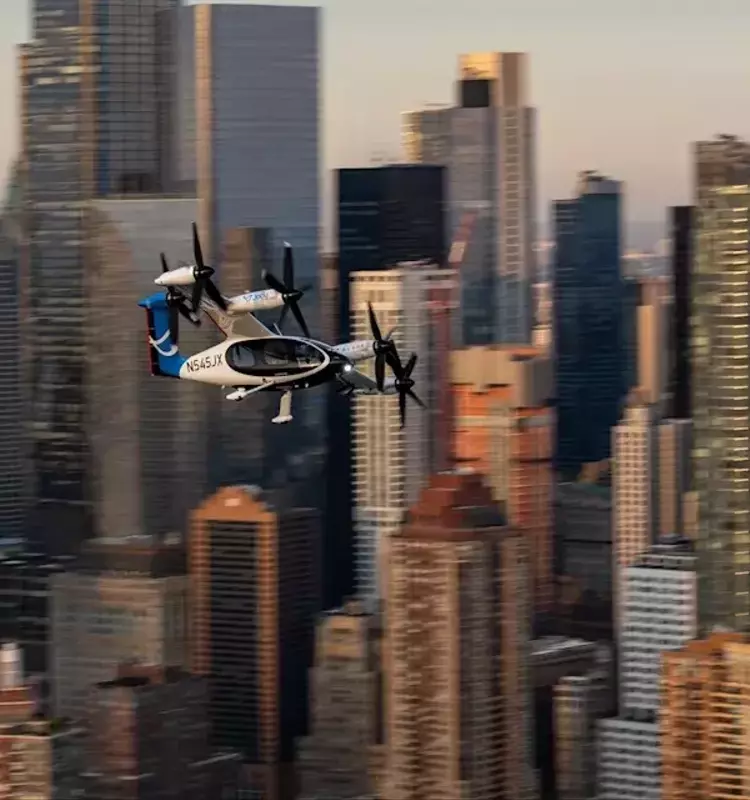
Joby Aviation is at the forefront of a burgeoning industry poised to transform urban travel through its innovative electric vertical takeoff and landing (eVTOL) vehicles. Despite a recent downturn in its stock performance, the company's continuous advancements in regulatory certification and successful operational demonstrations underscore its potential to redefine how people navigate congested cityscapes. This piece delves into Joby's strategic positioning, its progress with the Federal Aviation Administration (FAA), and the substantial long-term market opportunities that could solidify its standing as a formidable player in the future of transportation.
Imagine a future where the exasperating ordeal of gridlocked traffic becomes a relic of the past. Companies like Joby Aviation are actively working to make this vision a reality, offering an aerial alternative to terrestrial transportation. These eVTOL aircraft, often dubbed 'flying cars' or 'air taxis,' are designed to provide swift, efficient, and environmentally friendly urban mobility solutions. The potential for such a shift is immense, offering a compelling alternative to traditional ground-based commuting that currently plagues metropolitan areas like Atlanta, New York, and Los Angeles.
Joby Aviation has distinguished itself as a frontrunner in the competitive race to certify eVTOL aircraft in the United States. Its proactive engagement with the FAA dates back to the late 2010s, making it the first eVTOL company to secure a G-1 certification basis from the agency. This collaborative effort has propelled Joby through the rigorous five-stage type certification process, with the company currently navigating Stage 4. A significant milestone was recently achieved as Joby commenced testing FAA-conforming aircraft for Type Inspection Authorization (TIA), bringing it closer to commercial operations.
Further solidifying its operational capabilities, Joby demonstrated a piloted eVTOL flight over New York City in April 2026. This historic point-to-point flight, connecting JFK Airport with various Manhattan locations, not only showcased the efficacy of Joby's technology but also enhanced its prospects for establishing commercial air taxi services in the metropolis. Such demonstrations are crucial for building public trust and regulatory confidence. Through the White House's eVTOL Integration Pilot Program, Joby is slated to conduct similar demonstrations in several other U.S. cities, including those in Arizona, Florida, and Texas, expanding its footprint and proving its concept across diverse urban environments.
Despite the skepticism reflected in its current market valuation, Joby Aviation represents a high-growth, speculative investment with the potential to unlock trillions in market value. Analysts, including those from Morgan Stanley, project the long-term market for eVTOLs and urban air mobility could exceed $1 trillion in the coming decades. This market extends beyond passenger transport, encompassing critical applications such as medical supply delivery between hospitals and support for military defense and emergency response missions. While the path to success is not without risks, particularly concerning the timely achievement of FAA certification and the proven viability of its business model, Joby's ongoing advancements position it as a compelling opportunity for investors interested in the future of transportation. For those prepared to evaluate the balance between risk and groundbreaking potential, the current dip in Joby's stock may indeed present an opportune entry point.
