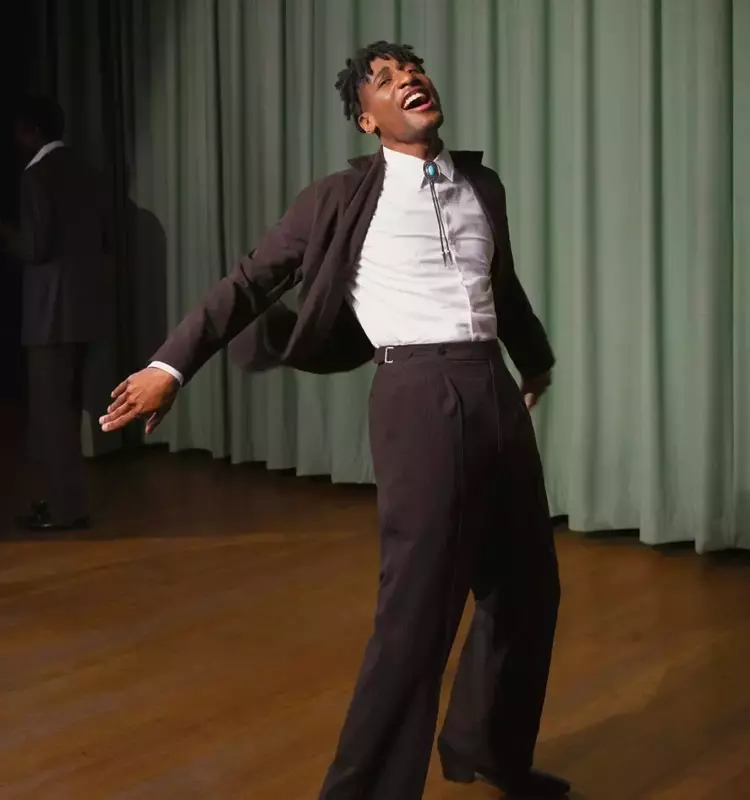
Jon Batiste's latest musical offering, 'Big Money,' is a powerful re-exploration of his foundational blues influences, broadening his artistic scope into the expansive world of roots music. This album stands as a testament to the enduring vitality of American musical traditions, consciously pushing back against contemporary trends towards artificial intelligence in creative fields. Through its diverse soundscapes and heartfelt performances, 'Big Money' not only celebrates the rich heritage of Black American music but also serves as a poignant reminder of the irreplaceable value of human connection and organic artistic expression. It's a significant statement from an artist dedicated to preserving and reinterpreting the authentic sounds that shaped his journey.
Jon Batiste's 'Big Money' Album and Tour Announced
On July 11, 2025, Grammy-winning artist Jon Batiste unveiled details about his highly anticipated seventh studio album, 'Big Money,' set to be released on August 22. This new work sees Batiste, a musician known for his eclectic genre-bending, making a deliberate foray into Americana and roots music, a return to his self-described 'new-age blues artist' origins. The album features a rich tapestry of sounds, from a Sly Stone-inspired collaboration with Andra Day on 'Lean on My Love' to the raw Chess Records-esque R&B of the title track, and even an unexpected rockabilly burst in 'Pinnacle,' showcasing Batiste's versatility on guitar alongside his piano prowess.
Batiste views 'Big Money' as a critical piece of a larger cultural movement, a 'repatriation process' for Black artists reclaiming musical forms historically originated by Black Americans. He draws parallels to recent works like Beyoncé's 'Cowboy Carter,' on which he also contributed. He passionately argues against the historical misattribution of genres like rock & roll, emphasizing its true origins in the American South among Black sharecroppers and pioneers such as Little Richard and Chuck Berry, rather than solely with the British Invasion.
The creation of 'Big Money' was a spontaneous process, born during Batiste's 2024 solo tour. He captured moments of inspiration by recording with fellow musicians in various locations, focusing on live, in-room performances to ensure an authentic, breathable sound. The album's organic approach is a direct counter-statement to the rise of AI music, with Batiste asserting that human tradition and communal expression can never be replicated by artificial means. The album's lead single, 'Big Money,' featuring The Womack Sisters (granddaughters of Sam Cooke), encapsulates this philosophy with its powerful lyrics: 'Might as well live for something you can feel/ Might as well live for something real.'
A notable highlight on the album is the poignant duet with legendary songwriter Randy Newman on 'Lonely Avenue,' a blues ballad famously covered by Ray Charles. This collaboration emerged from Batiste's growing friendship with Newman, ignited by their shared experiences scoring Pixar films and a mutual appreciation for New Orleans music. The recording session captured a magical moment when Newman, despite recent health challenges, spontaneously joined Batiste on piano, breathing new life into the classic song. The album also benefits from the production talents of No ID, known for his work with Jay-Z, who contributed to five of the nine tracks, lending a global, reggae-infused touch to the album's closing track, 'Angels,' reminiscent of Batiste's previous work on 'World Music Radio.'
To support the album, Jon Batiste is embarking on a comprehensive tour, beginning on August 27 in Kansas City, Missouri, and covering 30 venues across the country.
Jon Batiste's 'Big Money' serves as a crucial reminder of the soulful wellsprings of American music, particularly the blues. It emphasizes that true innovation often lies in returning to and reinterpreting the authentic roots of artistic expression. As a listener, I am inspired by Batiste's commitment to artistic integrity and his courageous stance against the homogenizing forces of technology, such as AI, in the creative sphere. His dedication to capturing the raw, communal essence of music not only enriches our present cultural landscape but also preserves a vital legacy for future generations. This album isn't just a collection of songs; it’s a powerful declaration for the enduring human spirit in art.