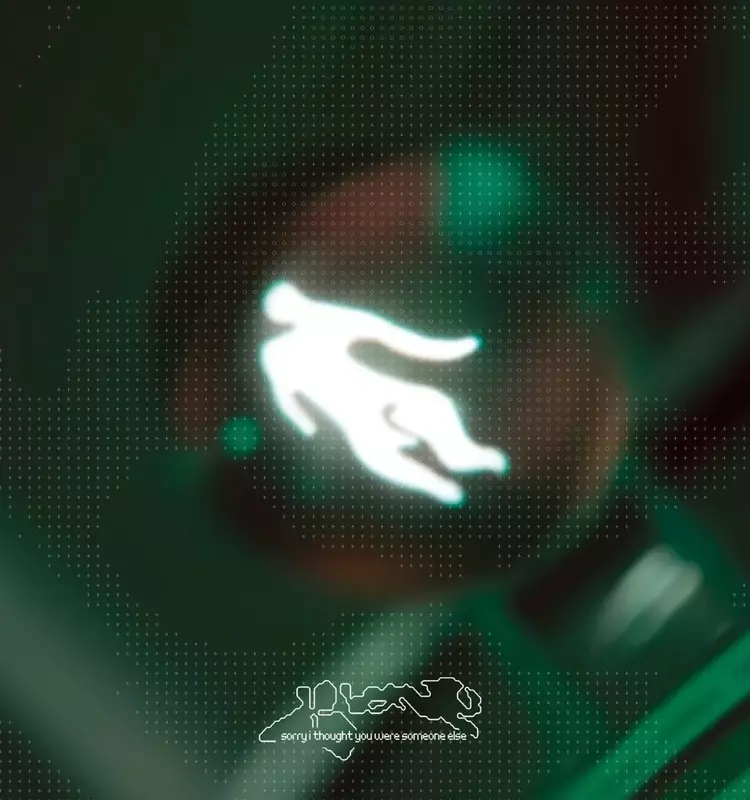
K-LONE's newest album, "sorry i thought you were someone else," represents a significant milestone in his artistic journey, showcasing a deepened maturity and refined sonic palette. While his label, Wisdom Teeth, has continuously explored diverse electronic music styles, K-LONE, whose real name is Josiah Gladwell, has maintained a remarkable consistency in his individual projects. This album solidifies his signature sound, characterized by luminous synthesizers and precisely crafted drum patterns, yet it introduces a new level of textural softness and emotional resonance that surpasses his previous works. It's a cohesive and introspective listening experience that invites listeners to delve into its subtle complexities.
Gladwell's artistic trajectory has been one of steady growth, moving from early dubstep explorations with Wisdom Teeth to a more distinct and personal sound. His two prior albums, "Cape Cira" and "Swells," laid the groundwork for this latest release, demonstrating a meticulous dedication to a modest yet impactful sonic vocabulary. The instruments he employs, though electronic, often possess a tangible quality, evoking the percussive impact of mallets or the ethereal hum of an organ. His drum work, notably understated compared to much of contemporary dance music, hints at delicate, burnished cymbals rather than overt, forceful beats. This nuanced approach allows each element to contribute to a larger, immersive soundscape.
The album's rich, enveloping sound might initially seem to diverge from Wisdom Teeth's recent focus on minimal techno, a style K-LONE himself has expressed admiration for in interviews. However, a closer listen reveals a subtle, streamlined architecture beneath the lush pads and shimmering chords. The compositions are often built upon simple, rhythmic drum patterns, with basslines that suggest rather than dictate, offering a few resonant notes before fading into the background. This minimalist framework allows the meticulously polished individual elements to shine, creating a complex, jewel-toned sonic mechanism that operates with quiet precision.
Across the entire album, there's a remarkable coherence in both its emotional tone and rhythmic pacing. Gladwell draws from a carefully curated selection of sounds: bright chimes, expansive chords, deep sub-bass, and fragmented spoken-word samples that drift through the stereo field like fleeting thoughts. The percussion, featuring bursts of static and sculpted white noise, draws parallels to minimal producers like Matthew Herbert, while the aquamarine harmonies evoke the lushness of Pépé Bradock. Gladwell’s judicious use of effects, such as the occasional dub delay that sends sounds echoing into the periphery, suggests vast, unseen sonic spaces.
Many tracks on "sorry i thought you were someone else" are characterized by a tightly focused artistic vision. "slide by side" stands out as a masterwork of sonic pointillism, where every sound—from the textured bass to the delicate woodblocks and the honey-like topline—is arranged with both casual grace and precise intentionality. In "sslip," monochromatic chords recall the energetic past of the Force Trax label, while a faint vocal sample adds a touch of Chicago ghetto house nonchalance. The album’s consistency allows for a seamless flow, creating a unified listening experience that rewards close attention.
Some tracks, like the opener "someone else," immediately capture attention with their melancholic vocal samples and bubbling chords, quickly becoming standout pieces. Others, such as "gurgle," offer a more subtle appeal, built on a simple, oscillating bassline. Yet, beneath their surface simplicity, these tracks reveal layers of intricate detail: "gurgle" is a rich tapestry of dubby pads, delicate embellishments, and hushed voices, while "someone else" boasts a masterful mix where each sound floats weightlessly. The precision in K-LONE’s use of negative space in some compositions creates a feeling akin to photographic negatives, highlighting the presence of sound through the absence of it.
Ultimately, "sorry i thought you were someone else" strikes a unique emotional chord. It balances the energetic pace of dance music with an introspective mood, suitable for both vibrant dance floors and quiet contemplation. This nuanced blend perhaps reflects the personal circumstances surrounding its creation, following the passing of Gladwell’s father. Despite this, the album never succumbs to somberness; instead, it is imbued with a clear sense of hope and an unwavering clarity of spirit. Unlike some electronic music that demands attention with its force, K-LONE’s work gently invites you to explore and embrace your emotions.