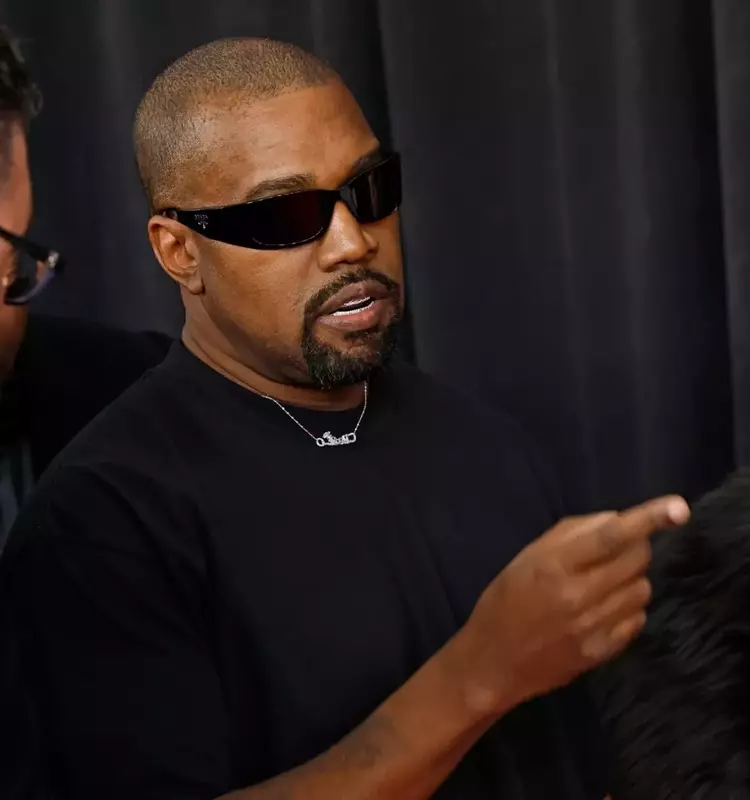
Kanye West's legal representatives are actively challenging a jury's decision that awarded $150,000 to handyman Tony Saxon. The verdict, delivered after a two-week trial in Los Angeles, stemmed from Saxon's claims of severe injuries sustained while employed at West's Malibu property. West's lawyers contend that the award lacks adequate evidentiary support, specifically regarding medical documentation and the calculation of economic and non-economic damages. This dispute highlights the complexities of celebrity legal battles and the meticulous scrutiny applied to jury findings.
Kanye West's Legal Team Seeks to Annul Handyman's Award in Malibu Mansion Case
On March 17, 2026, in Los Angeles, California, legal proceedings unfolded as Kanye West's (also known as Ye) attorneys, Andrew and Catherine Cherkasky, filed a motion to invalidate a $150,000 jury verdict. The award was granted to Tony Saxon, a handyman who testified to suffering significant injuries while living and working at West's $57 million Malibu mansion. West had acquired the Tadao Ando-designed property in 2021 with the vision of converting it into an off-the-grid sanctuary, reportedly instructing the removal of essential utilities and fixtures, including plumbing, electricity, and a concrete fireplace. The property was later sold for a substantial loss at $21 million.
West's lawyers argued that the jury's decision was not substantiated by evidence, asserting the absence of admissible medical bills or records establishing a direct link between Saxon's injuries and the work performed. They further questioned the award of $50,000 for past and future economic losses, claiming a doctor's testimony vaguely estimated treatment costs at 'about $50,000' without detailed billing. The legal team highlighted the inconsistency of awarding future economic loss while simultaneously granting zero for future pain and suffering, despite medical recommendations suggesting intermittent pain requiring treatment. They urged the court to set aside the verdict or, at minimum, order a new trial focused solely on damages.
Conversely, Ronald Zambrano, Saxon's lawyer, expressed confidence that the motion would be denied, stating it was an attempt to re-litigate a previously rejected issue. Jurors, speaking anonymously, revealed that they meticulously reviewed financial documents to determine the allocation of $240,000 West had wired to Saxon, concluding that Saxon had largely broken even on wages. They also described West's demeanor during his testimony as contemptuous, with one juror noting he appeared bored or asleep, leaving a negative impression. Saxon's legal team, including Neama Rahmani, anticipates that attorney fees and costs could elevate the final judgment to over $1 million. Before the trial, Saxon notably rejected West's demand for an apology and fee payment, standing firm against the celebrity's influence. West's spokesman, Milo Yiannopoulos, emphasized areas where West found success, such as the jury's refusal to impose punitive damages or find wrongful termination, and pointed to a verdict form detail that suggested Saxon acted as a contractor, potentially invalidating the damages award. During closing arguments, West's lawyer, Andrew Cherkasky, depicted Saxon as an unreliable witness fabricating claims and praised West for testifying, despite admitting he was merely 'bored.' Saxon's lawyer, Zambrano, countered that West was gutting the property without permits, hiring Saxon to maintain discretion, and cited a text from West's wife, Bianca Censori, cautioning against 'red flags' with permitting. Censori testified that West disliked stairs and windows, preferring 'ramps and slides,' and that Saxon had misrepresented himself as a licensed contractor.
This case serves as a poignant reminder of the intricate challenges inherent in legal disputes, especially when high-profile individuals are involved. It underscores the critical importance of meticulous documentation and clear contractual agreements in employment relationships. The divergent interpretations of evidence and the subjective experiences of witnesses and jurors highlight the human element within the judicial system. Furthermore, the incident sheds light on the potential pitfalls of ambitious architectural projects that skirt regulatory compliance, illustrating how personal visions can clash with legal and practical realities, leading to complex and costly outcomes.