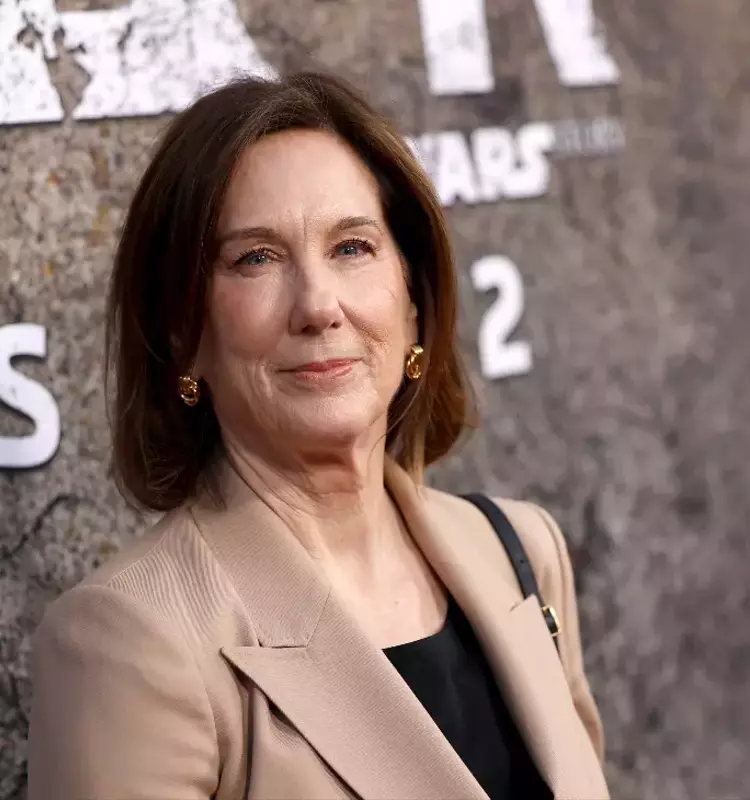
Kathleen Kennedy, a prominent figure in the film industry, has voiced a cautious stance on the widespread adoption of artificial intelligence in filmmaking. While recognizing the utility of AI for logistical aspects such as pre-visualization, budgeting, and scheduling, she underscores the indispensable role of human creativity, taste, and life experiences in the artistic process. Kennedy argues that the current iterations of AI lack the nuanced understanding and inherent unpredictability that define truly compelling cinematic storytelling, emphasizing that art stems from a depth of human experience that machines cannot yet replicate. Her perspective highlights a critical dialogue within Hollywood regarding the balance between technological advancement and the preservation of human artistic integrity.
Kennedy's skepticism extends to the lack of transparency in how AI models are trained and utilized, advocating for greater openness to build trust within the creative community. She suggests that a clearer understanding of AI's operational mechanisms would alleviate some of the existing apprehension. Despite her reservations about AI's capacity for core creative tasks, Kennedy does acknowledge its potential in specific innovative applications, such as gathering simulated feedback on scripts. This nuanced view reflects a broader industry debate, where some champion AI as a tool to democratize filmmaking and unleash new creative possibilities, while others, like Kennedy, prioritize the unique, irreplaceable contributions of human artists.
The Irreplaceable Human Element in Creative Storytelling
Kathleen Kennedy, a luminary with a four-decade-long career shaping cinematic universes like 'Star Wars' and 'Jurassic Park,' presented a measured, even skeptical, viewpoint on artificial intelligence's comprehensive integration into filmmaking. Addressing an AI summit hosted by Runway, a company dedicated to advancing AI in cinema, Kennedy acknowledged the technology's potential for streamlining practical aspects such as pre-production planning, financial oversight, and scheduling. However, her primary concern revolved around AI's ability to genuinely contribute to the core creative endeavor, emphasizing that 'taste is so fundamental to the process of creating things.' She argued that artistic sensibility is deeply rooted in personal life experiences and educational backgrounds, elements she believes AI, by its very nature, cannot possess. This perspective suggests a fundamental divergence between AI's algorithmic predictability and the organic, often serendipitous, nature of human artistic innovation.
Kennedy elaborated on her concerns, pointing out that while AI excels at predictable tasks, the essence of filmmaking lies in its inherent unpredictability and the unique artistic vision that a human director brings to a project. She questioned whether AI could truly grasp the deeper intent behind a creative work, asking, 'What are you trying to do? What’s the painting you’re trying to create?' Her experience with traditional filmmaking processes, including a humorous anecdote about the fragility of 3D-printed props compared to handcrafted ones, reinforced her belief in the irreplaceable value of human decision-making and material understanding. Kennedy stressed that the depth and quality of creative decisions, from composing a score to lighting a scene, often stem from a lifetime of learned experiences and a classically trained intuition, which she views as profoundly valuable and currently beyond the scope of artificial intelligence. This stance positions her as a traditionalist who deeply cherishes the collaborative and experiential aspects of human-driven artistic creation.
Navigating Transparency and Trust in AI's Evolution
Beyond the philosophical debate on creativity, Kathleen Kennedy raised crucial practical concerns regarding the implementation of AI in the entertainment industry, particularly focusing on the need for greater transparency. She articulated a palpable sense of unease within the Hollywood creative community, stemming from a perceived lack of information about how AI technologies, especially large language models, are being developed and trained. Kennedy stressed that building trust between the tech world and content creators necessitates a more open dialogue and clearer understanding of AI's capabilities and limitations. Her call for transparency highlights a broader industry tension where rapid technological advancements are met with apprehension about job displacement, intellectual property rights, and the ethical implications of machine-generated content. Kennedy’s argument suggests that without this foundational trust, widespread adoption and collaborative innovation will remain challenging.
While advocating for more openness, Kennedy did not entirely dismiss the innovative potential of AI. She envisioned some novel applications, such as utilizing AI to simulate actors' opinions on a script, offering new perspectives without direct human intervention. This selective embrace of AI's utility underscores a pragmatic approach: leveraging technology for efficiency and exploration while safeguarding the sanctity of human artistry. However, she remained cautious about AI's capacity to deliver immersive, long-form narrative experiences, speculating that its immediate impact might be more pronounced in short-form content. Despite the general enthusiasm among some AI proponents at the summit, Kennedy's persistent wariness, rooted in her extensive experience, suggests a call for measured integration. She implicitly challenges the AI community to demonstrate not only technological prowess but also a deep understanding of the human creative spirit and a commitment to transparent, ethical development, thereby bridging the divide between Silicon Valley's innovation and Hollywood's artistic heritage.
