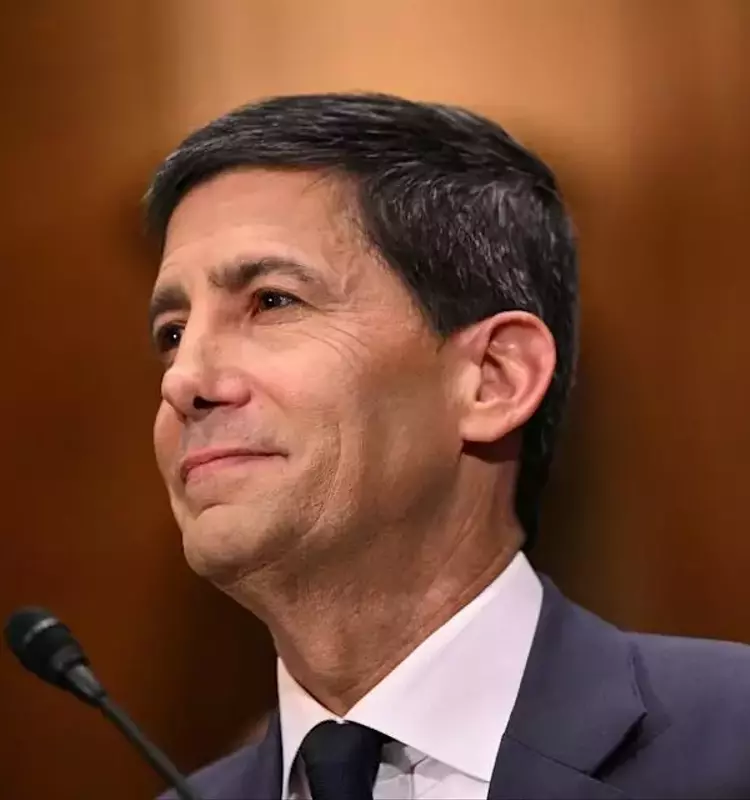
Kevin Warsh has officially assumed the role of Federal Reserve Chair, stepping into a critical position at a pivotal moment for the U.S. economy. His tenure begins with the immediate challenges of persistent inflation and a labor market showing signs of uneven recovery. This leadership transition from Jerome Powell signals a potential reorientation of the central bank's approach to monetary policy, as Warsh advocates for new frameworks and a more restrained communication strategy. His past experience during the 2008 financial crisis will undoubtedly inform his decisions as he aims to steer the economy towards stability and growth.
Warsh’s appointment brings fresh perspectives on managing the nation's economic trajectory. He takes the reins of the Federal Reserve at a juncture where the institution's independence has been a subject of public discourse. Observers and analysts are closely watching his first moves, particularly as the central bank contends with the dual mandate of maintaining price stability and maximizing employment. His approach to these complex issues, especially concerning interest rates and the Fed's balance sheet, will define his legacy and impact the financial landscape for years to come.
A New Era at the Federal Reserve: Warsh's Vision for Economic Policy
Kevin Warsh's swearing-in as the Federal Reserve Chair signals a new direction for the central bank, as he takes on an economy battling significant inflation and a job market that, while improving, still presents challenges outside of specific sectors. Having previously served on the Fed's Board of Governors during the 2008 financial crisis, Warsh returns with a wealth of experience, aiming to foster an environment of excellence and national interest within the institution. His appointment follows Jerome Powell's tenure, with Warsh now tasked with navigating complex economic currents, including the impact of geopolitical events on inflation and consumer sentiment.
Warsh's leadership is anticipated to bring notable changes to the Fed's monetary policy and communication style. Unlike his predecessor, Warsh has expressed a desire for a new inflation framework and a less frequent use of forward guidance to influence market behavior, aiming to depoliticize the Fed's decisions. He also holds a more forward-thinking view on monetary policy, emphasizing proactive measures rather than solely data-driven reactions. This approach suggests a focus on broader economic trends, including the potential disinflationary effects of artificial intelligence and the need to address the perceived distortions caused by the Fed's expanded balance sheet. These policy shifts could lead to a period of adjustment for markets and a recalibration of public expectations regarding the central bank's actions.
Economic Landscape and Anticipated Shifts Under Warsh's Leadership
The economic conditions Warsh inherits share some similarities with those faced by Jerome Powell in 2018, particularly concerning GDP growth and unemployment rates. However, the current inflationary environment is notably different, with consumer prices rising significantly more compared to previous years. This elevated inflation, coupled with a record-low consumer sentiment driven by high prices, presents a formidable challenge for the new chair. Experts suggest that Warsh's main task will be to effectively manage this persistent inflation while also addressing concerns about economic stagnation in certain areas of the job market.
Under Warsh, consumers and markets can expect a period of potential volatility, as new leadership often brings with it initial market reactions. Given his lesser-known status as a Fed chair compared to some predecessors, an increase in market fluctuations is a distinct possibility. Warsh's policy preferences, particularly his advocacy for lower borrowing costs and a reduced Fed balance sheet, stem from a belief that AI-driven productivity could act as a disinflationary force and that the current balance sheet distorts asset values. While these theories suggest a long-term vision for economic stability, their immediate implementation and impact will be closely scrutinized, especially as the Federal Open Market Committee approaches its next rate decision in mid-June.
