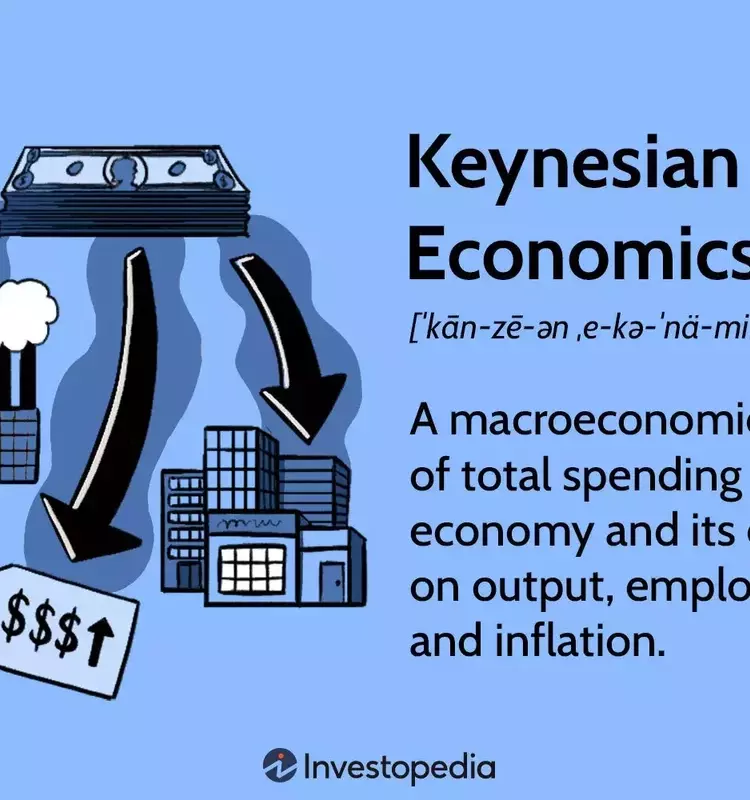
Keynesian economics, a pivotal macroeconomic framework, asserts that active government intervention, particularly through strategic spending and tax policies, is essential for stabilizing economies, especially during periods of instability. This theory challenges the traditional classical economic notion that markets naturally self-correct, emphasizing instead that inadequate aggregate demand can lead to prolonged economic stagnation and unemployment. Adopting Keynesian principles, governments can inject demand into the economy, thereby fostering employment and growth. This approach has guided responses to significant global economic crises, including the Great Depression and more recent downturns.
Keynesian economics diverges significantly from classical economic thought by arguing against the notion of inherent market self-correction. While classical theory posits that economic downturns create opportunities that market forces will naturally exploit to restore equilibrium, Keynes maintained that during recessions, factors such as widespread business pessimism can exacerbate economic weakness, leading to a sustained decline in aggregate demand. This perspective supports proactive government measures to mitigate the severity and duration of economic crises.
The Core Principles of Keynesian Economics
Keynesian economic theory posits that markets do not inherently self-correct to achieve full employment and stable growth. Instead, it argues that during periods of economic contraction, factors such as reduced consumer spending and business investment can create a vicious cycle of low demand and high unemployment. To counteract this, Keynesian economists advocate for government intervention through fiscal policies like increased public spending and reduced taxation. These measures are designed to stimulate aggregate demand, thereby encouraging businesses to increase production and hire more workers, ultimately leading to economic recovery and stability. This perspective challenged the then-dominant classical view, which held that economic imbalances would naturally resolve through market mechanisms.
John Maynard Keynes developed this theory during the tumultuous era of the 1930s, profoundly influenced by the Great Depression. He observed that the prolonged economic slump and high unemployment defied classical explanations of market self-correction. Keynes argued that in a recession, business and consumer pessimism could become self-fulfilling prophecies, leading to sustained economic downturns. He advocated for counter-cyclical fiscal policies, where governments engage in deficit spending to offset reduced private investment and bolster consumer demand. This approach, centered on boosting aggregate demand, aims to break the cycle of economic stagnation. While his ideas were initially met with skepticism from some who believed in market self-regulation, Keynes stressed that government action was crucial for creating a robust and stable economy, especially when market forces proved insufficient to restore equilibrium.
Keynesian Policy in Action: Fiscal and Monetary Strategies
A cornerstone of Keynesian fiscal policy is the multiplier effect, theorized by Keynes' student Richard Kahn. This concept suggests that an initial injection of government spending not only directly boosts economic activity but also generates subsequent rounds of increased spending and income throughout the economy. For instance, government spending on infrastructure projects creates jobs, and the wages earned by those workers are then spent on goods and services, further stimulating demand. The magnitude of this effect is linked to the marginal propensity to consume, emphasizing that higher consumer spending can amplify the impact of government stimulus on overall economic output and employment. Keynes and his proponents encouraged lower saving rates and higher consumption to achieve full employment and drive economic expansion, asserting that stagnant savings hinder growth.
In addition to fiscal measures, Keynesian economics also incorporates monetary policy, focusing on demand-side solutions to economic downturns. While Keynesian theorists primarily advocate for direct government intervention, they also recognize the role of monetary tools. They argue that wages and employment adjust slowly to market changes, necessitating government action. Interest rate manipulation is a key monetary strategy: lowering rates encourages borrowing and investment, thereby stimulating economic activity. When traditional monetary policies like interest rate cuts become ineffective, especially in a liquidity trap where rates approach zero, Keynesian economists propose fiscal policy as an alternative. This includes direct control of labor supply, tax adjustments to manage the money supply, and other measures to restore employment and demand for goods and services, underscoring the belief that sustained government action is crucial for economic stability and growth.
