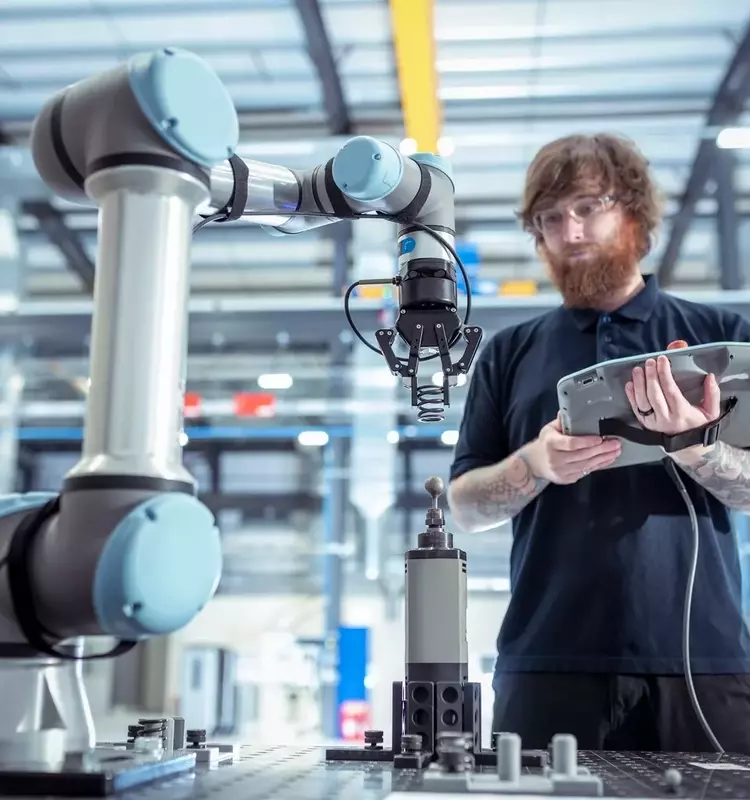
The KraneShares Global Humanoid Robotics and Physical AI Index ETF (KOID) is presently viewed as a 'hold' due to its elevated valuation and a misalignment between its portfolio composition and its thematic description. While the ETF's name suggests a focus on humanoid robotics and physical AI, its underlying holdings are predominantly in industrial automation and component manufacturing, with limited direct exposure to the emerging humanoid robotics sector. This discrepancy, coupled with a significant valuation premium over broader market indices, raises questions about the fund's investment proposition for those seeking pure-play exposure to humanoid robotics.
Furthermore, an in-depth analysis of KOID reveals that its current market price appears to incorporate future growth expectations that are still a considerable distance from becoming reality. Industry experts project that widespread adoption and commercialization of humanoid robotics are likely a decade or more away. Consequently, investors in KOID are paying a premium for a theme that is still in its nascent stages, relying heavily on the long-term potential of the underlying industrial automation companies to eventually transition into or significantly contribute to the humanoid robotics space. While the ETF does offer geographical diversification and access to global supply chains, the immediate catalyst for its thematic promise remains distant, warranting a cautious approach to its investment.
Understanding KOID's Portfolio and Thematic Discrepancy
The KraneShares Global Humanoid Robotics and Physical AI Index ETF, or KOID, is designed to mirror the performance of the MerQube Global Humanoid Robotics and Physical AI Index. This index purports to track companies involved in humanoid and embodied intelligence. However, a detailed examination of KOID's portfolio reveals a notable divergence from this stated thematic focus. Instead of showcasing companies directly engaged in the development and manufacturing of advanced humanoid robots, the ETF's holdings are largely dominated by established players in industrial automation, robotics components, and general AI infrastructure. This includes firms specializing in factory automation, precision engineering, and AI software that can be applied across various industries, not solely in humanoid forms.
This composition means that investors purchasing KOID are primarily gaining exposure to the broader industrial automation and technology sectors, rather than a concentrated bet on the nascent humanoid robotics market. While these industrial companies are foundational to the broader robotics ecosystem, they do not directly represent the "humanoid robotics" aspect implied by the ETF's name. This thematic misalignment is a critical consideration for investors, as the growth drivers and risk profiles of industrial automation suppliers differ significantly from those of companies pioneering direct humanoid robot technologies. Therefore, a careful assessment of what KOID actually offers versus what its name suggests is essential for making informed investment decisions.
Valuation Concerns and Long-Term Outlook
A significant concern surrounding the KraneShares Global Humanoid Robotics and Physical AI Index ETF (KOID) is its elevated valuation. Currently, KOID trades at a considerable premium compared to established market benchmarks such as the S&P 500, with a price-to-earnings ratio of approximately 42.4x. This valuation suggests that the market is assigning a high future growth potential to the ETF's holdings, anticipating rapid expansion and profitability from the humanoid robotics and physical AI sectors. However, this optimistic pricing appears to be detached from the current reality of the humanoid robotics market, which, according to various industry reports and expert opinions, is still in its very early stages of development and commercialization.
Industry research indicates that the true emergence and widespread adoption of direct humanoid robotics are likely more than a decade away. This implies that the substantial thematic growth implied by KOID's premium valuation is not an imminent prospect but rather a distant future scenario. While the ETF does provide valuable access to global supply chain companies and offers diversification across various geographical markets, the primary catalyst for its namesake theme remains a long-term aspiration. Consequently, investors face the risk of holding an asset priced for future exponential growth that may take an extended period to materialize, potentially leading to subdued returns in the interim. This makes a 'hold' rating appropriate, advising caution until the valuation aligns more closely with near-to-medium-term growth prospects or the thematic vision becomes more tangible.
