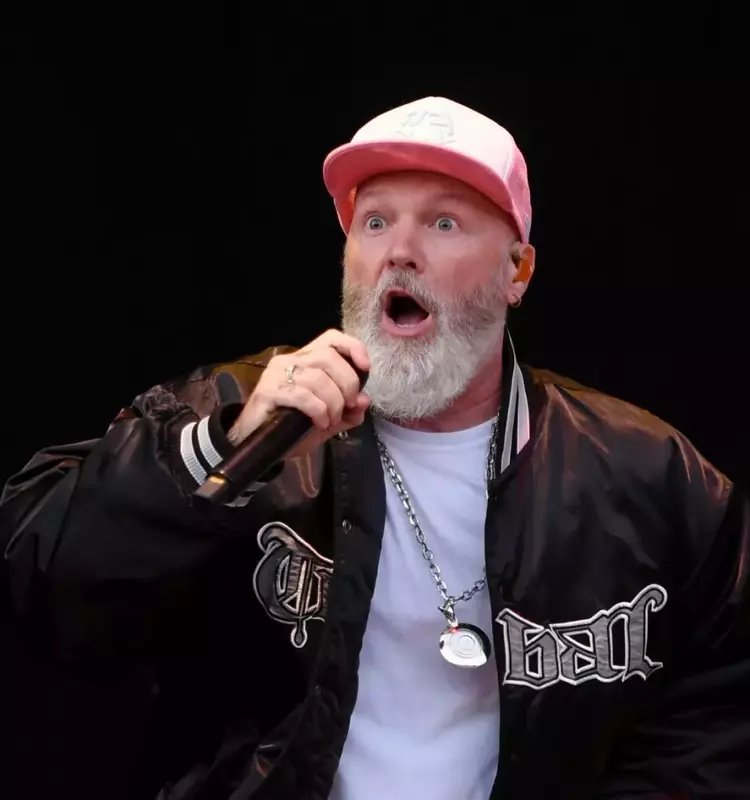
Limp Bizkit's planned performance in Tallinn, Estonia, has been called off, a decision stemming from a resurgence of scrutiny over frontman Fred Durst's prior endorsements of Russia. The controversy, fueled by his 2015 remarks and actions following Russia's annexation of Crimea, drew strong condemnation in Estonia. Despite initial attempts to merely reschedule, the event's promoter ultimately opted for a full cancellation, highlighting the sensitive geopolitical climate and Estonia's firm stance against justifications of Russian aggression.
The Cancellation: A Consequence of Past Statements
Limp Bizkit's anticipated concert in Tallinn, Estonia, slated for May 31, 2026, has been officially terminated. This decision follows a significant public outcry that reignited discussions about lead singer Fred Durst's historical pro-Russia sentiments. The event's Facebook page, initially updated to reflect a postponement, eventually confirmed the outright cancellation, as reported by Estonia's public broadcaster, ERR. The promoter, Baltic Live Agency, issued a brief apology, attributing the cancellation to circumstances beyond their control, without elaborating further. This abrupt end to the concert plans underscores the lingering impact of Durst's past political endorsements on the band's international touring schedule.
The catalyst for the cancellation was the re-emergence of Durst's pro-Russia stance, particularly his comments from 2015, made shortly after Russia's annexation of Crimea. At that time, Durst openly expressed a desire to acquire a Russian passport, penned a letter to Crimean authorities praising Vladimir Putin as a leader with "clear moral principles," and notably displayed a sign on stage that read "Crimea=Russia." These actions had previously led to Limp Bizkit being barred from Ukraine for five years. The renewed attention to these statements, coupled with the ongoing geopolitical tensions, created an environment where the concert's viability in a NATO and EU member state like Estonia became untenable. Estonia's Minister of Foreign Affairs, Margus Tsahkna, explicitly stated that those who condone Russia's aggression are not welcome in the country, reinforcing the government's principled opposition to such views.
Estonia's Firm Stance Against Pro-Russia Views
The Estonian government's strong disapproval played a pivotal role in the concert's cancellation. Margus Tsahkna, Estonia's Minister of Foreign Affairs, made it unequivocally clear that individuals who support Russia's aggression and its occupation of a neighboring country are unwelcome on Estonian soil. This declaration reflected the broader national sentiment and policy. Additionally, the Ministry of Culture reportedly engaged with the concert organizers, underscoring the government's position that performers who endorse a state whose leader faces an international arrest warrant should not be allowed to perform in Estonia. These official interventions highlight the deep political and moral objections within Estonia to any perceived legitimization of Russia's actions.
In an attempt to mitigate the initial backlash, Gunnar Viese, media director for Baltic Live Agency, suggested that Durst's pro-Russia views in 2015 might have been influenced by his marriage to a Russian make-up artist from Crimea, implying he was operating within a "distorted information bubble" at the time. Viese also pointed to Limp Bizkit's recent performances in countries that support Estonia and Ukraine, such such as Germany, Austria, and Poland, as evidence of a shift or a more neutral stance from the band. He further noted that Durst had not made any explicitly political statements concerning Russia or the ongoing conflict in Ukraine in recent times. However, these explanations and recent performance history ultimately failed to sway public and official opinion in Estonia, leading to the irreversible decision to cancel the concert, demonstrating the profound sensitivity and unwavering commitment of Estonia to its national and international political positions.