The Looming Bust in AI Capital Expenditure Growth
Finance

The Looming Bust in AI Capital Expenditure Growth

authorBy Nouriel Roubini
DateJul 28, 2026
Read time2 min

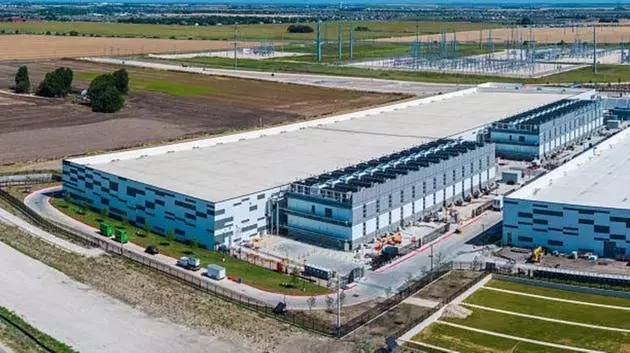
The burgeoning investment in Artificial Intelligence (AI) infrastructure by hyperscalers is facing an impending bust, with numerous factors pointing towards a significant deceleration in capital expenditure growth. The current surge in AI-related spending appears unsustainable, largely fueled by a speculative land rush rather than genuine, long-term profitability. As detailed, 14 major headwinds are set to impact this growth, suggesting a potential market correction by 2027.

Historically, market exuberance has often led to periods of over-investment, as seen in various technological booms. The present AI capital expenditure landscape echoes these patterns. Hyperscalers are investing at rates that exceed their cash flow, a trend driven by fierce competition and the desire to secure a dominant position in the nascent AI market. This aggressive spending is not primarily a result of groundbreaking technological breakthroughs that guarantee immediate returns, but rather a strategic play to capture future market share.

One critical issue is the elusive Return on Investment (ROI) for enterprises adopting AI solutions. Many businesses are struggling to translate AI deployments into tangible financial benefits, leading to skepticism about the long-term value proposition. Concurrently, the pricing of Large Language Models (LLMs) is experiencing a downward trend, which erodes profit margins for AI service providers. Furthermore, a substantial portion of hyperscaler backlogs is dependent on financially precarious entities, such as OpenAI and Anthropic, raising concerns about the stability of these revenue streams.

The financial community is also beginning to scrutinize the massive outlays. Investor pushback against unchecked capital expenditure is growing, demanding greater fiscal discipline and clearer pathways to profitability. Regulatory bodies are starting to pay closer attention to the AI sector, introducing potential risks that could further dampen investment enthusiasm. Additionally, the rapid depreciation of specialized AI hardware and infrastructure adds another layer of financial pressure, as companies face accelerated write-downs of their assets.

These combined forces indicate that the current AI capital expenditure boom is reaching its zenith. The confluence of unsustainable spending, questionable enterprise ROI, declining LLM pricing, reliance on unprofitable clients, investor scrutiny, regulatory uncertainties, and depreciation challenges suggests that a significant market adjustment is on the horizon, with projections indicating a downturn as early as 2027.

More Articles
Finance
Navigating Inflation: A Deep Dive into Fidelity's FCPI ETF
This article explores the Fidelity Stocks for Inflation ETF (FCPI), analyzing its structure, performance, and suitability for investors. It highlights FCPI's diversified, inflation-resilient portfolio and its strong risk-adjusted returns, especially during inflationary periods. The analysis also compares FCPI with alternative inflation-focused ETFs, providing insights for those looking to mitigate inflation's impact on their investments.
By Michele FerreroJul 28, 2026
Finance
Palantir Technologies Inc.: Strong Buy Rating Maintained Amidst Valuation Concerns
Palantir Technologies Inc. maintains a Strong Buy rating, with current price levels deemed a favorable entry point for staged investment. Despite trading at a premium, its valuation is justified by impressive year-over-year revenue growth, significant U.S. Commercial growth, and consistent guidance increases. The long-term outlook projects a $1 trillion market capitalization by 2030-2031, supported by robust AI capabilities in defense and commercial sectors, and strong management execution. Key risks include potential valuation adjustments and heavy reliance on U.S. revenue, necessitating close monitoring of international expansion and customer spending trends for sustained growth.
By Fareed ZakariaJul 28, 2026
Finance
Intel's Valuation Concerns Amidst Operational Progress
Despite Intel's recent operational improvements and Q2 revenue growth in its DCAI segment, the stock is currently overvalued. Its forward P/E ratio is nearly 60x, coupled with the lowest growth expectations among its competitors. Although Wall Street predicts a 25% upside, a double-digit downside is anticipated due to limited growth prospects and inflated relative valuation.
By Strive MasiyiwaJul 27, 2026
Finance
LGI Homes Navigates Stagnant Housing Market with Stable Q2 Outlook
LGI Homes (LGIH) is currently rated as a 'Hold,' reflecting its fair valuation in a housing market characterized by stagnation and limited near-term growth potential. The company anticipates stable margins within its guidance (18.5–20.5% gross, 22–24% adjusted) and projects a 9% year-over-year increase in home closings for Q2. However, LGIH's balance sheet presents a notable risk due to high debt (44.8% debt/capitalization) and a negative free cash flow margin, despite recent operational improvements. Any post-earnings stock rally should be seen as a chance to rebalance portfolios, prioritizing other builders.
By David RubensteinJul 27, 2026
Finance
Carvana's Path: Growth, Digital Dominance, and Valuation Challenges
Carvana Co. has demonstrated significant revenue growth and improved profitability over the past three years, largely driven by its digital-first approach to the used car market. Despite operational successes and expanding market presence, the stock is currently rated as a 'Hold' due to its high valuation multiples compared to projected cash flow and EBITDA. The upcoming Q2 2026 results are crucial, with expected revenue surges potentially offset by margin pressures.
By Nouriel RoubiniJul 27, 2026