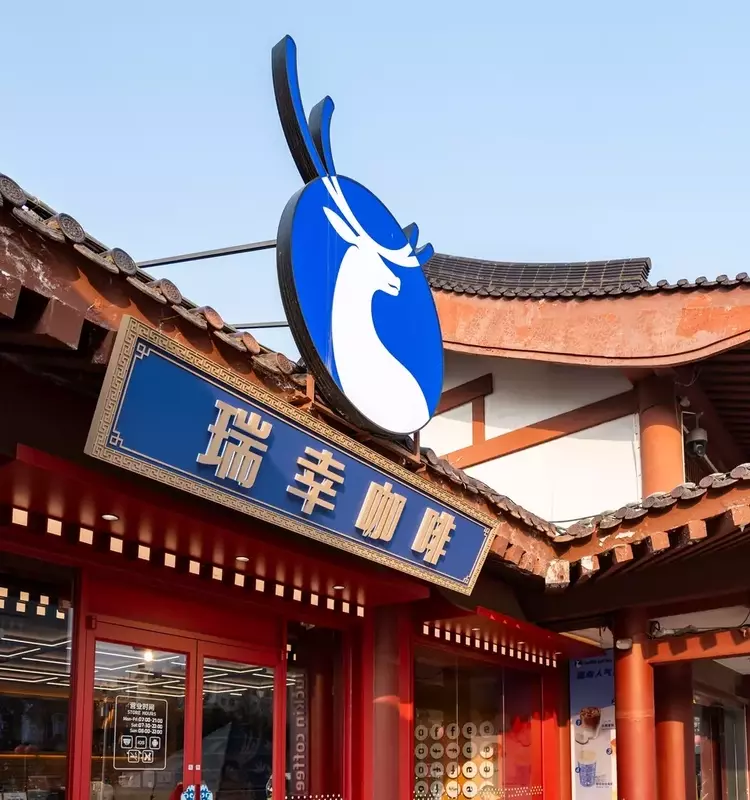
Luckin Coffee's relentless pursuit of market share through aggressive store expansion is raising red flags among investors. This strategy, while fueling rapid growth in the past, now appears to be a double-edged sword, potentially leading to cannibalization of existing locations and eroding profit margins. Despite a recent bullish outlook from Goldman Sachs, which assigned a 'Buy' rating and a $49 price target, many remain unconvinced about the sustainability of Luckin's current trajectory. The company's impressive liquidity, highlighted by $1.3 billion in cash and short-term investments, provides a buffer against immediate financial woes, but it doesn't alleviate concerns about its core business model. As operational efficiencies decline and delivery expenses climb, the long-term viability of this rapid growth approach is increasingly being questioned.
This situation presents a complex challenge for Luckin Coffee. While expanding its physical footprint rapidly has undeniably increased its market presence, the company must now contend with the potential downsides of such a strategy. The critical issue is whether this expansion can translate into sustainable, profitable growth, or if it will merely lead to a diluted market share for each store and further pressure on an already thinning bottom line. The path forward for Luckin will likely involve a delicate balancing act: continuing to innovate and attract new customers while also optimizing its store network and operational costs to ensure long-term financial health.
The Double-Edged Sword of Rapid Store Expansion
Luckin Coffee's strategy of aggressively opening new stores is generating increasing concern among market observers. This rapid expansion, while initially boosting market penetration, now risks undermining the profitability of its existing locations through a phenomenon known as cannibalization. When new stores open in close proximity to established ones, they often draw customers away from older outlets, leading to a decrease in sales per store. This internal competition can erode the overall revenue growth that aggressive expansion is intended to achieve, creating a paradoxical situation where growth in store count does not directly translate to proportional growth in profitability. The pressure on margins is further exacerbated by the increasing operational complexities and costs associated with managing a vast, rapidly expanding network of coffee shops, raising questions about the efficiency and long-term financial health of the business model.
This aggressive growth approach contrasts sharply with the strategies of more mature coffee chains, which typically prioritize profitability and sustainable growth over sheer volume. While Luckin's store count continues to climb, outpacing many U.S. competitors, the benefits of this expansion are being offset by declining margins and escalating delivery costs. The company's robust cash reserves offer some comfort, suggesting it can withstand short-term financial headwinds. However, without a clear path to improved per-store economics and a more efficient operational model, the current expansion strategy may prove to be unsustainable in the long run. Investors are increasingly looking for evidence that Luckin can translate its extensive physical presence into consistent, profitable growth rather than just expanding its footprint at the expense of its bottom line.
Navigating Market Skepticism Amidst Bullish Ratings
Despite a recent optimistic 'Buy' rating and a $49 price target from Goldman Sachs, significant market skepticism persists regarding Luckin Coffee's future performance. This divergence in opinion highlights the complexity of assessing the company's prospects. While a positive analyst rating can often boost investor confidence, the underlying concerns about Luckin's operational efficiency and the impact of its rapid expansion strategy remain prominent. Many investors are questioning whether the current valuation adequately reflects the risks associated with potential market saturation and the ongoing challenge of maintaining profitability in a highly competitive coffee market. The skepticism primarily stems from the belief that even with continued revenue growth, the company's ability to significantly expand its earnings per share (EPS) and achieve a higher valuation multiple might be constrained by its operational challenges and intense competition.
The core of this market skepticism lies in the deteriorating margins and rising delivery costs, which are seen as direct consequences of Luckin's strategy. While the company has managed to build a substantial cash reserve, this liquidity alone cannot address the fundamental business challenges of ensuring each new store contributes positively to the bottom line rather than diluting overall profitability. The long-term success of Luckin Coffee will hinge on its capacity to evolve its business model, moving beyond aggressive expansion to focus on optimizing operational efficiency, enhancing customer loyalty, and ultimately improving per-store profitability. Until there is clear evidence of such strategic shifts and a reversal in the trend of declining margins, the market's cautious stance, despite some bullish pronouncements, is likely to endure, reflecting a wait-and-see approach for sustained, profitable growth.
