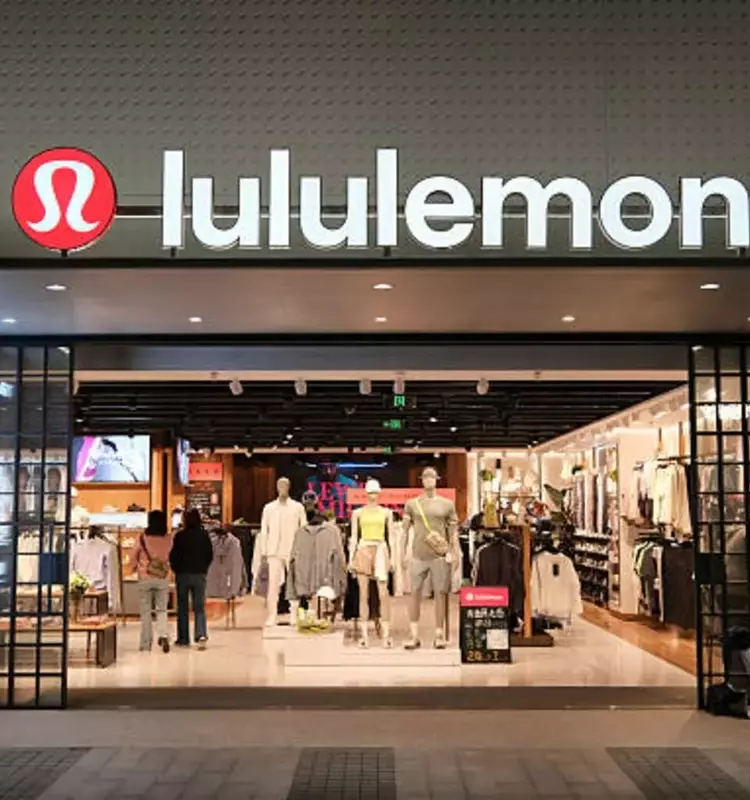
This report re-evaluates Lululemon Athletica Inc. (LULU), shifting its recommendation to a 'sell' following considerable setbacks. The athletic apparel retailer is contending with its initial projected annual revenue reduction since its market debut, grappling with challenges stemming from its North American operations and poorly received new offerings, exacerbated by widespread online criticism. The company's profitability has waned, marked by a gross margin of 54.2% and an operating margin of 11.2%, indicating ongoing downward revisions for future earnings. Despite appearing undervalued based on its forward price-to-earnings ratio, this valuation reflects deeper issues, including an absence of a clear recovery path and leadership instability anticipated through September 2026.
The decision to downgrade Lululemon's stock rating comes in the wake of the company's first-quarter fiscal year 2026 financial report, which revealed substantial cuts to both revenue and earnings per share forecasts. This marks a significant departure from earlier optimistic outlooks, where Lululemon was once considered a robust investment opportunity within the retail sector. The stock's value has depreciated by 41% since the initial assessment in 2026, highlighting the rapid deterioration of its market position and investor confidence.
A key factor contributing to this decline is the pronounced weakness observed in the Americas region, traditionally a strong market for Lululemon. This regional underperformance, combined with several product launches that failed to resonate with consumers, has created a challenging operational environment. Furthermore, the brand has faced considerable social media backlash, which has likely impacted consumer perception and sales, adding another layer of complexity to its recovery efforts.
The financial health of Lululemon has also deteriorated significantly. Profit margins have undergone a noticeable compression, with the gross margin falling to 54.2% and the operating margin experiencing a sharp decline to 11.2%. These figures are indicative of increasing cost pressures, reduced pricing power, or a shift in sales mix towards lower-margin products. The consistent downward revisions of earnings estimates further underscore the company's struggle to maintain profitability amidst a competitive and evolving retail landscape.
Despite these challenges, Lululemon's forward price-to-earnings ratio stands at a seemingly modest 10.74x. However, this lower valuation is a direct reflection of the underlying issues and uncertainties plaguing the company. The absence of a clear inflection point for recovery, coupled with a period of leadership uncertainty extending until September 2026, makes the stock a high-risk proposition for investors. Without a defined strategy to address its core operational and brand challenges, and with a transitional leadership phase ahead, Lululemon faces a prolonged period of instability.
In essence, the company is at a critical juncture, requiring strategic reorientation and renewed market confidence to regain its growth trajectory. The current market dynamics, internal operational issues, and leadership transition period collectively suggest that the stock’s current valuation accurately reflects its diminished prospects for the foreseeable future.
The recent financial disclosures reveal significant challenges for Lululemon, prompting a reassessment of its investment viability. Revenue and earnings forecasts have been sharply reduced, reflecting a challenging market and operational missteps. This situation marks a pivotal moment for the company, as it confronts the possibility of its first annual revenue contraction since its public offering. The confluence of underperforming markets, product misses, and negative public sentiment has severely impacted the brand's financial health. Profitability metrics, such as gross and operating margins, have notably declined, leading to ongoing downward adjustments in earnings projections. While the stock's forward P/E ratio appears low, this figure underscores the pervasive uncertainties, including the lack of a clear path to recovery and a period of leadership transition extending into late 2026. These factors combine to paint a picture of a company facing substantial headwinds, making its shares a less attractive prospect in the current climate.
