Secure Your Golden Years: Annuities Transform Retirement Savings
The True Cost of Retirement for Average Couples
Based on federal data, an average retired couple typically spends around $84,000 annually. This figure encompasses both essential needs and discretionary items like travel, dining, and entertainment. Social Security benefits cover approximately 45% of this spending, leaving a substantial gap to be filled by other income sources, such as personal savings or annuities.
Annuity Benefits: Shrinking Your Investment Portfolio While Securing Income
Annuities can significantly reduce the amount couples need to keep invested for retirement by providing a steady stream of income. For instance, according to the 4% rule, every $500 in monthly annuity income can replace $6,000 in annual portfolio withdrawals, thereby decreasing the required nest egg by $150,000. It is crucial to note that purchasing an annuity requires an upfront investment, which draws from your initial savings. This analysis focuses on the remaining investment needed after the annuity purchase.
Regional Differences in Retirement Savings with Annuities
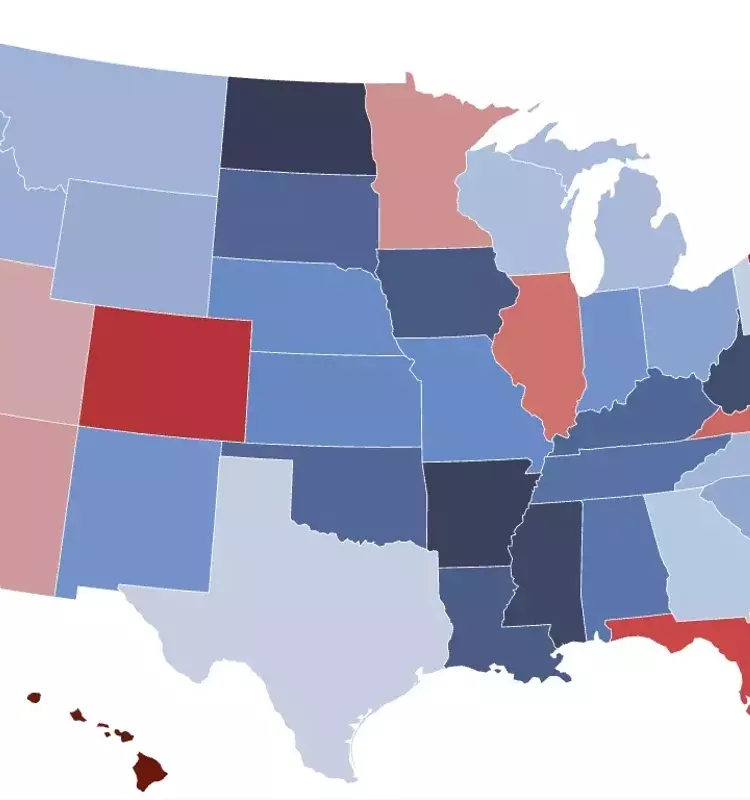
The geographic location of your retirement significantly influences the necessary nest egg. Without an annuity, the required savings for a comfortable retirement can range from approximately $800,000 in less expensive states like North Dakota to nearly $1.33 million in high-cost areas such as New Jersey. Although annuity income uniformly reduces the required invested balance across all states, the starting baseline for each state means that even with substantial annuity payments, significant differences in required savings persist.
Calculating Retirement Expenses Across the Nation
Our calculations for retirement costs in all 50 states utilized 2024 federal data, considering factors like housing, consumer spending, and regional price variations. Costs were initially estimated for a single retiree and then adjusted for two-person households, defining a comfortable retirement as average spending that covers both basic and discretionary needs. The required nest egg was determined by subtracting combined Social Security and annuity income from the estimated annual cost, then dividing the remaining gap by 4%.
