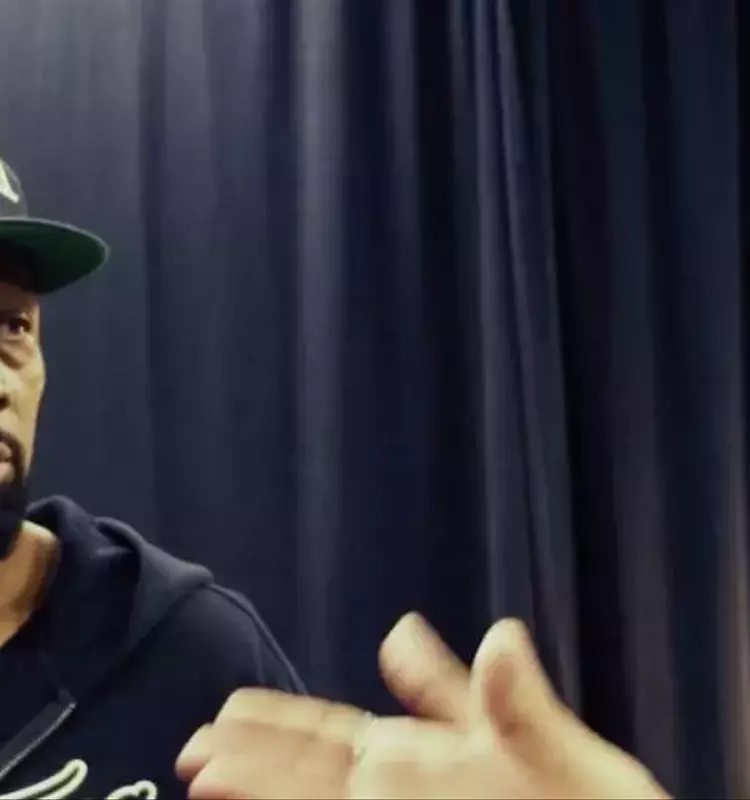
During a recent Wu-Tang Clan concert, Zohran Mamdani, the Democratic mayoral candidate for New York City, engaged in a significant discussion with RZA, a founding member of the iconic hip-hop group. This encounter, facilitated by Rep. Jamaal Bowman, was recorded for a campaign video, showcasing Mamdani interacting with fans and notable figures from the music world, including members of Run the Jewels and Jadakiss. Bowman lauded Mamdani for embodying the spirit of hip-hop in his political endeavors, recognizing the genre's enduring connection to community issues.
A pivotal moment unfolded as Mamdani and RZA discussed the plight of Brownsville, Brooklyn, RZA's birthplace, where many residents struggle with high living costs and limited opportunities. RZA expressed concern for those \"stuck\" in the neighborhood due to financial constraints. Mamdani responded by outlining his vision: to cultivate an environment in Brownsville, and indeed across New York City, where residents are not compelled to leave to achieve stability and raise families. He passionately articulated his campaign's core promise: to render the nation's most expensive city truly affordable. RZA's succinct approval – \"Alright, so it's a mission\" – followed by Mamdani's witty retort, \"It's Wu-Tang Financial,\" highlighted the serious yet hopeful tone of their exchange.
Mamdani’s journey to mayoral candidacy is noteworthy, given his past as a rapper, performing as Young Cardamom and later Mr. Cardamom. His earlier musical projects, particularly the EP 'Sidda Mukyaalo' with Abdul Bar Hussein, hinted at the political awareness that now defines his populist platform, centered on affordability. His campaign has garnered support from a diverse array of celebrities, underscoring the broad appeal of his message. This intersection of cultural influence and political ambition demonstrates how individuals from varied backgrounds can unite to champion critical social causes.
This candid dialogue between a political hopeful and a cultural icon illustrates the power of collaboration across different spheres to confront pressing urban challenges. It serves as a reminder that positive change often arises from unexpected connections, fostering hope for a more inclusive and equitable future where fundamental needs, like affordable living, are prioritized for all citizens.