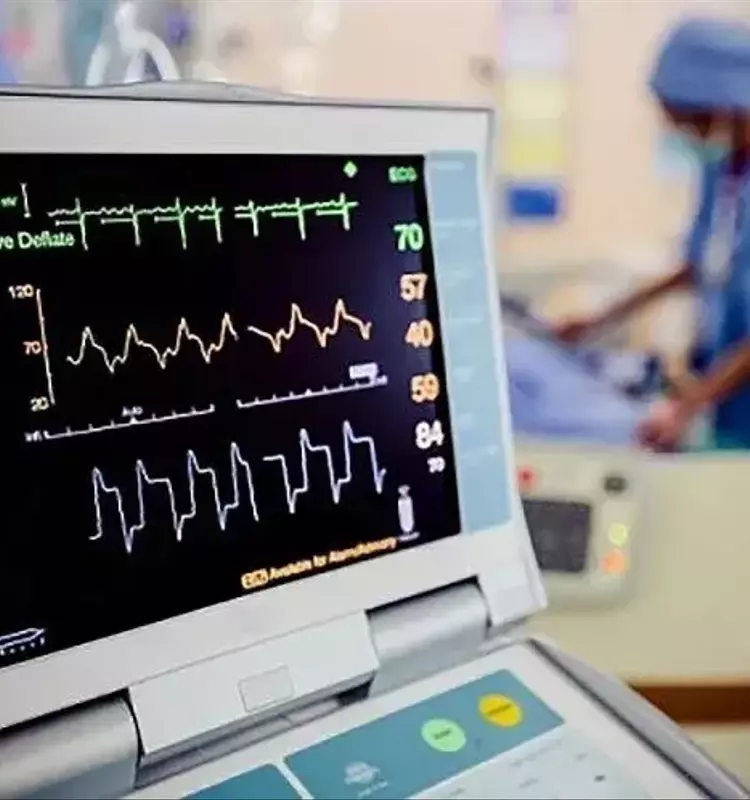
Medical Imaging Training: Modalities, Technical Principles, and Diagnostic Interpretation Frameworks
Defining the Objective
Medical imaging training refers to structured educational programs that prepare individuals to operate imaging equipment and interpret diagnostic images generated through various physical principles such as X-ray attenuation, magnetic resonance, and ultrasound reflection.
The objective of this article is to explain what medical imaging training involves, how imaging modalities function, what competencies are required, and how interpretation frameworks are developed. The structure follows a systematic progression: definition, foundational concepts, core mechanisms, comprehensive discussion, summary and outlook, and question-and-answer section.
Basic Concept Explanation
Medical imaging is a diagnostic discipline that uses physical energy forms to create visual representations of internal body structures. Training in this field typically includes both technical operation and interpretive analysis.
Major imaging modalities include:
- X-ray imaging
- Computed tomography (CT)
- Magnetic resonance imaging (MRI)
- Ultrasound imaging
- Nuclear medicine imaging
Each modality is based on different physical principles, such as photon attenuation, magnetic resonance signals, or acoustic wave reflection.
Training programs often integrate:
- Anatomy and physiology
- Imaging physics
- Equipment operation
- Image interpretation principles
Organizations such as the American College of Radiology and the Radiological Society of North America provide guidelines that influence imaging standards and educational frameworks.
Core Mechanisms and In-Depth Explanation
X-ray Imaging Principles
X-ray imaging is based on differential attenuation of ionizing radiation as it passes through tissues. Dense structures such as bone absorb more radiation, while soft tissues allow greater transmission.
Training focuses on:
- Radiation physics
- Image contrast interpretation
- Exposure parameter adjustment
Computed Tomography (CT)
CT imaging uses rotating X-ray beams and detectors to generate cross-sectional images. Data reconstruction algorithms convert attenuation signals into detailed slices.
Key training elements include:
- Reconstruction algorithms
- Slice thickness and resolution concepts
- Radiation dose optimization
Magnetic Resonance Imaging (MRI)
MRI uses strong magnetic fields and radiofrequency pulses to align and perturb hydrogen nuclei in the body. Signals emitted during relaxation are used to construct images.
Training includes:
- T1 and T2 relaxation principles
- Sequence selection
- Artifact recognition
Ultrasound Imaging
Ultrasound relies on high-frequency sound waves and echo detection. Training includes understanding acoustic impedance and real-time imaging interpretation.
Nuclear Medicine Imaging
This modality involves radiotracers that emit gamma rays detected by specialized cameras. Training includes tracer kinetics and functional imaging interpretation.
Safety and Radiation Protection
Radiation safety principles are fundamental in imaging training, including:
- Time, distance, shielding principles
- Dose monitoring
- Regulatory compliance
International standards are influenced by organizations such as the International Atomic Energy Agency.
Comprehensive and Objective Discussion
Clinical Applications
Medical imaging training supports diagnostic evaluation in:
- Oncology
- Neurology
- Musculoskeletal disorders
- Cardiovascular assessment
- Emergency medicine
Technical Competency Requirements
Training emphasizes:
- Equipment operation accuracy
- Image acquisition protocols
- Artifact recognition
- Cross-modality interpretation skills
Limitations and Variability
- Image quality may vary based on equipment and patient factors
- Interpretation is influenced by observer experience
- Some modalities involve exposure to ionizing radiation
- Motion artifacts may affect diagnostic clarity
Integration with Digital Systems
Modern imaging training increasingly includes:
- Picture Archiving and Communication Systems (PACS)
- Artificial intelligence-assisted image analysis
- Digital reconstruction and enhancement tools
Neutral Interpretation of Diagnostic Value
Medical imaging provides structural and functional information but must be interpreted alongside clinical findings and laboratory data.
Summary and Outlook
Medical imaging training is a multidisciplinary educational process combining physics, anatomy, and clinical interpretation skills. It prepares individuals to operate complex imaging systems and analyze diagnostic outputs across multiple modalities.
Future developments may include AI-assisted interpretation, hybrid imaging systems, and improved low-dose imaging techniques. These advancements may influence workflow efficiency while maintaining core diagnostic principles.
Question and Answer Section
Q1: What is the main purpose of medical imaging training?
It develops skills for acquiring and interpreting diagnostic images.
Q2: What are the main imaging modalities?
X-ray, CT, MRI, ultrasound, and nuclear medicine.
Q3: Why is radiation safety important?
Because some imaging modalities use ionizing radiation that requires controlled exposure.
Q4: What is the role of MRI in imaging?
It provides detailed soft tissue contrast using magnetic resonance principles.
Q5: Is interpretation fully automated?
No, interpretation typically involves trained professionals supported by systems.
Data Source Links
https://www.acr.org/
https://www.rsna.org/
https://www.iaea.org/resources/rpop
https://www.ncbi.nlm.nih.gov/books/NBK557492/
https://www.radiologyinfo.org/
