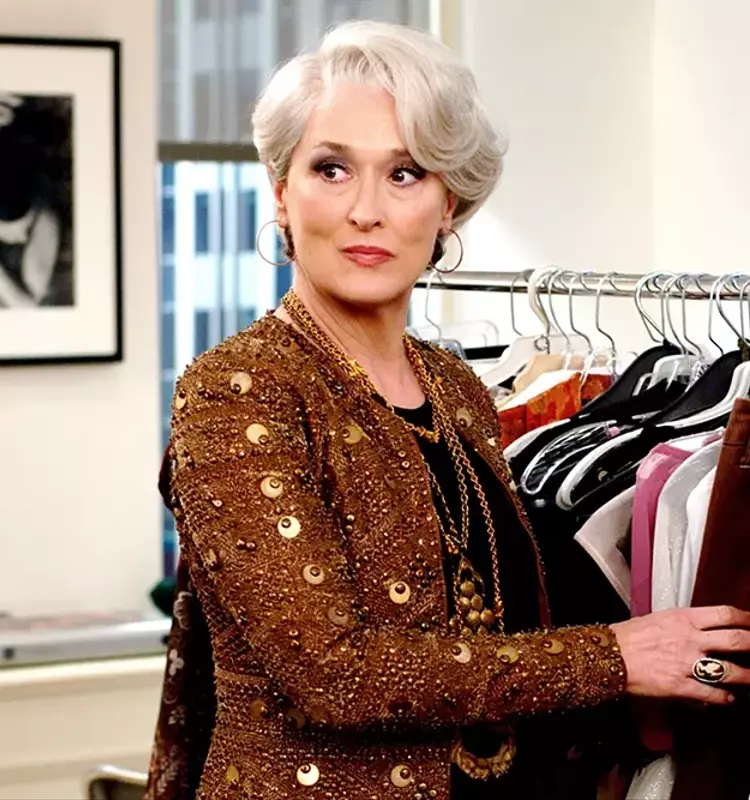
Meryl Streep recently shared her insights on the changing landscape of Hollywood, particularly concerning how films featuring female protagonists are perceived and funded. She highlighted the initial skepticism surrounding 'The Devil Wears Prada,' a film now considered a classic, and contrasted it with the more recent successes of 'Barbie' and 'Mamma Mia!' These conversations illuminate a significant shift in industry attitudes, where the commercial viability of women-led narratives is finally being recognized, challenging long-held stereotypes and budgetary constraints.
The Shifting Tides for Female-Centric Cinema
In a candid discussion, Meryl Streep reflected on the historical challenges faced by movies centered around women, drawing parallels between the initial reception of 'The Devil Wears Prada' and the current era. She revealed that her iconic film was once relegated to the 'chick flick' category, a label that often came with reduced funding and lower expectations. This categorization, she argues, undervalued the potential reach and impact of such stories. However, the immense success of recent films like 'Barbie' and 'Mamma Mia!' has demonstrably overturned these antiquated notions, proving that there is a substantial audience and financial reward for narratives that place women at their core. Streep's observations underscore a critical evolution in the film industry's understanding of diverse storytelling and audience preferences, moving away from restrictive genre classifications towards a more inclusive and equitable approach to production and marketing.
Streep elaborated on how the previous dismissal of 'The Devil Wears Prada' as merely a 'chick flick' led to significant struggles in securing adequate funding for its production. She recounted the necessity for the crew to "scrabble for our budget," a stark contrast to the financial backing often provided to male-dominated projects. This experience, she noted, was not unique to her film, pointing out similar challenges faced by director Greta Gerwig during the production of 'Barbie,' despite its eventual colossal box office success. However, looking ahead to the upcoming sequel, 'The Devil Wears Prada 2,' Streep expressed relief that the financial landscape has dramatically improved. She enthusiastically stated that for the sequel, money was "not a concern," indicating a positive shift where female-led films are now seen as robust investments rather than niche market ventures. This change signifies a broader recognition of the economic power and cultural significance of stories appealing to a wider demographic.
Crafting Miranda Priestly: A Masterclass in Character Development
Beyond the financial and categorical discussions, Meryl Streep also delved into the artistic process behind creating her unforgettable character, Miranda Priestly. She shared fascinating insights into the diverse inspirations that shaped the formidable fashion editor. While many assumed Miranda was primarily based on Vogue's Anna Wintour, Streep revealed a deeper, more nuanced approach, drawing inspiration from two legendary film directors: Mike Nichols and Clint Eastwood. This unexpected fusion of influences allowed Streep to imbue Miranda with a unique blend of commanding presence, subtle wit, and understated power. Her portrayal became a masterclass in character development, showcasing how a blend of diverse real-world figures can culminate in an iconic cinematic performance that transcends simple imitation, creating a character that is both universally recognizable and uniquely her own.
Streep explained that the essence of Miranda Priestly's demeanor and delivery stemmed from observing the directorial styles of Nichols and Eastwood. She noted that Mike Nichols contributed the element of "sly humor" and a certain self-awareness to Miranda's often cutting remarks, suggesting that the character understood the inherent humor in her own snide comments. This added a layer of complexity, preventing Miranda from being a one-dimensional antagonist. From Clint Eastwood, Streep adopted the characteristic of calm, unwavering authority. Eastwood's method of directing, where he never raised his voice and required people to lean in to hear his instructions, inspired Miranda's quiet but potent command. This combination resulted in a character who wielded immense power not through overt aggression, but through an almost unnerving stillness and precise articulation, forcing those around her to give their full, undivided attention. This sophisticated approach to character construction cemented Miranda Priestly's status as one of cinema's most memorable figure
