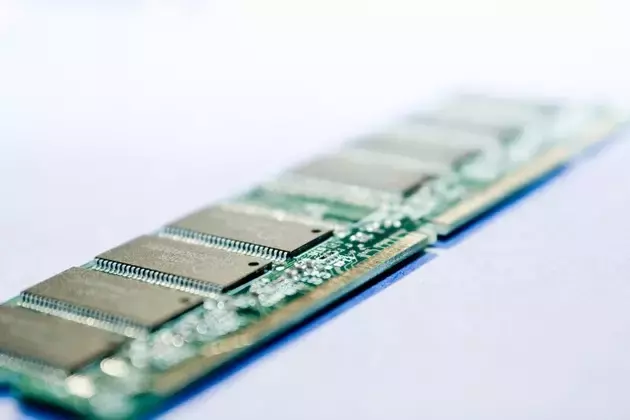
Micron Technology has witnessed an extraordinary ascent in its market performance, with its stock appreciating almost eightfold within a year. This significant surge, however, is juxtaposed against a seemingly moderate valuation of around 10.5 times its highest quarterly earnings. The current profitability and return on equity (ROE) of Micron have reached unprecedented levels, primarily fueled by exceptional margins during a period of memory chip scarcity. While this growth trajectory appears robust, it prompts a crucial question: is this valuation indicative of a genuine, long-term growth phase, or are there inherent risks associated with the cyclical nature of the memory market and the potential for oversupply?
The company's exceptional performance is largely attributable to a confluence of factors, particularly the favorable conditions within the semiconductor memory market. A global shortage of memory chips has driven prices upwards, allowing Micron to achieve historical highs in both profitability and ROE. This scarcity has created a 'supercycle' for memory products, where demand consistently outstrips supply, leading to inflated margins. Furthermore, the burgeoning demand for artificial intelligence (AI) technologies has acted as a significant tailwind, pushing the need for high-performance memory to new heights. These factors combined have created an environment where Micron can thrive, but also raise concerns about the sustainability of such conditions.
Despite the current strong performance, the long-term outlook for Micron is subject to considerable debate. The memory market is historically cyclical, characterized by periods of boom and bust. The current 'supercycle' might eventually lead to increased investment in production capacity, potentially resulting in an oversupply that could drive down prices and compress margins. This mean reversion — the tendency of market conditions to return to their long-term average — poses a significant risk to Micron's sustained profitability. If the market normalizes, or if an oversupply scenario materializes, the company's current earnings may not be sustainable, and its stock valuation could be impacted.
Investors must critically evaluate whether Micron's current valuation fully accounts for these cyclical risks. The divergence between the price-to-book (P/B) ratio and the price-to-earnings (P/E) ratio is not necessarily an anomaly but rather a reflection of the extraordinary returns on capital generated during these temporary supply-constrained conditions. Should these conditions shift, the lack of a substantial margin of safety in its valuation could leave investors vulnerable. Therefore, while the immediate prospects appear bright, a cautious approach is warranted, emphasizing the importance of diligent analysis of market dynamics and long-term supply-demand forecasts.
The substantial appreciation of Micron Technology's stock in the past year, alongside its seemingly modest valuation, prompts a thorough examination of its future prospects. The company's record-breaking profitability and return on equity are largely a result of the ongoing memory supercycle and robust demand from the AI sector. However, the inherent cyclicality of the memory market introduces considerable uncertainty regarding the sustainability of these elevated earnings, with potential oversupply and market normalization representing significant risks. Investors should consider these factors carefully, as the current valuation may not offer a sufficient margin of safety if market conditions revert to historical averages.
