MicroStrategy's Bitcoin Strategy: Innovation or Risk?
Finance

MicroStrategy's Bitcoin Strategy: Innovation or Risk?

authorBy David Rubenstein
DateJun 14, 2026
Read time3 min

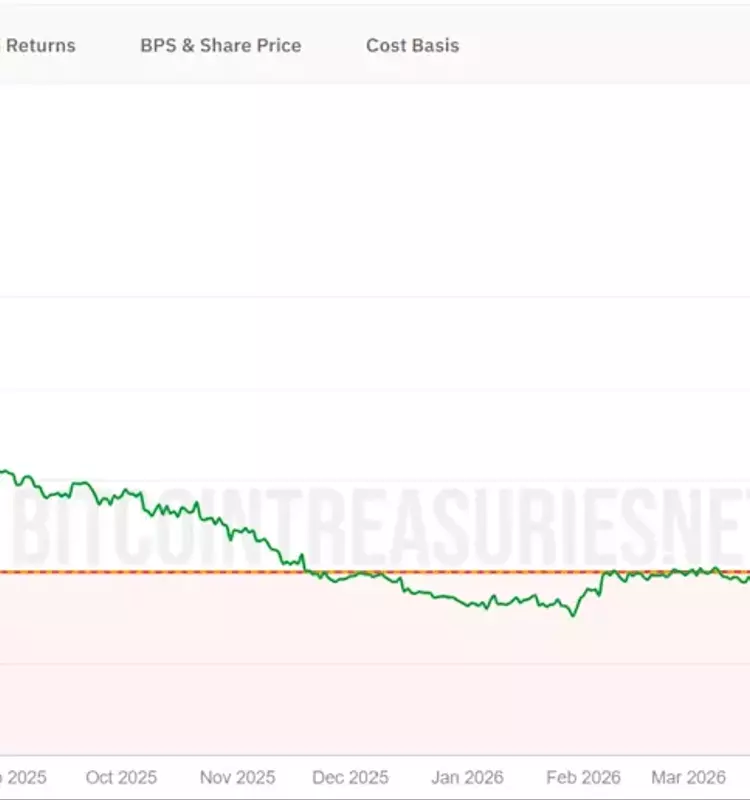
MicroStrategy's chairman, Michael Saylor, has unveiled a new set of metrics designed to evaluate the company's substantial Bitcoin reserves. This development comes as the firm's stock (MSTR) experiences a significant decline, now valued beneath its total Bitcoin assets once debts and preferred stock obligations are factored in. Saylor presents these new measurement tools as innovative improvements, but detractors suggest they might be merely a way to shift performance benchmarks.

These new additions to MicroStrategy's reporting framework include 'CEBE BPS,' which calculates Bitcoin per share after accounting for senior claims, and a concept termed 'Amplification.' Saylor argues that prudent, long-term, low-cost liabilities can convert amplification into enhanced common equity upside, especially if Bitcoin's annualized return surpasses the capital cost. However, these specific terms are not present in the company’s official financial disclosures. The company currently holds 845,256 BTC, acquired through a program initiated in August 2020. Despite this extensive accumulation, valued at approximately $54 billion, the average purchase price sits near $75,700, with a cost basis exceeding $61 billion. This places their current Bitcoin holdings underwater as the spot price hovers around $64,000, leading to a reported $14.5 billion unrealized loss in the first quarter and a net loss of $12.5 billion, yet Saylor remains committed to further acquisitions.

The debate over MicroStrategy's Bitcoin strategy is intensifying. Analysts like Nic Pucrin express apprehension, noting that MicroStrategy shares trade at roughly 84% of their gross Bitcoin value. He warns that all current options, such as issuing more stock (which dilutes Bitcoin per share) or adding to the over $13.5 billion in preferred obligations, exacerbate the situation, with no clear positive outcome in sight. Quinn Thompson reinforces this concern, pointing out that MSTR common stock trades at about 0.8 times its net asset value, burdened by $8.2 billion in debt and preferred shares yielding up to 11.5%. He critically states that the company is effectively selling shares worth 80 cents to acquire dollar-denominated assets. Former banker Pius Sprenger and investor Adrian further challenge the new metrics, asserting they track capital efficiency rather than actual value. MicroStrategy's own filings acknowledge that these metrics are not valuation measures and that share ownership does not confer direct claims on its Bitcoin. The ultimate success or failure of Saylor's leveraged Bitcoin wager largely depends on a robust market rally, as a stagnant market would leave the substantial senior claims firmly in place.

The current discourse surrounding MicroStrategy’s Bitcoin investment highlights the inherent volatility and speculative nature of cryptocurrency. It underscores the critical importance of transparent financial reporting and rigorous risk assessment in innovative investment strategies. For investors, it serves as a powerful reminder to conduct thorough due diligence, understand the nuances of leveraged positions, and recognize that even visionary approaches carry significant downside risks. Ultimately, a balanced perspective, coupled with an unwavering commitment to sound financial principles, is essential for navigating the dynamic landscape of modern finance.

More Articles
Finance
Residential REITs: American Homes 4 Rent vs. Essex Property Trust
This analysis compares American Homes 4 Rent, specializing in single-family rentals across the Sunbelt and Midwest, with Essex Property Trust, focusing on West Coast apartment communities. Both REITs offer distinct approaches to residential real estate investment, aiming for stable income from tenant leases in high-demand areas. The article delves into their financial performance, risk profiles, and valuation metrics to determine which stock might be a more attractive investment in 2026.
By Robert KiyosakiJun 14, 2026
Finance
Uncertainty Surrounds Fed's First Post-Meeting Press Conference, Accenture Shows Long-Term Potential, and Anthropic's AI Models Face Regulatory Scrutiny
The Federal Reserve's first press conference under Chair Warsh raises questions about future interest rate movements, with markets closely watching for signals impacting rate expectations. Meanwhile, Accenture presents a rare long-term investment opportunity due to recent stock weakness, and Anthropic's AI models have been taken offline following US export-control directives, highlighting increased regulatory scrutiny in the tech sector. Additionally, several companies are scheduled to report earnings, and AI models offer surprising predictions for the 'World Cup of Stocks.'
By Suze OrmanJun 14, 2026
Finance
Headwater Exploration: Adaptive Capital Management and Promising Outlook
Headwater Exploration (CDDRF) demonstrates strong financial discipline, particularly in maintaining a debt-free balance sheet while consistently growing production and distributing dividends. The company's flexible capital budgeting allows for strategic adjustments in response to market fluctuations, ensuring resilience and outperformance across diverse commodity cycles. Recent robust cash flow figures and a dividend increase signal a positive trajectory, further strengthened by the expectation of sustained higher commodity prices.
By Lisa JingJun 14, 2026
Finance
Investment Fund Performance Analysis in Q1 2026
This article discusses the performance of the Wasatch International Opportunities Fund - Investor Class in the first quarter of 2026. The fund recorded a return of -7.82%, significantly underperforming its benchmark, the MSCI AC World ex USA Small Cap Index, which saw a modest decline of -0.48%. The commentary highlights that stock selection within the industrial and financial sectors was a primary contributor to the relative underperformance. Furthermore, it touches upon the increasing impact of AI adoption on data valuation, suggesting a reinforcing cycle where AI enhances platform utility and strengthens market positioning.
By Morgan HouselJun 14, 2026
Finance
Hoegh LNG Partners Preferred Shares: A Stable 10.5% Yield Amidst Market Shifts
Hoegh LNG Partners' preferred shares offer an attractive 10.5% yield, underpinned by consistent dividend payments and strong financial coverage, even after the common units' delisting. The company's Q1 2026 results reveal solid revenue, net income, and free cash flow, with only a small portion allocated to preferred dividends. Declining interest expenses and leverage further enhance the security for preferred shareholders, making HMLPF a compelling investment despite past market changes.
By Mariana MazzucatoJun 14, 2026