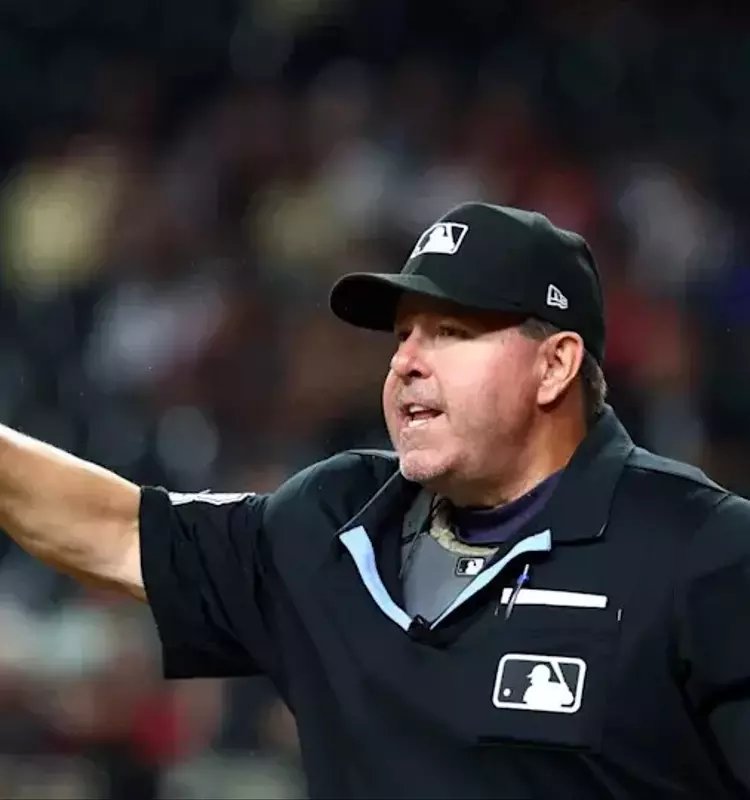
Major League Baseball's recent implementation of the Automated Ball-Strike (ABS) system has ignited a significant discussion among players and pundits alike. Early season statistics reveal a noticeable surge in walk rates, prompting many to question the system's impact on the game's balance. While some pitchers, such as the Arizona Diamondbacks' closer Paul Sewald, express concerns that the newly defined, smaller strike zone unfairly benefits hitters, other prominent figures, including New York Yankees outfielder Cody Bellinger, believe these are merely initial adjustments that will eventually stabilize as both players and the system adapt. The ABS system, designed to provide greater precision, redefines the strike zone using specific height and width measurements, leading to a much tighter interpretation of pitches. This fundamental shift in officiating has sparked extensive conversations about its potential long-term consequences for game dynamics, player strategies, and the overall rhythm of baseball.
MLB's Automated Ball-Strike System Leads to Historic Walk Rates Amidst Player Debate
In a significant shift for Major League Baseball, the recently introduced Automated Ball-Strike (ABS) system has led to a notable increase in walk rates, reaching near-historic levels during the season's initial month. This change has fueled a spirited debate among players, coaches, and analysts regarding its immediate and future implications for the game.
On Thursday, April 23, 2026, in Phoenix, Arizona Diamondbacks closer Paul Sewald voiced his observations on the new system. While acknowledging the theoretical neutrality of ABS, Sewald contended that, in practice, it appears to favor batters. "It's what (MLB) wanted — people on base," Sewald remarked, "Tough time to be a pitcher. Balls flying everywhere, you've got a smaller strike zone. But you just go out there and do the best you can."
Statistical data from the early season supports Sewald's claim, showing that players have drawn a walk in 9.8% of plate appearances, a rate not seen since 1950. While this figure might naturally decline as the season progresses and pitchers adjust to varying weather conditions, the substantial leap in walk rates from the previous season remains undeniable.
Arizona Diamondbacks catcher James McCann directly attributed this rise to the ABS system. "Of course it is," McCann stated, when asked about the connection, "What other rules have changed?" McCann also highlighted that a tighter strike zone, enforced uniformly by robot umpires, was an anticipated outcome that minor league players had forewarned would occur.
The ABS system has precisely redefined the strike zone. Historically, the zone was described as extending from the midpoint of a hitter's torso to just below the kneecap. The new definition, however, is far more exact: it begins at 27% of a batter's standing height and extends to 53.5%, maintaining a width of 17 inches, consistent with home plate. All pitches are now assessed at the plate's midpoint.
However, the impact isn't universally perceived as detrimental to pitchers. New York Yankees outfielder Cody Bellinger, the 2019 National League MVP, believes it's too early to draw definitive conclusions. "I think there's always an adjustment to something new," Bellinger commented, "It's also such a short sample size. It's (20-25) games into the season, so numbers skyrocket both ways early on." He suggests that an equilibrium will eventually be found as both hitters and pitchers adapt their strategies.
Chicago Cubs infielder Nico Hoerner offered a slightly different perspective, noting that hitters might temporarily benefit by being more disciplined on pitches at the top of the zone, but expects this advantage to be short-lived. "Getting on base has been emphasized for a long time," Hoerner explained. "Walking is incredibly valuable as a hitter. A lot of pitchers — their approach is to avoid slug at all cost. Sometimes that involves throwing less strikes. But I'm sure there will be a back and forth, just like every trend in baseball."
Historical precedents suggest that MLB rule changes can have lasting effects. For instance, the introduction of a pitch clock and limits on pickoff throws in 2022 led to a nearly 50% increase in stolen bases, a trend that has persisted. Similarly, when the mound was lowered in 1969, walk rates significantly jumped from 7.6% to 9.1% and remained elevated for decades.
Despite these trends, Miami Marlins manager Clayton McCullough remains cautiously optimistic. He believes that while the current spike in walk rates is noteworthy, it may not be a permanent fixture. "I think that we'll get to a point where it gets close and stabilizes to what it's been, where relievers are walking around 10%. Starters are going to be more around 8%," McCullough hypothesized. "My hypothesis sitting here now early in the year is that by the time the season ends, (walk rates) will look very much like they have, say the last several seasons." The coming months will undoubtedly reveal the true long-term impact of this technological intervention in America's pastime.
The integration of technology, such as the Automated Ball-Strike system, into professional sports invariably brings about a period of adaptation and re-evaluation. This development in Major League Baseball highlights the continuous tension between preserving the traditional elements of a sport and embracing innovations aimed at improving fairness and consistency. While the immediate impact on walk rates is evident, the broader implications for pitching strategies, hitter approaches, and the overall pace of the game remain to be fully understood. It serves as a reminder that every significant rule change ripples through the entire ecosystem of a sport, forcing players and teams to evolve and find new ways to succeed. The ongoing debate underscores the dynamic nature of baseball, where tradition meets technology in a quest for an optimized, yet still human, game.