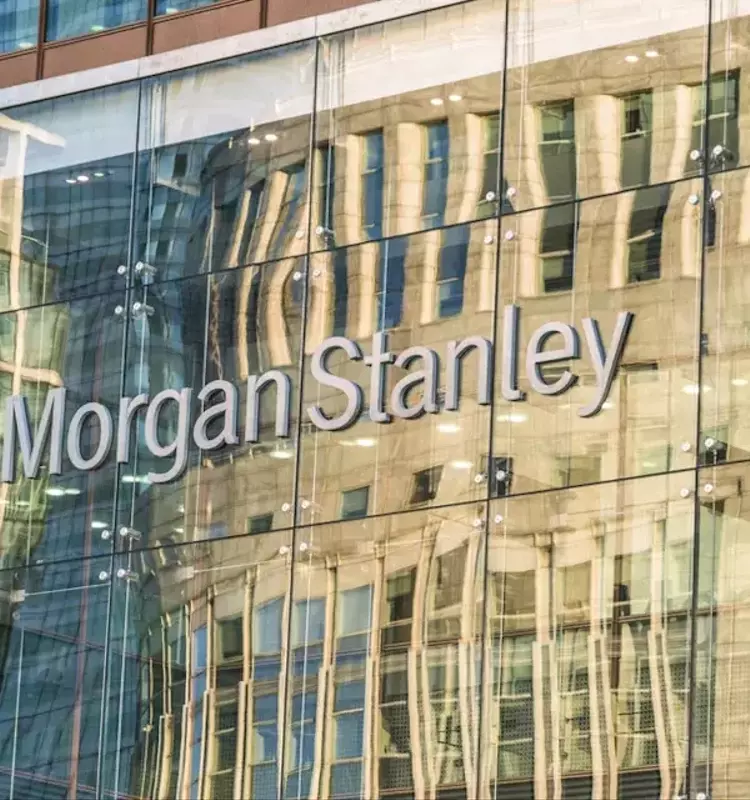
Wall Street recently witnessed an exceptional earnings period, with the top five U.S. banks collectively reporting approximately $49 billion in net income for the second quarter of 2026, marking a 39% year-over-year increase. Their combined trading revenue approached $39 billion. Global investment banking income for the first half of the year reached $61.4 billion, a 24% rise from 2025. Notably, SpaceX's monumental IPO contributed an estimated $500 million in underwriting fees to the leading banks. Among these financial giants, Morgan Stanley emerged with particularly strong performance, showcasing its strategic advantage in a dynamic market.
Morgan Stanley's success is rooted in its two-pronged approach, effectively blending the high-growth potential of a leading global investment bank with the resilient, consistent cash flows of a vast asset management firm. This strategy provides a buffer against market fluctuations, ensuring stability and growth. While some express caution due to broader economic uncertainties, potential shifts in central bank policies, or a return to normalized trading volumes, focusing solely on Morgan Stanley as a cyclical trading entity overlooks the profound and continuous positive impact of its high-margin Wealth Management operations.
Morgan Stanley's Stellar Second Quarter Financials
Morgan Stanley delivered an outstanding performance in the second quarter of 2026, surpassing expectations with record-setting net revenues and significant earnings growth. The firm reported net revenue of $21.35 billion, exceeding the consensus forecast of $19.65 billion by 8.6%, and reflecting a substantial 27.1% increase from the previous year, alongside a 4% sequential gain. Diluted earnings per share soared to $3.46, marking a 62.4% year-over-year jump and comfortably beating analysts' projection of $2.92. This robust financial showing boosted the first-half return on tangible common equity (ROTCE) to an impressive 26.6%, prompting an upgrade from Freedom Broker to 'Buy' with an increased price target of $245.
In addition to its overall impressive earnings, Morgan Stanley achieved an all-time high in equities trading revenue, reaching $6.3 billion, which was approximately $1.9 billion more than analysts had predicted. The company attributed this exceptional performance to widespread strength across its equities franchise, particularly highlighting strong growth in Asia. This trend, with "strength in Asia" becoming a recurring theme in major bank earnings calls, indicates the expanding influence of AI-driven trading strategies beyond U.S. markets, impacting financial hubs such as Hong Kong, India, Japan, and South Korea. This global reach and diversified revenue stream further solidify Morgan Stanley's position as a leader in the financial sector.
The Strategic Moat: Wealth and Investment Management
Despite the high-profile success in equities trading, Morgan Stanley's core competitive strength lies in its recurring Wealth and Investment Management business. This segment acts as a crucial high-margin safeguard during market downturns, providing consistent revenue streams. The Wealth Management division achieved a record quarterly revenue of $8.9 billion, a 14% increase year-over-year, boasting a robust pretax margin of 30.5%. This growth was primarily fueled by elevated asset management fees and net interest income. During the quarter, the firm attracted an unprecedented $148 billion in net new assets, elevating the total client assets across its Wealth and Investment Management divisions to over $10 trillion.
This impressive $10 trillion asset base consistently generates stable fee income, reducing Morgan Stanley's dependency on the volatile nature of trading volumes. The stability derived from these fees empowers CEO Ted Pick to emphasize the bank's structurally strong position, indicating an openness to strategic bolt-on acquisitions. Such acquisitions could enhance the firm's geographical presence or expand its corporate service offerings. Hedge fund sentiment, as reflected in Insider Monkey's Q1 2026 database, shows 80 elite funds maintaining positions in Morgan Stanley, suggesting a continued high-conviction belief in the bank's strategic direction and long-term value, reinforced by its formidable wealth management moat.
