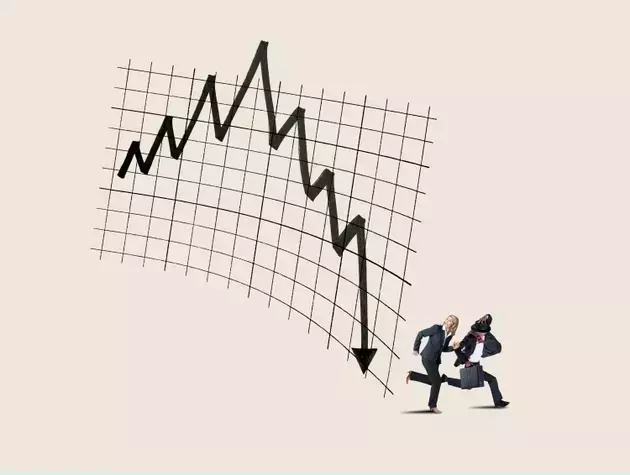
Navigating the Current Market Trajectory: Is it Time to Reassess Equity Allocations?
Finance

Navigating the Current Market Trajectory: Is it Time to Reassess Equity Allocations?

authorBy Nouriel Roubini
DateJun 04, 2026
Read time3 min

The stock market currently exhibits exceptionally high valuations, with the S&P 500's cyclically adjusted P/E ratio and market capitalization to GDP ratio nearing their all-time peaks. This elevated state is largely fueled by a powerful, tech-driven narrative centered on artificial intelligence, which places significant reliance on future growth expectations, leaving little room for investment missteps. Consequently, the earnings yield on equities has fallen below that of Treasury bonds, shrinking the equity risk premium and undermining the fundamental rationale for long-term equity investments. This market environment suggests a prudent approach of realizing gains and exploring new investment opportunities, as the prevailing conditions offer an unfavorable balance of risk and reward. For those considering short positions, options trading is recommended to manage potential exposure effectively.

The financial markets are presently on an unprecedented trajectory, where traditional correlations between economic indicators and market fundamentals seem to be increasingly disregarded. Despite a substantial increase in interest rates over recent years, a factor that historically dampens market enthusiasm, the equity markets have continued their ascent, exhibiting a resilience that defies conventional economic logic. This disconnect raises questions about the sustainability of current market trends and the underlying drivers of investor behavior.

A significant contributing factor to this unusual market behavior is the pervasive influence of speculation and abundant liquidity. Large infusions of capital into the market, coupled with speculative trading activities, can inflate asset prices beyond their intrinsic values, creating a feedback loop that sustains upward momentum regardless of underlying economic health. This environment can lead to periods of irrational exuberance, where investment decisions are driven more by herd mentality and momentum than by rigorous fundamental analysis. The primary risk in such a market is the potential for further escalation, where prices continue to climb, pushing valuations to even more extreme levels before an inevitable correction. This scenario presents a dilemma for investors, as exiting too early could mean missing out on further gains, while staying invested too long could expose them to significant losses when the market eventually rebalances.

Given the current market dynamics, characterized by historic valuations and a diminished equity risk premium, investors should prioritize caution and strategic repositioning. It is advisable to review existing portfolios, lock in profits from highly appreciated assets, particularly in the technology sector, and redeploy capital into opportunities that offer more favorable risk-adjusted returns. This might involve exploring asset classes less susceptible to the current speculative fervor or adopting a more defensive posture. For those inclined to hedge against potential downturns, utilizing options can provide a structured way to gain short exposure without the unlimited downside risk associated with direct short selling. Ultimately, maintaining a disciplined approach and recognizing the potential for market irrationality are crucial in navigating this unique investment landscape.

More Articles
Finance
Chevron's Promising Future Despite Market Fluctuations
Chevron (CVX) has been re-evaluated as a "buy" with an increased price target, driven by rising oil prices and significant production growth in the first quarter. The company maintains its ambitious 2026 targets, including 7-10% production growth, $18B-$19B in annual organic capital expenditure, and $3B-$4B in cost reductions. With strong EPS growth projections and an attractive free cash flow yield of 5.3%, Chevron presents a compelling investment opportunity, though potential risks such as geopolitical developments and refining competition warrant consideration.
By Nouriel RoubiniJun 04, 2026
Finance
HelloFresh: A Critical Look at Underperforming Fundamentals
This analysis downgrades HelloFresh (HELFY) to 'HOLD' due to persistent volume declines, weak profitability, and an unconvincing strategic shift. Despite efforts to improve efficiency, revenues fell significantly, and a pivot to ready-to-eat (RTE) products has further eroded margins. The current valuation does not reflect its underlying asset value, leading to a target price reflecting liquidation value.
By Nouriel RoubiniJun 04, 2026
Finance
Microsoft's AI Leap: Azure Growth and Strategic Investments Pave the Way for Market Revaluation
Microsoft, often overlooked in the recent AI boom, is poised for a significant market revaluation due to its robust Azure cloud growth and strategic investments in artificial intelligence, including a substantial stake in OpenAI. The company has demonstrated strong financial performance with notable revenue and operating income increases, driven by Azure's impressive expansion. Projections indicate a substantial capital expenditure in AI and cloud infrastructure, suggesting an aggressive push into these high-growth sectors. This strategic positioning, combined with potential catalysts like an OpenAI IPO, could lead to a substantial upside for Microsoft's stock.
By Mariana MazzucatoJun 04, 2026
Finance
AMD's AI Growth: A Risky Bet on Circular Financing
This article delves into the financial intricacies of AMD's recent advancements in AI, highlighting how its partnerships with major AI customers are underpinned by a potentially dilutive warrant system. While AMD's AI segment shows promising growth, the author raises concerns about the true cost of this growth, suggesting that the current stock valuation may not fully account for future share dilution.
By Robert KiyosakiJun 04, 2026
Finance
WisdomTree U.S. Value Fund: A Detailed Examination of Its Performance and Strategy
The WisdomTree U.S. Value Fund (WTV) has shown impressive returns since its strategic shift in 2017 to focus on shareholder yield. While outperforming its peers, it exhibits higher volatility. Its methodology blends quality and shareholder return, prioritizing share buybacks and dividends. Despite this, WTV's quality metrics fall short compared to some rivals, positioning it as 'quality-aware' rather than 'quality-focused.' With an attractive shareholder yield, a reasonable forward P/E, and robust next-year EPS growth, WTV presents compelling GARP characteristics and strong sector diversification, leading to a 'hold' rating due to risk-adjusted performance concerns.
By Mariana MazzucatoJun 04, 2026