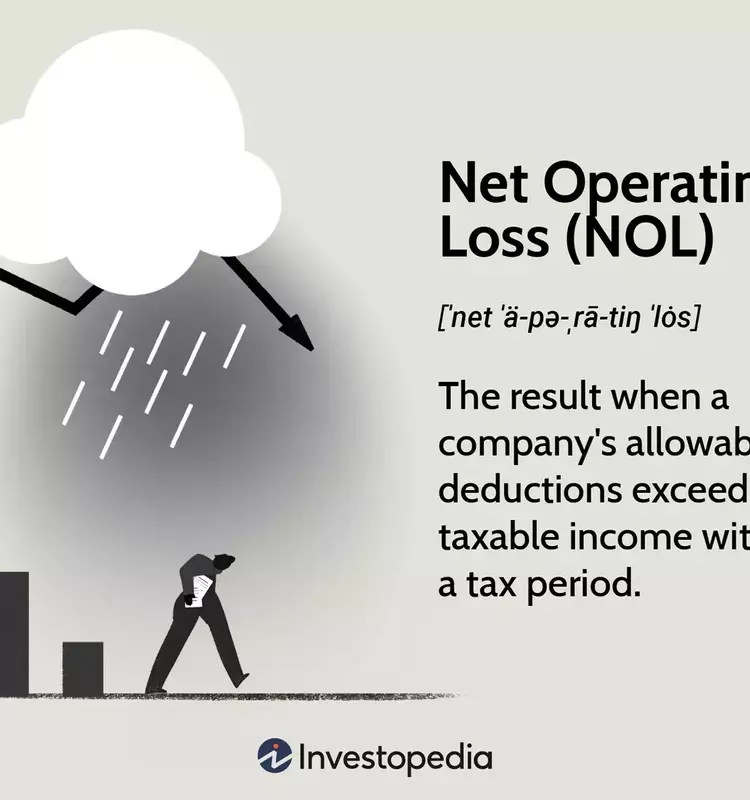
When a business faces a financial downturn, a net operating loss (NOL) can act as a critical mechanism for recovery. This tax provision allows companies to leverage current losses to reduce future tax obligations, offering a vital lifeline during challenging times. By strategically applying NOLs, businesses can optimize their financial health, manage cash flow effectively, and plan for sustained profitability.
Understanding and Applying Net Operating Losses in Business
In the dynamic landscape of business finance, the concept of a Net Operating Loss (NOL) serves as a crucial tool for companies experiencing periods where their expenses outstrip their income. An NOL arises when a company's allowable tax deductions exceed its gross revenue within a defined fiscal period. This situation is particularly common for nascent enterprises, where initial investments and operational costs frequently surpass early earnings, or for businesses operating within cyclical industries such as construction or retail, which naturally experience fluctuating profit margins.
Historically, the regulations governing NOLs have undergone substantial revisions, with notable changes introduced by the 2017 Tax Cuts and Jobs Act (TCJA) and the 2020 Coronavirus Aid, Relief, and Economic Security (CARES) Act. These legislative amendments have significantly reshaped how businesses can utilize these losses for tax benefits. Currently, NOLs generated in tax years commencing after 2017 can typically be carried forward indefinitely. However, their application in tax years following 2020 is generally capped at 80% of the taxable income, after accounting for any pre-2018 carryovers. This two-tiered system necessitates meticulous tracking of losses based on their origination year, adding a layer of complexity to tax planning.
For individuals, estates, and trusts, the computation of an NOL involves a series of specific adjustments, often requiring the completion of IRS Form 172. These adjustments include adding back NOL carryovers from previous years, removing non-business deductions exceeding non-business income, and excluding capital losses that exceed capital gains, among other considerations. These detailed calculations ensure that the actual NOL amount accurately reflects the business's financial position for tax purposes.
Furthermore, restrictions apply to the use of NOLs following significant ownership changes in a corporation. Under Internal Revenue Code Section 382, if a corporation undergoes an ownership shift where a substantial percentage of stock (more than 50 percentage points) changes hands among 5-percent shareholders over a three-year period, the annual utilization of pre-change NOLs is limited. This limit is determined by multiplying the corporation's value immediately prior to the ownership change by the prevailing long-term tax-exempt rate. This provision aims to prevent companies from being acquired solely for their accumulated tax losses.
For instance, consider a tech startup, Daratech Solutions. If Daratech incurs an NOL of $500,000 in Year 1 and then generates $400,000 in taxable income in Year 2, it can apply its NOL to reduce its tax liability. Given the 80% limitation, Daratech can deduct up to $320,000 (80% of $400,000) from its taxable income in Year 2. This reduces its taxable income to $80,000 and leaves a remaining NOL of $180,000 to be carried forward to subsequent years, subject to the same limitation. This strategic application of NOLs highlights their importance in managing a company's financial resilience and long-term tax strategy.
The ability to carry forward net operating losses provides a critical safety net for businesses, allowing them to transform temporary financial setbacks into future tax advantages. This mechanism not only offers a measure of financial relief during lean times but also underscores the importance of thorough tax planning and compliance in a constantly evolving regulatory environment. For businesses, understanding and optimally utilizing NOLs can be a cornerstone of sustainable growth and resilience.
