In an increasingly intricate world where factual understanding often faces skepticism and scientific principles are sometimes dismissed, cultivating critical thinking and an inquisitive spirit in children has become more vital than ever. The good news is that this endeavor may be simpler than many parents imagine, even for those whose own scientific knowledge is limited. The key lies in leveraging children's innate wonder and transforming daily interactions into rich learning experiences.
Cultivating Young Minds: A Guide to Fostering Scientific Curiosity
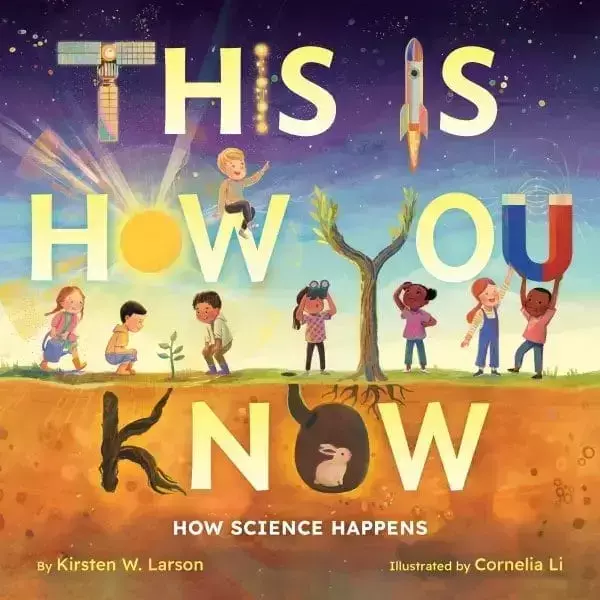
This report highlights the profound importance of nurturing scientific curiosity in young children, drawing on expert advice from children's book author Kirsten W. Larson, known for her work \"This Is How You Know.\" Larson, whose book guides children aged 4-8 in scientific thinking, stresses that children are inherently inquisitive. She argues that encouraging this natural inclination before science is perceived merely as a dry academic subject is crucial. Research consistently supports this view, indicating that fostering STEM interest in preschool and elementary years significantly impacts future engagement in scientific fields.
A common scenario for parents involves facing a barrage of \"why\" questions. Larson suggests a revolutionary approach: instead of providing immediate answers, parents should redirect the question back to the child, prompting them to articulate their own theories. This method validates the child's thought process and encourages independent reasoning. Furthermore, parents are encouraged to comfortably admit \"I don't know\" when stumped. This isn't a failure but an opportunity to model resourceful learning. By suggesting, \"Let's discover together,\" parents teach children how to seek information and approach challenges collaboratively, turning an unknown into a shared exploration.
The article also advocates for integrating scientific exploration into daily routines. These \"notice and wonder\" activities can occur anywhere, from a grocery store aisle where a child observes different apple varieties to a kitchen counter where baking soda and vinegar react. Such moments, requiring no special equipment or elaborate planning, transform mundane events into spontaneous experiments, teaching children to observe, categorize, and hypothesize. Moreover, resisting the urge to provide immediate solutions when a child is engaged in testing a theory—such as why a toy car rolls farther down a steeper ramp—is vital. Allowing children to experiment, even if it leads to \"failure,\" teaches them that setbacks are simply data points, refining their understanding of how things work. This resilient mindset is invaluable, fostering perseverance and an appreciation for the iterative nature of scientific discovery.
Finally, the report emphasizes broadening children's perspectives on who can be a scientist. Larson, who initially doubted her own scientific potential due to struggles with calculus, highlights that true scientific aptitude lies in \"scientific habits of mind\" such as curiosity, skepticism, and open-mindedness, rather than specific academic strengths. Promoting diverse children's books about scientists from various backgrounds, like African American biologist Charles Henry Turner or autism advocate Temple Grandin, shows children that science is a universal pursuit accessible to everyone. This approach not only expands their sense of possibility but also instills critical thinking skills necessary for navigating a complex information landscape, empowering them to become thoughtful, informed adults.
The cultivation of a curious and critically thinking mind in children is an investment that transcends academic achievement. In an era overflowing with information, the capacity to question, investigate, and adapt is paramount. By embracing children's innate wonder and guiding their explorations, parents are not merely raising future scientists; they are nurturing adaptable, discerning individuals prepared to shape a better world. Every \"why\" question, every small experiment, contributes to building a foundation of intellectual resilience that will serve them long after the mysteries of soap bubbles or blue skies are understood.
